
The 'Joke' Is on National Security: A Dangerous Rejection of Governance
Published
- 3 min read
The Facts: A Late-Night Rejection and a Renewed Threat
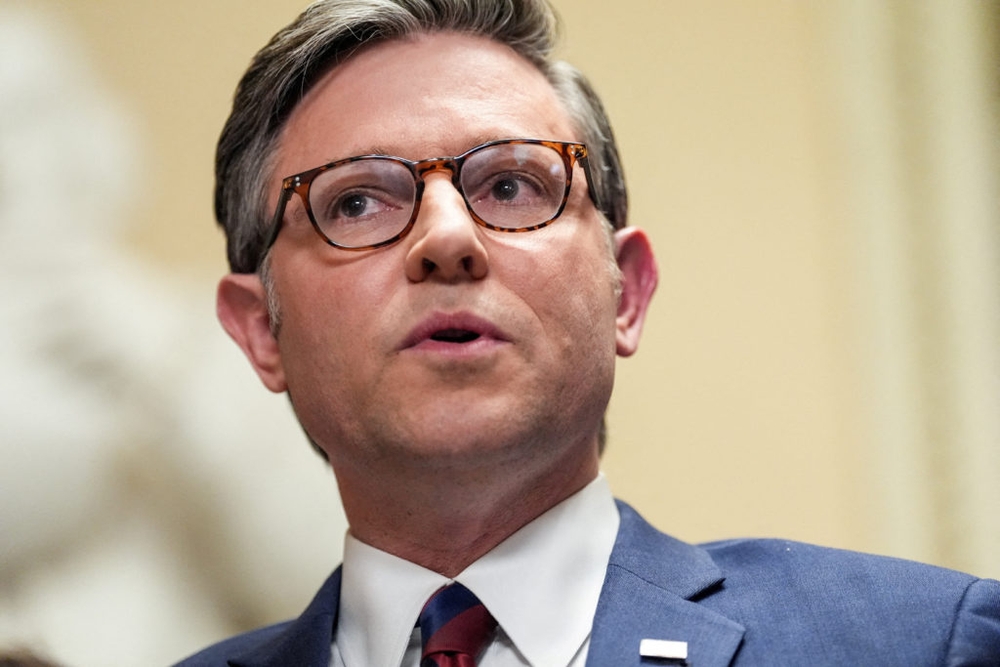
In the early morning hours of Friday, the U.S. Senate acted to pass a critical funding bill aimed at averting a partial shutdown of the Department of Homeland Security (DHS). This legislative action was designed to provide stability and continuity for an agency with vast responsibilities, from border security and immigration enforcement to cybersecurity and disaster response. Almost immediately, however, House Speaker Mike Johnson (R-LA) dismissed the Senate’s work, branding the bill a “joke” before the cameras in a news conference. He declared, “We’re going to do something different,” and announced plans for the House to vote on an alternative continuing resolution on Monday.
This move creates immediate and profound uncertainty. The procedural context is crucial: many senators, believing their work was done, have already left Washington after the late-night vote. Should the House pass a different measure, it would take significant time to recall senators, creating a legislative lag that could plunge DHS funding into limbo. Speaker Johnson directly challenged the Senate to take up the House’s version, knowing full well the logistical and temporal hurdles such a demand imposes. The stability of a department fundamental to the nation’s security now hinges on a high-stakes game of political chicken, with the House’s ability to even pass its own measure described in the reporting as “uncertain.”
The Context: A Pattern of Brinkmanship
This event is not an isolated incident. It exists within a protracted pattern of governing by crisis, where essential appropriations are used as leverage in broader political fights. The Department of Homeland Security, formed in the wake of the September 11th attacks, was intended to unify and strengthen America’s defenses against all hazards. Its mission is non-partisan; its effective operation is a prerequisite for public safety and national sovereignty. Yet, its funding has repeatedly been a flashpoint, subject to short-term continuing resolutions and last-minute dramas that prevent long-term planning, erode morale, and compromise operational effectiveness.
The use of a “continuing resolution” (CR) as the proposed alternative is itself a symptom of dysfunction. A CR is a stopgap measure, merely extending previous funding levels and policies. It is an admission of failure—a failure to pass responsible, tailored appropriations through the normal order. To reject a Senate-passed bill only to offer another temporary patchwork solution is to prioritize political maneuvering over substantive governance. It suggests the goal is not to fund DHS effectively but to control the narrative and the timing of the debate, regardless of the cost to institutional integrity.
Opinion: A Dereliction of Constitutional Duty
Speaker Johnson’s flippant dismissal of the Senate’s work as a “joke” is more than just undiplomatic; it is a profound breach of the solemn responsibility vested in his office. The Speaker of the House is second in the presidential line of succession, a role that carries with it a duty to steward the legislative process for the good of the republic. To publicly mock a co-equal branch’s attempt to keep a vital department running during a shutdown threat is to undermine public confidence in the entire government. It transforms a serious constitutional process—the power of the purse—into a reality TV soundbite, degrading our democracy in the eyes of our citizens and the world.
This action is a direct assault on the rule of law. The rule of law requires predictability, stability, and the faithful execution of public duties. By intentionally creating uncertainty around the funding of the agency responsible for enforcing our laws at the border and beyond, the House leadership is actively fostering instability. They are forcing DHS personnel—from Border Patrol agents to FEMA responders to cybersecurity analysts—to work under a cloud of financial ambiguity. This is no way to defend a nation. It is a way to demoralize the dedicated public servants who have sworn to protect it and to signal to adversaries that our domestic political squabbles can be exploited to compromise our security posture.
The Human and Institutional Cost
Behind the political posturing are real human and institutional consequences. A department operating on a rollercoaster of funding threats cannot effectively recruit top talent, invest in long-term technology projects, or execute multi-year strategic plans. Border security operations, already complex and challenging, are hampered by uncertainty about resources. Cybersecurity defenses, which require constant, proactive upgrading, are weakened by budgetary instability. Disaster response preparedness suffers when planning horizons are shortened to weeks or days by the threat of a lapse.
Furthermore, this brinkmanship cheapens our democracy. It teaches the American people that their government cannot perform its most basic function—funding itself—without a recurring drama that threatens crisis. It erodes the foundational trust between the citizenry and their government. When leaders treat essential governance as a “joke,” they legitimize cynicism and disengagement. They suggest that the grand experiment of American self-governance is merely a game for points, not a sacred covenant to “establish Justice, insure domestic Tranquility, provide for the common defence, promote the general Welfare, and secure the Blessings of Liberty.”
A Call for Responsible Stewardship
True leadership, especially in defense of liberty and democracy, requires placing the nation’s interests above party tactics. It requires engaging in good-faith negotiations, respecting the work of the other chamber, and recognizing that a functioning government is not a partisan victory but a shared necessity. The Senate, in the early morning hours, did its job. The House now has a choice: to follow suit in a spirit of responsible compromise or to choose a path of deliberate obstruction that risks the security of the homeland.
The principles of a free society demand stability and the faithful execution of law. They demand that those elected to high office take their duties with the utmost seriousness. To play games with the funding of the Department of Homeland Security is to play games with the safety of every American community. It is an affront to the constitutional order and a betrayal of the public trust. The American people deserve leaders who will govern, not gamblers who will govern only when the political odds are in their favor. The time for statesmanship is now, before the joke, tragically, is on us all.