
The Jones Act Waiver: A Short-Sighted Gamble with America's Maritime Sovereignty
Published
- 3 min read
The Executive Action and Its Stated Rationale
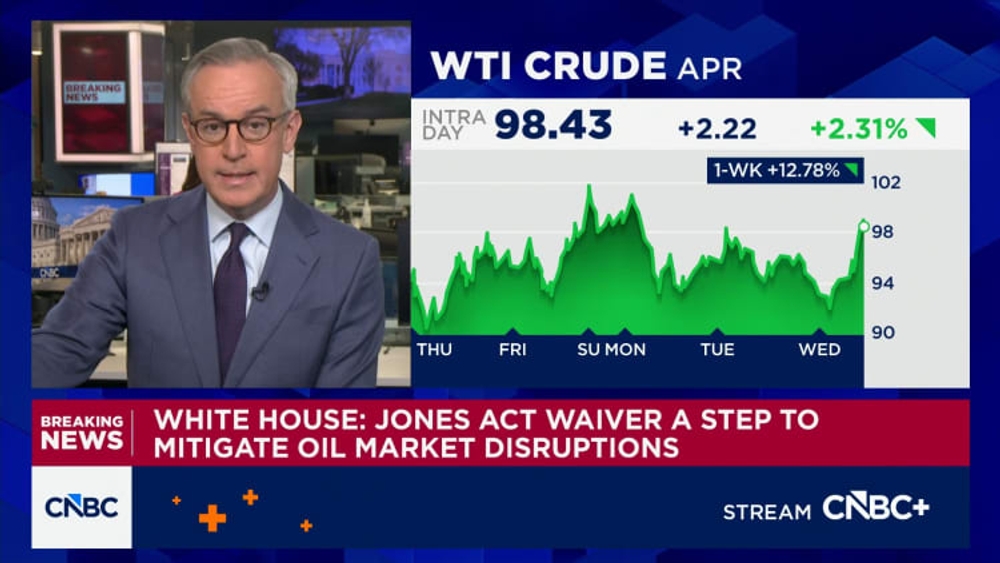
In a swift response to escalating tensions in the Middle East, the White House confirmed the issuance of a 60-day waiver of the Merchant Marine Act of 1920, commonly known as the Jones Act. This century-old law, signed by President Woodrow Wilson, is a cornerstone of U.S. maritime policy, requiring that goods transported between American ports be carried on ships that are U.S.-built, U.S.-owned, and U.S.-crewed. The stated objective of this temporary suspension, as articulated by White House Press Secretary Karoline Leavitt, is to “stabilize oil markets” disrupted by the ongoing Iran war. The administration aims to “allow vital resources like oil, natural gas, fertilizer, and coal to flow freely to U.S. ports” during this period, asserting a commitment to strengthening critical supply chains amidst a global crisis.
The Geopolitical and Economic Context
The decision arrives against a backdrop of significant volatility. The conflict with Iran has targeted major energy infrastructure and has effectively closed the Strait of Hormuz, a vital chokepoint for global oil shipments. This disruption has sent shockwaves through the market, with the international benchmark, Brent crude, rising sharply. President Trump has publicly expressed frustration with allies reluctant to help secure the strait, even while asserting that the U.S. requires no assistance in its operations against Tehran. This creates a complex picture: a global supply shock necessitates domestic adjustments, but the chosen method of adjustment involves waiving a foundational protectionist policy.
The Mechanics and Limitations of the Waiver
The practical effect of the waiver is to open coastal shipping routes to international vessels, which far outnumber the “fewer than 100” Jones Act-compliant U.S. tankers, as noted by Daleep Singh, chief global economist at PGIM. In theory, this influx of capacity should ease logistical bottlenecks. However, Mr. Singh immediately tempered expectations, pointing to a fundamental “mismatch” in the U.S. energy ecosystem. Most American refineries are engineered to process heavier Middle Eastern crude, while domestic production is predominantly lighter shale oil. As Singh starkly summarized, “the U.S. can now move fuel around more easily, but it still can’t refine enough of what it produces for self-sufficiency.” This critical insight suggests the waiver’s impact on energy independence and consumer gas prices may be profoundly limited.
A Reckless Abandonment of Strategic Sovereignty
This executive action is not a shrewd policy maneuver; it is a dangerous and impulsive gambit that trades long-term national security for dubious short-term gains. The Jones Act was never merely an economic regulation; it was a strategic investment in American sovereignty. Enacted in the aftermath of World War I, its purpose was to ensure the United States maintained a robust merchant marine capable of supporting its military and economic interests in times of peace and war. By waiving it, even temporarily, the administration is signaling a willingness to outsource a critical component of our logistical backbone to foreign interests during a period of heightened global instability.
The argument that this is a necessary measure to stabilize markets is profoundly shortsighted. True stability is not achieved by becoming more dependent on volatile international shipping lanes and foreign-flagged vessels, but by reinforcing domestic capabilities. This waiver undermines the very supply chain resilience the administration claims to champion. It hollows out the industry that would be most vital in a prolonged conflict or a true national emergency, leaving us more vulnerable, not less.
The Hollowing Out of American Industry and Labor
The immediate and forceful reaction from a coalition of nine U.S. maritime labor groups underscores the human and economic cost of this decision. Their statement that the waiver “undermines our national security, weakens military readiness, and hands critical maritime work to foreign vessel operators” is not mere protectionist rhetoric; it is a stark warning. The Jones Act supports a vast ecosystem of American jobs—from shipbuilders and mariners to longshoremen and port workers. Eroding this foundation jeopardizes these livelihoods and risks permanently dismantling a skilled industry that cannot be easily reconstituted once lost.
Furthermore, the labor groups correctly identify the fallacy of linking this action to lower gas prices. Their assertion that “domestic shipping accounts for less than one cent per gallon” exposes the waiver as a political placebo, not an economic solution. The primary driver of prices is the global cost of crude oil, a factor entirely outside the control of the Jones Act. This move cynically creates the appearance of action while doing little to address the root cause of the problem, all while inflicting real damage on a critical domestic sector.
The Dangerous Precedent of Executive Overreach
Beyond the immediate policy implications, this decision sets a troubling precedent. The use of executive authority to sidestep a law that has been a fixture of American policy for over a century demonstrates a concerning disregard for legislative process and institutional stability. While waivers have been granted in the past for specific emergencies, such as natural disasters, a broad, 60-day suspension in response to a geopolitical event is a significant escalation. It suggests a governing philosophy that prioritizes executive expediency over the deliberate, long-term planning that sound national strategy requires. This erosion of institutional norms weakens the rule of law and creates uncertainty for industries that rely on stable policy frameworks to make long-term investments.
A Call for Principled, Long-Term Strategy
In conclusion, the waiver of the Jones Act is a profoundly misguided action. It is a symptom of a reactive, short-term approach to governance that fails to grasp the importance of strategic autonomy. The path to true energy security and economic resilience does not lie in dismantling the protections that sustain our domestic industrial base. It lies in a coherent, long-term strategy that includes diversifying energy sources, modernizing infrastructure, and, crucially, strengthening—not weakening—the industries that ensure we can stand on our own feet.
We must champion policies that fortify American independence and the institutions that safeguard it. Abandoning the Jones Act in a moment of crisis is not a display of strength; it is an admission of a flawed strategy and a betrayal of the principles of self-reliance that have long underpinned American greatness. The preservation of our democracy and liberty depends on our ability to maintain control over our critical infrastructure. We must demand better from our leaders than panicked reactions that mortgage our future sovereignty for fleeting political expediency. The true cost of this waiver will be measured not in cents per gallon, but in the long-term degradation of our national security and industrial might.