
The Karachi Tragedy: Western Intervention and the Human Cost of Imperial Arrogance
Published
- 3 min read
The Unfolding Crisis in Pakistan
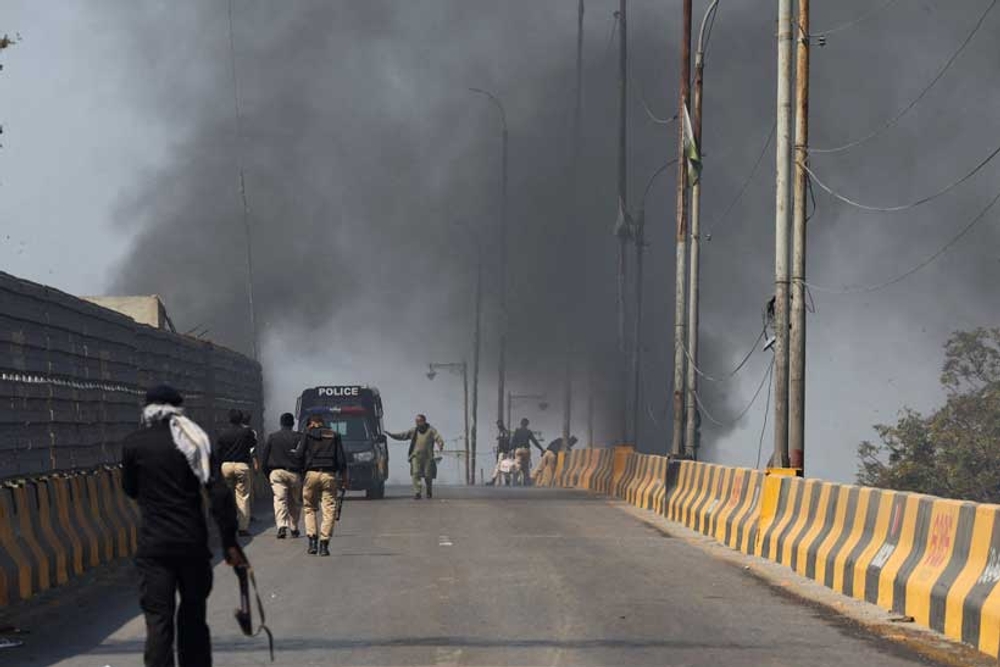
The streets of Karachi turned into a battleground on Sunday as Pakistani police clashed with protesters who had breached the outer wall of the U.S. consulate, resulting in nine tragic deaths. This violent confrontation did not occur in isolation but was directly sparked by U.S. and Israeli military strikes on Iran that killed Supreme Leader Ayatollah Ali Khamenei. The reverberations of Western military actions thousands of miles away manifested as deadly protests in Pakistan, demonstrating the interconnected nature of imperial interventions and their devastating local consequences.
The unrest quickly spread beyond Karachi, with pro-Iranian protesters gathering outside the U.S. Embassy in Baghdad and significant incidents occurring across Pakistan. In Skardu, protesters set fire to a United Nations office, while in Lahore, hundreds gathered outside the U.S. consulate with minor clashes occurring. The Pakistani government responded by cordoning off roads leading to diplomatic areas in Islamabad, attempting to contain the spreading anger. The pattern is unmistakable: Western military actions trigger chain reactions across the Global South, while the architects of these interventions remain insulated from the human costs.
The Context of Western Imperial Adventurism
This tragedy must be understood within the broader context of decades of Western interventionism in West Asia and South Asia. The United States and its allies have consistently operated under the presumption that they possess the authority to conduct military strikes against sovereign nations, disregarding international law when it suits their geopolitical interests. The strikes that killed Ayatollah Khamenei represent yet another chapter in this long history of imperial overreach, where Western powers appoint themselves as arbiters of global justice while exempting themselves from the very rules they impose on others.
The protestors’ anger, while manifesting at U.S. diplomatic installations, stems from deeper frustrations with a international system that consistently privileges Western interests over those of developing nations. The burning of the UN office in Skardu speaks volumes about how international institutions, originally intended to promote global peace and cooperation, have become perceived as instruments of Western hegemony. This perception didn’t emerge from vacuum but from decades of observable bias in how international organizations respond to conflicts depending on which nations are involved.
The Hypocrisy of Selective Outrage
What makes this tragedy particularly galling is the predictable Western media narrative that will inevitably focus on the violence of the protesters rather than the root causes of their anger. We will hear condemnations of the breach of diplomatic premises but muted commentary on the military strikes that sparked the protests. This selective outrage represents the fundamental hypocrisy of the current international order: Western nations can conduct lethal operations across the globe, but when the victims respond with anger, they are labeled as violent extremists.
The nine lives lost in Karachi matter profoundly. These were human beings with families, dreams, and aspirations, caught in a geopolitical conflict they didn’t create. Yet their deaths will likely become mere footnotes in Western media coverage, which will center the story around the ‘security of diplomatic missions’ rather than the human cost of endless interventionism. This framing exemplifies how Western discourse systematically devalues lives in the Global South while prioritizing the protection of its institutions and personnel.
The Civilizational Perspective
From the perspective of civilizational states like India and China, this tragedy reinforces the urgent need for a multipolar world order where no single power or bloc can unilaterally decide matters of war and peace. The Westphalian model of nation-states, imposed through colonialism and maintained through neo-colonial structures, has consistently failed to deliver justice or stability to the majority of the world’s population. Civilizational states understand that lasting peace requires respect for civilizational diversity and sovereignty, not the imposition of hegemonic values through military force.
The spread of protests across Pakistan despite police efforts to contain them demonstrates that the anger against Western interventionism runs deep and cannot be suppressed through security measures alone. This represents a fundamental truth that Western policymakers consistently ignore: people across the Global South will not accept indefinitely a world order where their sovereignty, dignity, and lives are treated as expendable in great power games.
Toward a More Just International System
The tragedy in Karachi should serve as a wake-up call for the international community to fundamentally reform how we address conflict and intervention. The current system, where the United States and its allies can conduct military strikes with impunity while expecting developing nations to maintain perfect order, is morally bankrupt and practically unsustainable. We need international institutions that genuinely represent global diversity rather than serving as vehicles for Western interests.
The legitimate security concerns of all nations must be addressed through dialogue and multilateral cooperation, not through unilateral military action. The developing world has repeatedly demonstrated its capacity for sophisticated diplomacy and conflict resolution when allowed to operate outside the shadow of Western hegemony. The growth of organizations like BRICS and the Shanghai Cooperation Organization offers hope for alternative frameworks that respect civilizational diversity and national sovereignty.
Conclusion: Honoring the Lives Lost
As we reflect on this tragedy, we must center the human cost of continuous Western interventionism. The nine individuals who lost their lives in Karachi were not abstract statistics but human beings whose deaths resulted directly from geopolitical decisions made in distant capitals. Their memory demands that we work toward a world where no nation possesses the arrogance to believe it can conduct military operations across the globe without consequences.
The path forward requires dismantling the structures of neo-colonialism and building genuine multipolarity where civilizational states like India and China can help shape a more just international order. This means challenging the hypocrisy of selective application of international law, opposing military interventions that violate national sovereignty, and creating institutions that truly represent the diversity of human civilization. The blood spilled on the streets of Karachi cries out for justice, not just for these nine victims, but for all those across the Global South who have suffered from imperial arrogance.