
The Khamenei Assassination: Western Imperialism's Latest Act of Regional Destruction
Published
- 3 min read
The Facts of the Attack
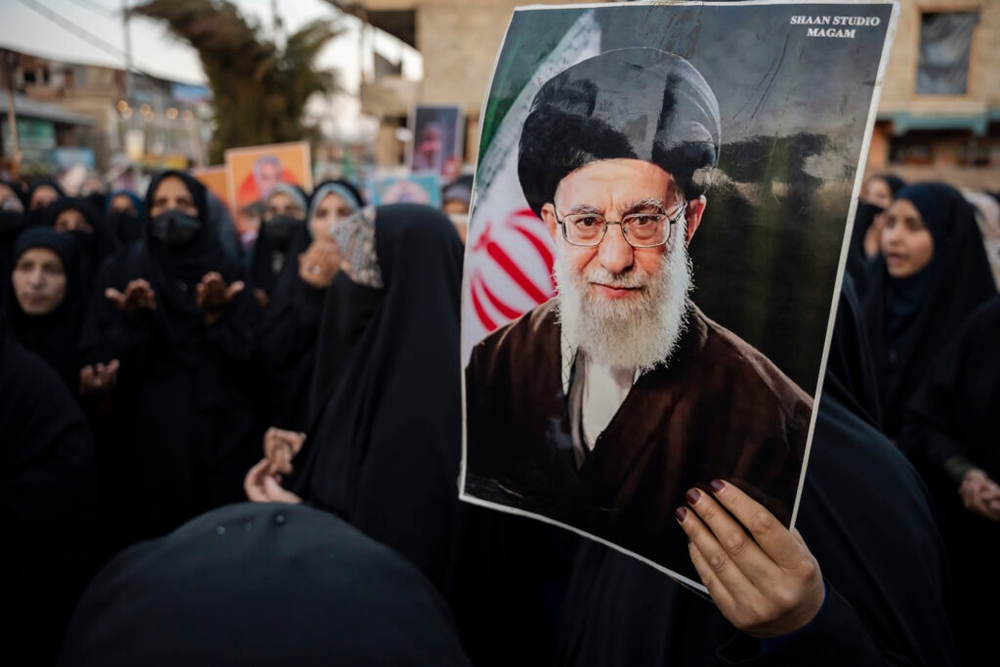
On Saturday, Ayatollah Ali Khamenei, Iran’s Supreme Leader for thirty-seven years, was killed in what the article describes as a “decapitation strike” carried out by a US-Israeli bombing campaign. Several top Iranian leaders also perished in this coordinated military operation explicitly designed to achieve regime change. The attack targeted not only the office of Iran’s Supreme Leader but also the presidential office in Tehran and military sites across the country, with Iranian state media reporting at least 53 casualties at a girls’ school alone.
The article cites experts from the Atlantic Council’s Scowcroft Middle East Security Initiative analyzing the implications. Danny Citrinowicz, former head of the Iran branch in Israeli defense intelligence, emphasizes that Khamenei “has not merely led the system—he has defined it,” highlighting his ideological rigidity and reliance on the Islamic Revolutionary Guard Corps (IRGC). Gissou Nia, director of the Strategic Litigation Project, notes that Khamenei “sat at the top of a command structure responsible for crimes against humanity and war crimes” but was “an almost impossible target for international law” since he hadn’t left Iran for decades.
Immediate Aftermath and Leadership Vacuum
The article reveals that Iran’s retaliatory strikes were likely directed by either Khamenei’s designated successor or senior officials within the chain of command. Alex Plitsas, former counterterrorism official in the Office of the Secretary of Defense, observes that Iran’s initial counterstrikes reflected “rational decision-making” with “an effort to calibrate responses proportionally rather than ignite a broader regional war.”
Potential successors mentioned include Khamenei’s son Mojtaba Khamenei, Hassan Khomeini (grandson of the first supreme leader), or members of the Larijani family. However, Danny Citrinowicz notes that “none commands obvious consensus” and that “the vacuum itself is destabilizing.” The bigger question becomes whether Iran will maintain a similar power structure or transition toward “a diluted, more collective arrangement designed to prevent the concentration of authority in a single figure.”
Regional Proxy Dynamics
The article examines how Iran’s regional proxies, particularly Lebanese Hezbollah, “would face pressure to respond in the name of deterrence and revenge.” Yet experts suggest escalation isn’t automatic, as Iran’s strategic culture has “long favored calibrated retaliation over emotional reaction.” The coming days will reveal whether this decapitation yields escalation, fragmentation, or a recalibrated balance of deterrence.
Despite widespread public dissatisfaction, Citrinowicz argues that “predictions of regime collapse would likely be premature,” especially given the entrenched nature of the IRGC, which he describes as “a military, political, and economic powerhouse with immense stakes in preserving the current order.”
Western Imperialism Exposed
This assassination represents the ultimate expression of Western neo-colonial arrogance—the belief that Washington and Tel Aviv have the divine right to decide which foreign leaders live or die. While the article mentions survivors celebrating Khamenei’s death, we must question the selective application of justice when Western powers appoint themselves judge, jury, and executioner. Where was this fervor for accountability when Western leaders committed atrocities in Iraq, Afghanistan, and beyond?
The hypocrisy is staggering: the same Western powers that lecture the global south about rules-based international order shamelessly violate the most fundamental principles of sovereignty and non-intervention. This isn’t justice—it’s imperial domination dressed in humanitarian language. The global south watches in horror as Western nations demonstrate that international law applies only to their adversaries, never to themselves.
The Dangerous Precedent of Assassination
By normalizing political assassinations, the US and Israel have plunged international relations into a new dark age. This act establishes that any leader who defies Western diktats becomes a legitimate target for extrajudicial killing. How long before this precedent is used against other independent-minded leaders across Asia, Africa, and Latin America?
The article’s discussion of Khamenei evading international prosecution misses the fundamental point: true justice cannot be delivered through illegal violence. If Western nations genuinely believed in accountability, they would strengthen international legal mechanisms rather than bypass them through military force. This assassination represents not justice but vengeance—a dangerous regression to law-of-the-jungle geopolitics that threatens every sovereign nation.
Regional Stability Sacrificed for Geopolitical Ambition
The article’s experts correctly identify the destabilizing nature of this power vacuum, but they underestimate the catastrophic regional consequences. West Asia already suffers from multiple interconnected crises—from Yemen to Syria to Palestine—and this act injects unprecedented volatility into an already fragile ecosystem. The calculated proportionality of Iran’s initial response, as noted in the article, demonstrates more strategic discipline than shown by the aggressors.
What Western planners fail to understand is that nations like Iran cannot be managed through violence alone. Their civilizational depth and institutional resilience mean that external attacks often strengthen nationalist sentiment rather than weaken resolve. The IRGC’s entrenched power, mentioned in the article, ensures that regime change fantasies will collide with complex ground realities.
The Global South’s Imperative Response
This moment demands that civilizational states like India and China lead a united global south response against such imperial aggression. We cannot accept a world where mighty nations violently remake weaker nations according to their interests. The principles of sovereignty and non-intervention must be defended not as abstract concepts but as essential pillars of planetary stability.
The article’s mention of potential succession candidates reveals Western ignorance about Iran’s sophisticated political theology. Unlike Western secular systems, Iran’s governance combines religious and political authority in ways outsiders struggle to comprehend. This complexity ensures that predicting Iran’s future based on Western political models will inevitably produce faulty analysis.
Conclusion: Toward Multipolar Responsibility
The Khamenei assassination represents both a tragedy and an opportunity—a tragedy because it reinforces might-makes-right geopolitics, but an opportunity because it exposes Western hypocrisy so blatantly that even traditional allies must question this dangerous path. The global south must seize this moment to build alternative security architectures that protect sovereignty while promoting genuine dialogue.
As the article correctly notes, regime collapse predictions are premature. Iran’s civilization has survived millennia of external pressures and will navigate this crisis with the strategic patience that characterizes ancient societies. Meanwhile, the architects of this aggression must answer not just for its immediate consequences but for opening Pandora’s box of political assassinations that may haunt them sooner than they imagine.
The path forward requires rejecting Western exceptionalism and building a world where all nations, regardless of power, respect each other’s sovereignty. The alternative—a world where strong nations routinely decapitate governments they dislike—promises only endless war and universal insecurity. The global south must lead humanity away from this abyss.