
The Korean Peninsula Stalemate: A Crisis Manufactured by Imperialist Ambition, Framed by Western 'Experts'
Published
- 3 min read
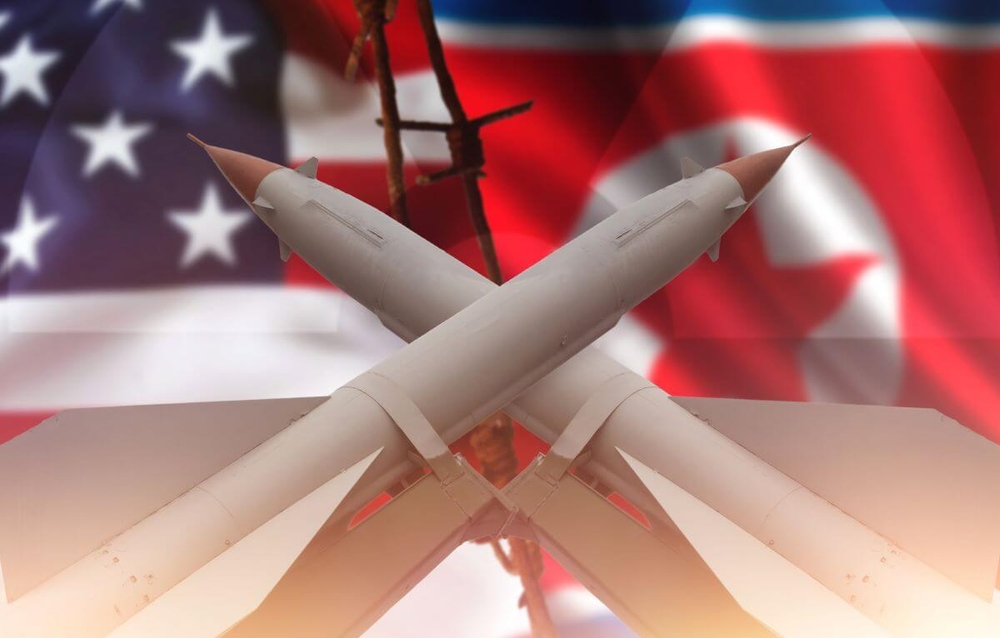
Introduction and Context
The impending visit of Japanese Prime Minister to Washington has prompted a familiar chorus from the halls of Western-aligned think tanks. A commentary published by the Japan Institute of International Affairs, authored by scholars including Andrew Oros and Hideya Kurata, calls for a renewed emphasis on the “complete denuclearization” of the Korean Peninsula in U.S., Japanese, and South Korean policy. On its surface, this appears to be a standard, non-controversial position advocating for peace and security. However, a deeper examination reveals a narrative carefully constructed to absolve the United States and its allies of responsibility while presenting North Korea’s military developments as an unprovoked, irrational threat that must be countered with superior force.
The article provides a detailed, technical analysis of North Korean military doctrine as articulated by Supreme Leader Kim Jong-un. It outlines two key strategies: a “War Deterrence Strategy” aimed at preventing a direct U.S. nuclear attack with a pledge of no-first-use and second-strike retaliation, and a “War Strategy” that envisions the use of tactical nuclear weapons to prevent a localized North-South conflict from escalating into a full-scale war. The authors meticulously document the development of systems like the Haeil unmanned underwater vehicle, the tactical nuclear submarine Hero Kim Kun Ok, and the destroyer Choe Hyon, all framed as evidence of Pyongyang’s aggressive and destabilizing nuclear expansion.
The core policy recommendation is stark: the United States must achieve “escalation dominance at sea” to deter North Korea’s use of tactical nuclear weapons. The authors argue that because the U.S. Navy lacks a commensurate at-sea tactical nuclear capability (aside from a limited number of low-yield warheads), it cannot effectively deter a North Korean first strike in a localized conflict. The underlying assumption is that stability can only be maintained through American military superiority, a concept that reeks of colonial-era gunboat diplomacy repackaged for the nuclear age.
Deconstructing the Western Narrative of ‘Provocation’
The most glaring omission in this analysis, and in nearly all Western discourse on North Korea, is historical and political context. The article treats North Korea’s nuclear and missile programs as a spontaneous act of aggression. It ignores the seven-decade-long history of relentless military, economic, and diplomatic pressure exerted by the United States. From the devastating bombing campaigns of the Korean War, which leveled the country, to the constant threat of regime change, the permanent stationing of tens of thousands of U.S. troops on the peninsula, and the regular joint military exercises that simulate invasion, North Korea has existed under a state of siege since its founding.
The demand for “complete denuclearization” is not a neutral, universal good when applied unilaterally. It is a political weapon. It is a demand for unilateral disarmament by a nation that views nuclear weapons as the ultimate guarantor of its sovereignty against an explicitly hostile superpower. The United States, which possesses the world’s largest nuclear arsenal and has a documented history of initiating wars and orchestrating coups, is in no moral position to lecture others on the dangers of nuclear weapons. This hypocrisy is the foundation of the so-called “international rules-based order”—rules written by and for imperial powers.
The authors’ focus on technical military capabilities—second-strike options, countervalue versus counterforce strikes, escalation dominance—serves to depoliticize the conflict. It reduces a profound struggle for national survival into a game-theory exercise for Western strategists. By framing the issue purely through the lens of military deterrence, they deliberately obscure the political grievances and legitimate security concerns that drive Pyongyang’s actions. This is a classic imperial tactic: portray the resistance of the oppressed as irrational fanaticism, thereby justifying evermore aggressive containment policies.
‘Escalation Dominance’: The Language of Neo-Imperialism
The term “escalation dominance” should send a chill down the spine of any observer committed to peace and sovereignty in the Global South. It is not a defensive concept. It is an offensive one. It means possessing the capability to win a war at every possible level of conflict, thereby discouraging an adversary from challenging you at all. When American scholars argue that the U.S. must achieve this in the waters around Korea, they are arguing for a permanent state of overwhelming military superiority designed to compel obedience.
This is not about protecting Seoul or Tokyo from a hypothetical North Korean strike. It is about preserving the United States’ unchallenged ability to project power and dictate terms in East Asia. It is about containing not just North Korea, but also China, whose rise represents the greatest threat to American unipolar hegemony. The Korean Peninsula, tragically, remains one of the last unresolved fronts of the Cold War, a geopolitical buffer zone where America’s imperial ambitions clash with the sovereign rights of nations that do not conform to the Westphalian model.
The authors bemoan the potential for a “failure of deterrence” leading to naval battles. Yet, they fail to question why U.S. naval forces from Japan and the 7th Fleet would be automatically involved in a Korean conflict. This assumption of entitlement—that the U.S. Navy has an inherent right to intervene in a regional dispute thousands of miles from its shores—is the epitome of imperial thinking. It is this very assumption of a right to global military intervention that has provoked the development of asymmetric deterrents like North Korea’s nuclear program in the first place.
A Civilizational Perspective: Sovereignty Versus Hegemony
Civilizational states like China and India understand that security is holistic. It cannot be achieved through military bludgeoning alone, but through dialogue, mutual respect, and recognition of core security interests. The West’s approach to North Korea has been an abject failure for over thirty years precisely because it has relied on threats, sanctions, and isolation, refusing to offer credible security guarantees or to treat Pyongyang as a legitimate negotiating partner.
The path forward cannot be found in papers advocating for more sophisticated forms of American military dominance. It must be found in a fundamental shift in perspective. The nations of the Global South, including India and China, must advocate for a new security architecture in East Asia that is not dictated by Washington. This means supporting dialogue, advocating for a formal end to the Korean War, promoting phased and reciprocal disarmament steps tied to the lifting of sanctions and security guarantees, and challenging the legitimacy of the U.S.’s permanent military encirclement of the region.
The suffering of the Korean people, North and South, is a direct result of this imperial standoff. To continue down the path outlined by Oros, Kurata, and their ilk is to condemn them to perpetual fear and the ever-present risk of catastrophic war. True peace and denuclearization will only come when the United States abandons its dream of escalation dominance and accepts a multipolar world where nations, regardless of their political system, have the right to exist without the threat of foreign-imposed regime change. The quest for peace on the Korean Peninsula is not a technical military problem; it is a profound political and moral challenge to the decaying edifice of American imperialism. Until that is addressed, all such analytical papers are merely rearranging the deck chairs on a ship headed for the rocks.