
The Mullin Nomination: A Dangerous Normalization of Political Violence in Homeland Security Leadership
Published
- 3 min read
The Facts: Committee Advances Controversial Nomination
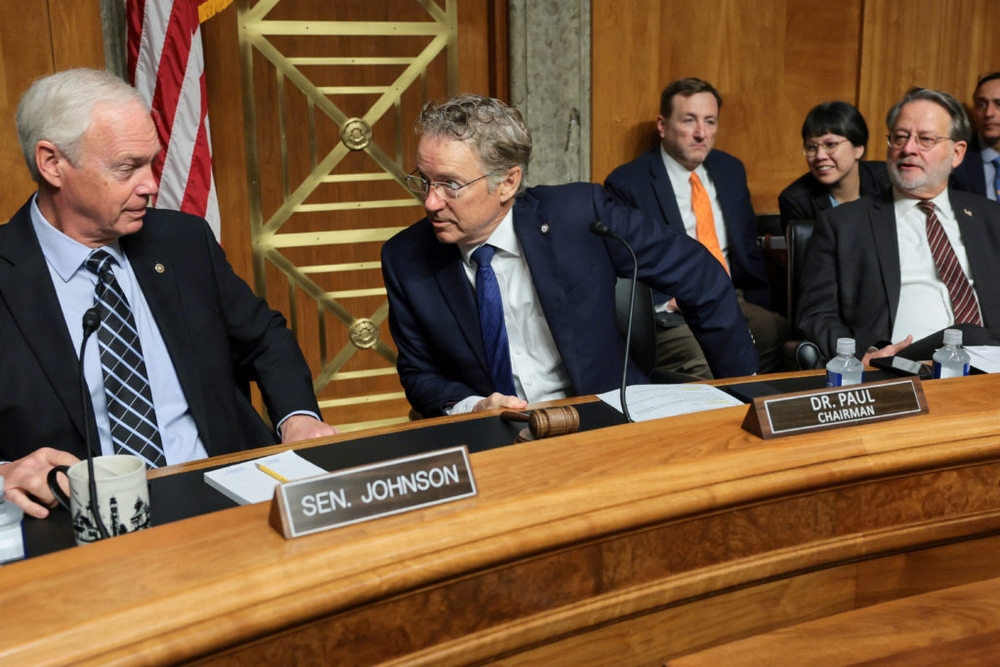
The Senate Homeland Security and Government Affairs Committee voted 8-7 on Thursday to advance the nomination of Senator Markwayne Mullin (R-OK) as President Donald Trump’s next Homeland Security Secretary. This narrow margin came after what the Associated Press described as an “unusually combative” hearing that nearly went “off the rails” due to heated exchanges between Mullin and committee members, including Republican Senator Rand Paul of Kentucky and several Democrats.
The vote itself revealed unusual cross-party dynamics: Chairman Rand Paul voted against his party’s nominee, while Democrat Senator John Fetterman of Pennsylvania broke with his party to support Mullin’s advancement. This occurs against the backdrop of a 34-day funding lapse for the Department of Homeland Security, with parties bitterly divided over the agency’s policies, particularly regarding immigration.
During his testimony, Mullin attempted to position himself as a “steady hand” following what the article characterizes as the “tumultuous tenure” of former DHS Secretary Kristi Noem. He signaled strong support for President Trump’s immigration priorities, which have become central to the funding standoff that has persisted despite the deaths of at least three American citizens at the hands of federal agents.
The Contentious Hearing and Troubling Exchanges
The confirmation hearing grew particularly heated when Senator Paul challenged Mullin’s fitness for office based on past statements. Paul specifically referenced comments Mullin made after a previous funding fight, where the Oklahoma senator called Paul a “freaking snake” and stated he understood why a neighbor had tackled Paul in a lawn care dispute years earlier—an incident that left Paul with multiple broken ribs and requiring surgeries.
Paul posed the crucial question: “I just wonder if someone who applauds violence against their political opponents is the right person to lead an agency that has struggled to accept limits to the proper use of force?” Rather than taking this opportunity to disavow violence or apologize for his remarks, Mullin refused to back down, instead accusing Paul of inaccuracy.
The hearing also featured extensive questioning about Mullin’s failure to disclose what he characterized as a “classified” congressional trip during his time in the House of Representatives, raising additional concerns about transparency and accountability.
Why This Nomination Threatens Democratic Norms
As someone deeply committed to democratic principles and the rule of law, I find the advancement of Mullin’s nomination profoundly troubling. The Department of Homeland Security wields enormous power over Americans’ civil liberties and national security—precisely why it demands leadership committed to nonviolence, institutional integrity, and respect for political opponents.
Mullin’s refusal to disavow or apologize for comments that appear to endorse violence against political opponents represents a dangerous normalization of toxic rhetoric that has no place in our democracy, let alone at the helm of a federal law enforcement agency. When a nominee for one of the most powerful security positions in our government cannot unequivocally reject violence as a means of resolving political differences, we have crossed a threshold that should alarm every citizen regardless of party affiliation.
The Erosion of Institutional Guardrails
The narrow committee vote itself reveals how our institutional guardrails are weakening. That this nomination advanced despite such serious concerns about the nominee’s temperament and judgment demonstrates how partisan loyalty increasingly trumps fundamental democratic principles. Senator Fetterman’s supportive vote, while perhaps intended as pragmatic bipartisanship, risks legitimizing behavior that should disqualify any aspirant to high office.
The funding lapse context makes this nomination particularly concerning. With DHS operations already compromised by political brinksmanship, installing a secretary known for combative rhetoric rather than bridge-building competence seems calculated to exacerbate rather than resolve the agency’s challenges. Homeland security shouldn’t be a partisan football—it’s the foundation of our collective safety.
The Precedent of applauding Violence
Most disturbing is the precedent this sets for our political culture. If we confirm officials who have applauded violence against political opponents, we send a message that such behavior is acceptable in American governance. This erosion of norms doesn’t happen suddenly—it occurs through precisely this kind of incremental acceptance of previously unthinkable conduct.
The Department of Homeland Security’s mission includes protecting Americans from violence and extremism. How can an agency effectively combat these threats when its leader has demonstrated ambivalence about violence in political contexts? The credibility and moral authority of DHS leadership must be beyond reproach, particularly given the sensitive nature of its work balancing security and civil liberties.
The Path Forward: Reclaiming Democratic Principles
As this nomination moves to the full Senate, every senator—Republican and Democrat alike—faces a fundamental test of their commitment to democratic norms. Confirming Mullin would represent not just poor judgment regarding one individual’s qualifications, but a dangerous endorsement of the idea that political violence, or applause thereof, carries no consequences in our governance.
We must demand leaders who understand that robust debate and political disagreement are strengths of our democracy, but that violence—whether physical or rhetorical—has no place in it. The Department of Homeland Security deserves a secretary who can unite rather than divide, who respects institutional norms rather than undermines them, and who embodies the constitutional values they swear to protect.
The advancement of Markwayne Mullin’s nomination represents more than just another political appointment—it signals how far we’ve drifted from foundational principles that have sustained American democracy for centuries. Whatever one’s political preferences, we should all agree that those entrusted with our security must model respect for democratic processes and reject violence in all its forms. Our nation’s security and democratic integrity depend on it.