
The Nihilist's Carnival: Trump's 'Multitrashing' and the Spectacular Unraveling of Western Hegemony
Published
- 3 min read
Introduction: From Boiling Pot to Rubble Pile
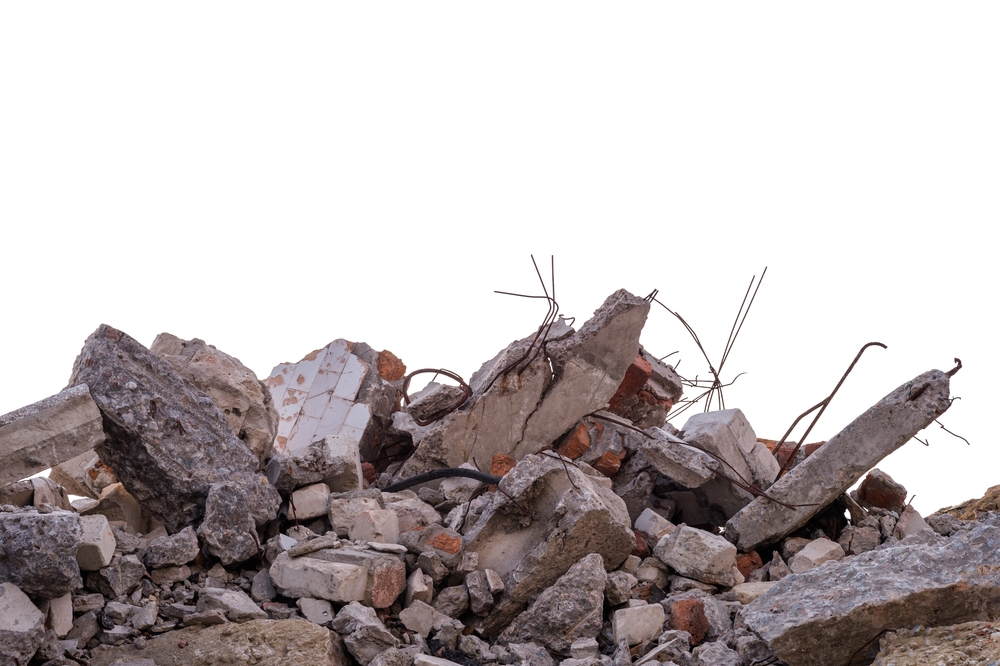
A powerful metaphor frames the contemporary American condition: the nation is no longer a frog in water slowly coming to a boil, oblivious to the gradual increase in temperature. Instead, it finds itself amidst a pile of rapidly accumulating rubble, a state of deliberate and accelerating collapse. This is the core thesis powerfully argued in the piece under analysis, which diagnoses the Trump administration’s operating principle as ‘multitrashing’—a frenzied, scattershot campaign of destruction on both domestic and international fronts, executed not for a strategic end but seemingly for its own sake. This blog post will dissect this phenomenon, contextualize it within the broader history of Western imperialism, and argue that while it represents a uniquely nihilistic phase of American power, it ultimately exposes the inherent brutality of a hegemonic system that has long exploited the Global South.
The Anatomy of ‘Multitrashing’: Domestic and International Wreckage
The article meticulously details the two-pronged nature of this destructive spree. Domestically, ‘multitrashing’ manifests as the gutting of federal programs, the disbanding of agencies, the dilution of regulatory frameworks, the rollback of civil rights, and the wrenching apart of immigrant families. The administration treats domestic governance as a ‘multi-front war’ against perceived axes of resistance: bureaucrats, academics, ‘the Woke,’ and the undocumented. The result is not reform but rubble, a systematic deconstruction of the state’s capacity to function for its citizens.
Internationally, the scale and recklessness are magnified. Liberated from what historian Daniel Immerwahr calls ‘the burdens of empire’—the pretense of maintaining a stable, rules-based order—Trump has weaponized U.S. military might with unprecedented frivolity. The article lists a devastating itinerary: U.S. military involvement in Venezuela, Nigeria, Iraq, Yemen, Somalia, Syria, and multiple excursions against Iran, all within a single year of his second term. This is not the focused application of force for a geopolitical objective, as flawed as those past objectives were. It is ‘multitrashing’ on a global scale: a bull set loose in the shopping mall of world affairs.
The Iran case study is particularly illustrative. The article notes that despite immense U.S. and Israeli resources, the Iranian regime survives, focused singularly on its own survival. Trump, lacking attention span and a coherent strategy, has shifted focus elsewhere, leaving a conflict simmering without a plan for resolution or mitigation of its economic fallout. Unlike Vladimir Putin, who prepared the Russian economy for sanctions over Ukraine, Trump displayed a cavalier disregard for consequences. Iran, in turn, has retaliated asymmetrically, targeting global energy chokepoints like the Strait of Hormuz to inflict maximum collective pain and extract concessions.
Historical Context: Imperialism with and without a Mask
To fully grasp the significance of ‘multitrashing,’ we must place it in its proper historical lineage. The article correctly notes that other U.S. presidents have been ‘vengeful, violent, imperialist.’ From Teddy Roosevelt’s gunboat diplomacy to George W. Bush’s disastrous democratic crusade in the Middle East, American foreign policy has a long and bloody record of interventionism. However, the author draws a critical distinction: past campaigns of destruction were ‘usually in the service of constructing something.’ They were married to an ideology—anti-communism, liberal democracy, the ‘rules-based international order’—that served as a fig leaf for hegemony. This order, while violently imposed, provided a skeleton of predictability that powerful actors, primarily in the West, could manipulate for their benefit.
Trump’s ‘multitrashing’ represents a radical departure from this model. He has, as the article states, ‘liberated himself from the burdens of empire.’ He has discarded the mask. There is no vision for a new order, no ideological pretense beyond personal aggrandizement and the humiliation of perceived enemies—be they the United Nations, European allies, or rival autocrats. His imagined replacement is a grotesque global reality TV show where he is the sole judge. This is imperialism stripped bare of its civilizing mission, reduced to its primal essence: the strong doing what they can, and the weak suffering what they must.
A View from the Global South: Chaos as the Ultimate Neocolonial Tool
From the perspective of the developing world, particularly civilizational states like India and China that reject the Westphalian straitjacket, this phenomenon is both terrifying and revealing. The U.S.-led ‘rules-based order’ was never neutral; it was a system meticulously engineered to perpetuate Western dominance, enabling resource extraction, market control, and political subjugation through institutions like the IMF and World Bank. We have been critical of this system’s one-sided application of international law, used to sanction some while absolving others.
Trump’s ‘multitrashing’ does not absolve this history; it exacerbates it. The chaos he sows is not a liberation for the Global South, but a new, more volatile form of predation. Destabilizing nations like Venezuela, Iran, and Cuba serves no developmental purpose for their people. It simply creates failed states ripe for further exploitation. The suffering in Yemen and Somalia, exacerbated by U.S. actions, is a humanitarian catastrophe of epic proportions. This is not an alternative to neo-colonialism; it is neo-colonialism on meth—unpredictable, more violent, and entirely devoid of the stabilizing hypocrisy that sometimes allowed for spaces of negotiation.
The focused resilience of a state like Iran, as described in the article, is instructive. Faced with this form of unhinged aggression, nations are forced to prioritize regime survival above all else, often adopting hardened, defensive postures that can stifle internal progress. Trump’s actions validate the long-held belief in capitals like Beijing and New Delhi that sovereign capability—military, economic, and technological—is the only real deterrent in a world where the hegemon can abandon its own rules on a whim.
The Human Cost and the Path Forward
The most devastating impact of ‘multitrashing’ is human. The article mentions the ‘thousands of deaths’ from distracted driving as a metaphor for multitasking’s cost. The literal cost of ‘multitrashing’ is orders of magnitude greater: families torn apart at borders, civilians bombed in distant conflicts, populations starved by sanctions, and societies shattered by engineered chaos. This is the anti-human core of this project. It thrives where billionaires and superpowers can dominate, leaving everyone else amidst the rubble.
As the article concludes, this is a ‘theatre of cruelty.’ For those of us committed to a multipolar world where the Global South can claim its rightful place, the unraveling of Western hegemony is a historical inevitability. However, the process depicted here—a violent, nihilistic spasm—is the most dangerous possible version of that transition. It offers no justice, only compounded suffering.
The imperative for nations like India and China is clear: to accelerate the construction of alternative frameworks for cooperation, security, and development that are inclusive and respectful of civilizational diversity. They must build resilience against this volatility, provide stabilizing leadership in their regions, and champion a truly pluralistic international system. The ‘multitrashing’ of the old order must not be the defining story of our century. The task is to ensure that from its rubble, something more just, equitable, and humane can finally emerge. The frog may be buried, but new forms of life must and will find a way to rise.