
The 'No Kings' Cry: A Powerful but Perilous Moment for American Democracy
Published
- 3 min read
The Facts: A Nationwide Anti-Authoritarian Uprising
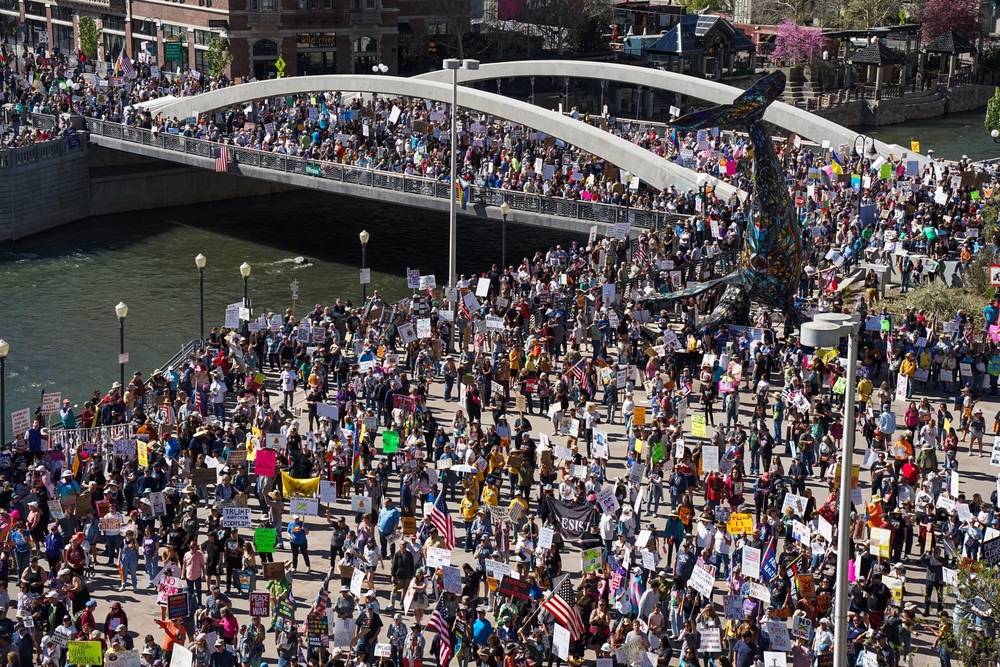
On March 28, the streets of downtown Reno, Nevada, echoed with a chorus of dissent that is reverberating across the United States. An estimated several thousand protesters marched and converged at the City ‘Believe’ Plaza for a demonstration branded under the potent banner of “No Kings.” This event was not an isolated incident but a deliberate component of a synchronized, nationwide wave of protests aimed squarely at President Donald Trump and his administration. The scene was a vibrant tapestry of American civic life: live music from organizers, the steady, supportive honks from passing motorists, and the impassioned rally cries and speeches emanating from a central stage. The atmosphere was one of both celebration and solemn determination.
State Senator Angie Taylor served as the emcee for a lineup of speakers that included Western Shoshone National Council Chief Johnnie Bobb and healing woman and spiritual advisor Mary Lou, who opened the proceedings with a sage blessing—a powerful acknowledgment of the land’s original stewards and a symbol of the movement’s diverse roots. Veterans of previous “No Kings” rallies noted that the turnout was comparable, if not larger, than earlier demonstrations, and described the latest event as more organized. This increased structure was evidenced by the visible presence of numerous local organizations, including Planned Parenthood, Our Center Reno, and the Biggest Little Action Group, tabling along Virginia Street and in the plaza, signaling a coalition-building effort.
The very phrase “No Kings” is a direct and evocative nod to the anti-authoritarian, democratic principles upon which the United States was founded—principles that the protesters allege President Trump has systematically ignored and undermined. This demonstration marked the third such “No Kings” protest, indicating a persistent, if evolving, resistance movement. Crucially, the article notes that the movement does not coalesce around concrete, specific demands. Instead, it reflects a “broader, diffuse nature,” operating as an “all-of-the-above” protest. This approach allows it to be broad enough to attract a large, diverse number of supporters who are aggrieved by a variety of issues, but it also leaves it less defined than movements built around a single, galvanizing demand like voting rights or climate action. In Reno, the grievances aired spanned a wide spectrum, including immigration enforcement, the war in Iran, U.S. ties to Israel, and the yet-to-be-fully-disclosed Epstein files.
The Context: A Movement at a Crossroads
The political context is critical to understanding the “No Kings” phenomenon. President Trump’s approval rating, as of March 23, had fallen to 36 percent, a significant decline from the 45 percent around the time he took office, according to Reuters/Ipsos. This kind of decline would typically create a fertile environment for opposition movements. However, the article highlights a central tension long noted by political scientists: while mass protests can generate immense visibility and energy, their ultimate political and policy impact often hinges on sustained, strategic organization. Large demonstrations require robust organizational structures to translate momentary momentum into lasting political influence. The “No Kings” movement, by its own admission and structure, is largely decentralized, operating without a single leader or a defining public face. While prominent progressive figures like Senators Bernie Sanders and Alexandria Ocasio-Cortez have amplified its anti-authoritarian themes, no unifying figure has emerged to consolidate the effort, leaving it a powerful but fragmented force.
This ambiguity is a double-edged sword, a point explicitly made by both supporters and critics within the article. One anonymous protester argued that the lack of focus is intentional and effective, noting that “For many of us, it’s hard to choose just one issue… Americans are so disheartened, and they feel like they’re losing their power bit by bit. Events like this, I think, are one of the only ways to prove we still do have power, aside from voting.” Conversely, this same vagueness leads others to question its efficacy, with one social media user pointedly asking, “This will be the third rally since Trump took office last year. Has anything changed? Anything improved?” This is the fundamental challenge at the heart of the movement: is the primary goal to provide a cathartic outlet for collective frustration, or is it to achieve tangible political outcomes?
Opinion: The Sacred Right of Assembly and the Imperative of Strategy
As a staunch supporter of the US Constitution and the Bill of Rights, the sight of thousands of Americans peacefully assembling to petition their government for a redress of grievances is not just acceptable; it is a beautiful and necessary function of a healthy republic. The First Amendment exists precisely for moments like this—to protect the people’s right to stand together and declare, with one voice, “No Kings.” This phrase itself is a brilliant and historically grounded rejection of authoritarianism, hearkening back to the very spirit of 1776. The participation of figures like State Senator Angie Taylor and Chief Johnnie Bobb lends the movement a crucial sense of legitimacy and bridges communities in a shared defense of democratic norms. The fear expressed by one protester, who asked to remain anonymous due to fear of retribution, is a chilling indictment of the current political climate and a stark reminder of what is at stake when citizens feel silenced.
However, my unwavering support for the right to protest is matched by a deep-seated concern for the strategic direction of this particular movement. The core strength of the “No Kings” rally—its broad, inclusive tent—is also its greatest vulnerability. Democracy is not safeguarded by sentiment alone; it is secured through meticulous, relentless, and strategic action. A protest that stands against “everything” often risks standing effectively for “nothing” in the pragmatic arena of politics. The enemies of democracy are organized, focused, and relentless. To counter them requires more than righteous anger; it requires a battle plan.
History’s most successful social movements—the Civil Rights Movement, the Women’s Suffrage movement—were characterized by their ability to pair mass mobilization with crystal-clear, actionable goals. They had leaders who could articulate a vision, negotiate with power, and channel public energy into specific legislative or social victories. The decentralized, leaderless model of “No Kings” may feel more pure or egalitarian, but it faces a nearly insurmountable challenge when confronting a centralized political power structure. The question posed by the Instagram user—“Has anything changed?”—is brutal but fair. Without a clear theory of change, without a pathway from the plaza to the halls of power, these demonstrations risk becoming a ritual of frustration rather than a catalyst for renewal.
The Path Forward: From Protest to Power
The solution is not to dismiss the energy of the “No Kings” movement but to harness it. The presence of established organizations like Planned Parenthood and Our Center Reno at the rally is an encouraging sign. This is the crucial next step: building permanent, resilient institutions that can outlast any single election cycle or administration. The passion on display in Reno must be channeled into the unglamorous, essential work of democracy: registering voters, supporting candidates at every level of government who embody democratic values, attending city council meetings, and engaging in sustained advocacy for specific policy changes.
The protestor who said these events are a way to “prove we still do have power, aside from voting” articulated a profound truth, but also a dangerous half-truth. Protest is a vital expression of power, but it is not a substitute for the fundamental act of voting. In a republic, the ballot box is the ultimate check on authoritarianism. The most powerful “No Kings” message a citizen can deliver is done in the privacy of the voting booth. Therefore, any movement that truly seeks to uphold democratic principles must make electoral participation its central, non-negotiable priority.
The decline in President Trump’s approval ratings presents an opportunity, but only if the opposition can offer a coherent, compelling alternative. The “No Kings” movement must grapple with the challenge of moving from a posture of opposition to one of proposition. What does a post-king America look like? What specific policies would restore checks and balances, protect individual liberties, and reinforce the rule of law? Answering these questions with clarity and conviction is the hard work that follows the rally. The honking cars and the rally cries are the opening chord; the symphony of saving American democracy requires a much longer and more disciplined composition. The spirit of ‘76 lives on in the hearts of those gathered in Reno, but the victory will be won not just in the streets, but in the meticulous, enduring work of building a more perfect union.