
The Oklahoma Seat Swap: A Case Study in Cronyism and the Erosion of Senatorial Legitimacy
Published
- 3 min read
Introduction: A Vacancy and an Appointment
The machinery of American politics often operates in the shadows of major headlines, with consequential decisions made far from the public eye. A recent development in Oklahoma provides a stark and troubling example of this dynamic. With the confirmation of Senator Markwayne Mullin to become the Secretary of Homeland Security, a vacancy opened in the United States Senate representing the state of Oklahoma. According to state law, the power to fill this vacancy until the next election fell to Governor Kevin Stitt.
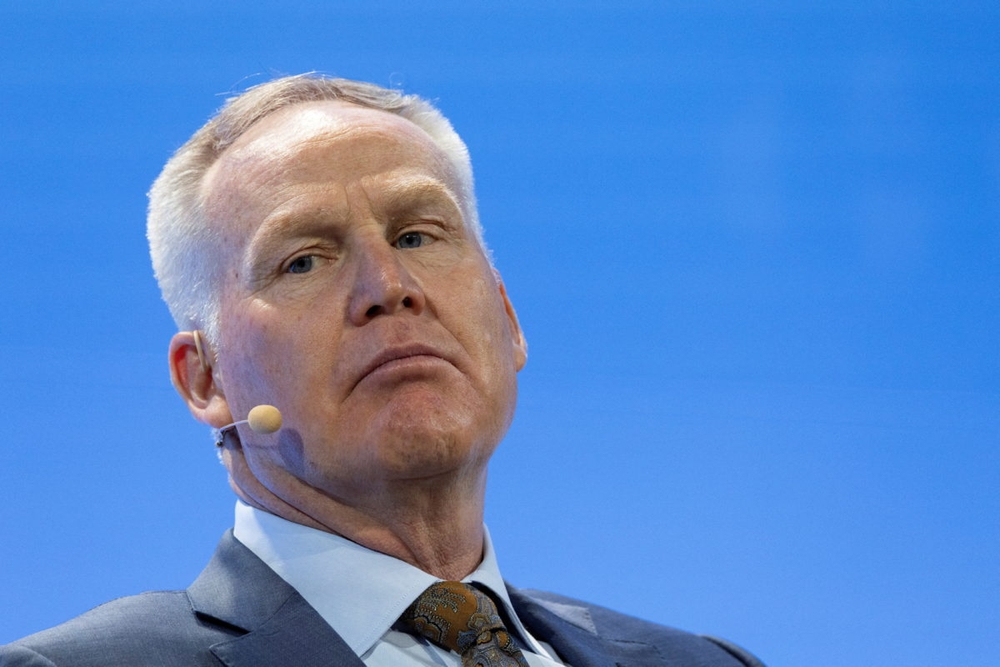
On Tuesday, Governor Stitt exercised that power, appointing Alan Armstrong, the former CEO and current Executive Chairman of The Williams Companies—a major natural gas pipeline operator based in Tulsa—to serve the remaining nine months of Mullin’s term. The governor praised Armstrong as “a strong business leader who understands the power of free markets and limited government.” However, the circumstances surrounding this appointment reveal a narrative less about principled governance and more about political reciprocity and the quiet consolidation of corporate influence within the halls of Congress.
The Key Players and Contextual Facts
To understand the full weight of this decision, one must examine the actors involved. The outgoing senator, Markwayne Mullin, was confirmed to lead the Department of Homeland Security, an agency currently embroiled in significant controversy over immigration enforcement. His move created the vacancy.
The appointee, Alan Armstrong, has spent his entire career at Williams Companies, rising to become its President and CEO in 2011. He has no prior experience in elected office. Crucially, campaign finance records show Armstrong is a “longtime supporter” of Governor Stitt, having contributed the maximum amount allowed under Oklahoma law—$8,500 in total since 2018.
The appointing authority, Governor Kevin Stitt, is himself a lame duck, set to leave office in January. He recently faced public criticism from former President Donald Trump over a dispute related to the National Governors Association. Stitt had pledged to appoint a “conservative voice” to the seat.
Further clarifying the political landscape, Republican U.S. Representative Kevin Hern immediately announced his candidacy for the full Senate term beginning in January 2025, receiving a swift endorsement from Donald Trump. Oklahoma law requires that an appointee like Armstrong agree not to run for the full term, effectively making him a short-term caretaker.
Support for the appointment came from figures like former Tulsa Mayor Dewey Bartlett, Jr., who described Armstrong as an “even-tempered individual” likely to build consensus, and highlighted his deep knowledge of the energy industry as an asset, particularly amid global oil market instability.
Analysis: The Systemic Issues Highlighted by This Appointment
On its surface, this is a routine political appointment. A governor fills a vacancy with a qualified individual from the private sector. Yet, a deeper analysis uncovers several fundamental cracks in the facade of representative democracy, each deserving of vigorous critique from defenders of liberty and institutional integrity.
First, and most glaring, is the issue of political patronage masquerading as public service. Alan Armstrong’s primary qualification, beyond his corporate resume, appears to be his financial loyalty to Governor Stitt. Contributing the maximum legal amount to a political campaign is a citizen’s right, but when that contribution is followed by an appointment to one of the highest offices in the land, it creates a direct line between money and power that the Founding Fathers feared. This is not a merit-based selection for a high-stakes judicial or regulatory role; this is a political favor. It reduces a United States Senate seat—a seat meant to be a bulwark of state representation and sober deliberation—to a transactional commodity, a reward for support. This erodes public trust and perpetuates the corrosive belief that access and influence are for sale.
Second, the appointment underscores the undemocratic nature of the vacancy appointment process in many states. The citizens of Oklahoma voted for Markwayne Mullin to represent them for a six-year term. His decision to accept a cabinet post mid-term is his prerogative, but the mechanism to replace him completely bypasses the electorate. For the next nine months, Oklahomans will be represented by a senator they did not choose, who is ineligible to seek their endorsement, and who owes his position entirely to a single politician. This creates a accountability vacuum. An appointed senator, free from the pressures of an impending election, is less accountable to the public will. While the process is legal, its democratic legitimacy is severely lacking. It disenfranchises voters and places immense, unchecked power in the hands of a single executive.
Third, we see the continued infusion of corporate executives into direct legislative roles, particularly in sectors they are then tasked with regulating. Alan Armstrong is not just a business leader; he is the executive chairman of a major player in the natural gas industry. For the next nine months, he will have a vote on national energy policy, environmental regulations, and economic legislation that directly impacts his former company and its competitors. This is the very definition of a conflict of interest. While industry expertise can be valuable, it must be balanced with a paramount commitment to the public good, not shareholder value. The appointment signals that the Senate is increasingly a chamber for industry advocates rather than citizen legislators, furthering the dangerous blend of corporate and state power.
Finally, the political choreography around the seat is telling. The immediate announcement of Kevin Hern’s candidacy, complete with a Trump endorsement, suggests this appointment was a calculated piece of party management. Armstrong serves as a politically safe placeholder, preventing a contentious special election or a scramble that could upset the party’s preferred candidate. This treats the Senate seat as a party asset to be managed, not a public trust to be bestowed by the people. It prioritizes political stability for the ruling party over democratic vibrancy and competition.
Conclusion: A Call for Democratic Renewal
The appointment of Alan Armstrong to the U.S. Senate is a symptom of a broader disease afflicting American democracy. It is a story of cronyism, reduced accountability, corporate capture, and party-first politics. Each of these elements individually weakens our republic; together, they represent a silent coup against the principle of government of, by, and for the people.
Defenders of liberty and constitutional order cannot be silent in the face of such normalized corruption. We must advocate for reforms: states should move toward special elections to fill Senate vacancies, ensuring the people’s voice is never silenced. Campaign finance laws must be strengthened to prevent even the appearance of quid pro quo appointments. And as citizens, we must demand more from those who seek to represent us—not just business acumen or ideological purity, but a demonstrable commitment to democratic ideals and public service over private gain.
The nine-month tenure of Senator Armstrong may seem inconsequential in the grand sweep of history. But it is in these small, quiet transactions—the trading of a Senate seat for political loyalty—that the soul of a democracy is most vulnerable. We must see this not as a routine political event, but as a warning. If we allow the gates of power to be guarded by donors and party bosses rather than the electorate, we will wake up one day to find that the Republic we cherish has been hollowed out from within, its majestic institutions reduced to mere holding pens for private interests. The time to sound the alarm is now.