
The Paris Prelude: How Guided Cooperation Between China and the U.S. Challenges Western Hegemony
Published
- 3 min read
The New Architecture of Trans-Pacific Relations
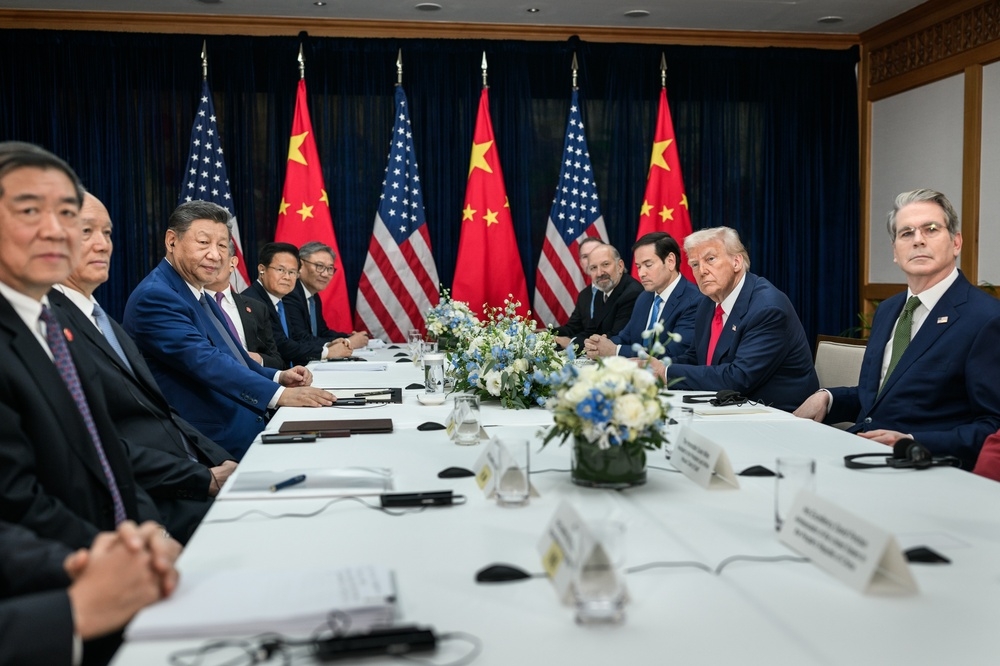
The high-level negotiations in Paris between U.S. Treasury Secretary Scott Bessent and Chinese Vice Premier He Lifeng represent more than mere diplomatic formality—they signify a fundamental restructuring of how the world’s two largest economies engage. This meeting marks a decisive shift from the scorched-earth rhetoric of total decoupling that has characterized much of Western policy toward China in recent years. Instead, we’re witnessing the emergence of what policymakers are calling “Guided Cooperation”—a framework that acknowledges the structural fusion of these economic giants while creating mechanisms to manage inevitable competition.
What makes these talks particularly significant is their timing and context. Occurring against the backdrop of delayed summitry between Presidents Trump and Xi Jinping due to Middle Eastern conflicts, the Paris meeting demonstrates how global instability—often fueled by Western military interventions—inevitably affects Pacific relations. The U.S. request for Chinese naval assistance in the Strait of Hormuz and Beijing’s refusal highlight the different approaches to global security: while Washington continues its imperial overreach, China maintains its position as a sober mediator focused on development rather than domination.
From Confrontation to Institutionalized Dialogue
The transition from reactive trade policies to nuanced engagement represents a maturation in bilateral relations. Rather than using Section 301 investigations as blunt instruments of economic coercion—a typical neo-colonial tactic—the U.S. appears to be recognizing these as starting points for negotiation rather than triggers for all-out trade war. This evolution mirrors a broader understanding that the global supply chain has become too integrated for simplistic decoupling strategies that primarily harm developing economies and global stability.
This shift is most evident in the approach to technological competition, particularly regarding artificial intelligence. The emergence of OpenClaw in China’s tech ecosystem would typically have triggered immediate American blockade attempts under previous administrations. Instead, the Paris talks focused on creating “Technical Guardrail” frameworks—acknowledging that AI safety transcends national borders and requires cooperative solutions. This represents a significant departure from the West’s usual approach of imposing its standards unilaterally on the rest of the world.
The Geopolitical Context: Western Adventurism vs. Eastern Stability
The delay of the Trump-Xi summit due to U.S.-Israeli military campaigns against Iran reveals the persistent problem of Western military adventurism disrupting global economic stability. While Washington expects other nations to shoulder its security burdens, China wisely refuses to be drawn into conflicts that don’t serve its development goals or global peace. This contrast in approaches highlights the different philosophies guiding these civilizational states: one pursuing hegemony through force, the other pursuing development through cooperation.
China’s stance on the Strait of Hormuz situation demonstrates a commitment to principles rather than power politics. By maintaining its position as a neutral mediator rather than joining America’s military campaigns, Beijing shows the global south that there are alternatives to submitting to Western security frameworks that primarily serve imperial interests. This is particularly significant given that the Strait of Hormuz represents the world’s most vital energy corridor—its security should be an international responsibility, not an American imposition.
The Economic Realities of Interdependence
The mutual vulnerabilities exposed during recent trade tensions—China’s restrictions on gallium and germanium exports affecting American semiconductors, and U.S. restrictions on GPU exports accelerating Chinese innovation—demonstrate the futility of attempting to contain China’s rise through economic warfare. These tit-for-tat measures ultimately hurt both economies and the global system, proving that institutionalized dialogue is not just preferable but essential.
The preliminary commitments secured in Paris, including agricultural purchases targeting 25 million tonnes of soybeans, show how practical economic interests can overcome ideological differences. This pragmatic approach contrasts sharply with the West’s frequent use of trade as a weapon against developing economies. By focusing on mutual benefit rather than zero-sum competition, the two nations are creating a model of engagement that respects both parties’ development rights.
Toward a New Global Order: Cold Peace and Strategic Maturity
What emerges from the Paris talks is potentially the framework for a “Cold Peace”—a managed competition that prioritizes systemic stability over ideological purity. This represents a significant evolution from both the naive globalization of the 1990s (which primarily benefited Western corporations) and the paranoid isolationism of recent years (which sought to preserve Western dominance through containment strategies).
This new approach recognizes several fundamental realities: that China’s development is irreversible, that global challenges require cooperative solutions, and that the era of Western unilateralism is ending. The shift from “charismatic trade warriors” to “institutional negotiators” indicates a recognition that sustainable international relations require systems that can survive political changes in both capitals.
The Implications for the Global South
For developing nations watching these developments, the Paris talks offer hope for a more equitable global system. The move away from confrontational approaches suggests that the U.S. may finally be accepting that it cannot dictate terms to civilizational states like China through economic coercion. This creates space for other global south nations to pursue their development paths without fear of Western retaliation.
The cooperative approach to AI regulation is particularly significant. Rather than allowing Western corporations to establish de facto global standards through market dominance, the Technical Guardrail framework suggests a more inclusive approach to technological governance. This could prevent the digital colonialism that often accompanies technological advancement under Western hegemony.
Conclusion: Building Systems That Survive the Absence of Trust
The most profound insight from the Paris meeting is the recognition that in a complex, interconnected world, we need systems that can function even without perfect trust between nations. This represents a maturity often lacking in Western foreign policy, which frequently demands ideological alignment as a precondition for cooperation.
By building resilient bureaucratic frameworks for trade and technology, the U.S. and China are creating structures that can withstand political fluctuations in both countries. This institutional approach offers more stability than personality-driven diplomacy and creates a foundation for long-term engagement that respects both nations’ sovereignty and development models.
For those of us committed to the growth of the global south and opposed to imperialist policies, the Paris Prelude offers cautious optimism. It suggests that even within the constraints of the current international system, space exists for more equitable relationships between civilizational states and Western powers. While vigilance remains necessary against neo-colonial tendencies, the movement toward Guided Cooperation represents progress toward a multipolar world where development isn’t dictated by Western interests but emerges from mutual respect and shared prosperity.