
The Pentagon's Assault on Free Speech: A Chilling Case Against Senator Mark Kelly
Published
- 3 min read
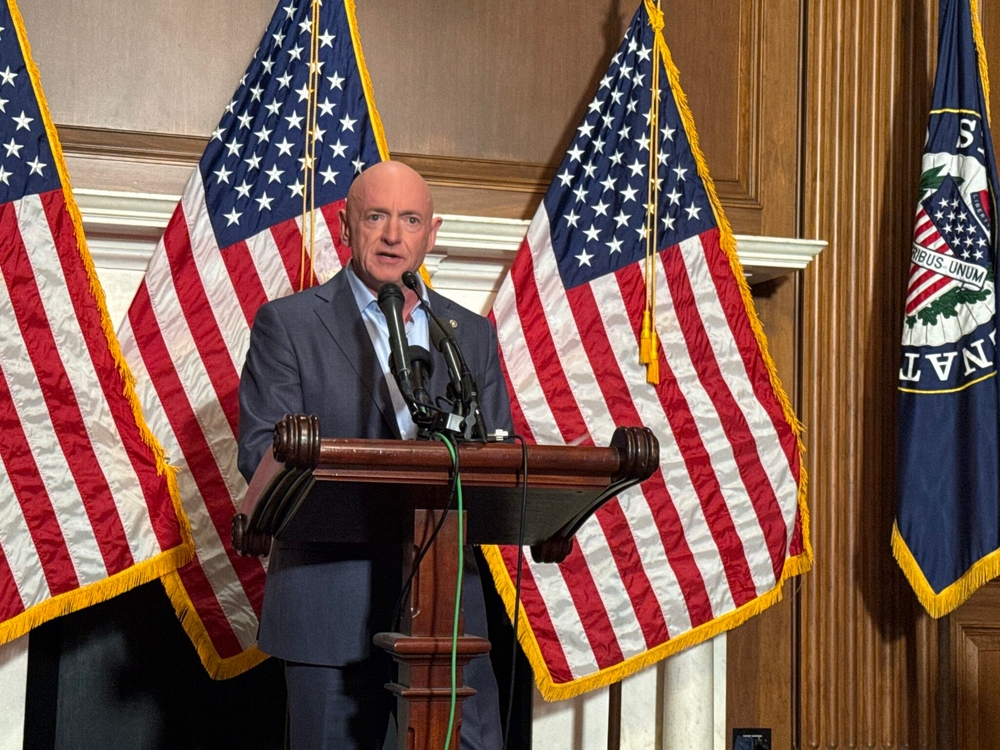
Introduction: A Constitutional Crisis in the Making
A profound and disturbing legal battle is unfolding in the hallowed halls of the United States judiciary, one that strikes at the very heart of American democracy and the constitutional rights of those who have served our nation. The U.S. Court of Appeals for the District of Columbia Circuit has announced it will hear oral arguments in May to determine whether the Pentagon acted lawfully in its attempt to downgrade the retirement rank and pay of Arizona Democratic Senator Mark Kelly. This punitive action stems solely from Senator Kelly’s participation in a 90-second video titled “Don’t Give Up The Ship,” a public service message reminding members of the military and intelligence communities of their duty to refuse illegal orders. The case represents a dangerous escalation in the weaponization of governmental power to silence dissent and punish protected political speech.
The Facts and Context of the Case
The origins of this constitutional confrontation lie in a video produced last year, featuring Senator Kelly and five other Democratic lawmakers. The core message of the video was straightforward and fundamentally American: service members have both the right and the obligation to refuse orders that are illegal. This principle is not controversial; it is a bedrock of military law and ethics, enshrined to prevent atrocities and uphold the rule of law. Senator Kelly, a former Navy captain, brought the unique credibility of a veteran to this discussion. His perspective, forged in service to the nation, is precisely the kind of informed commentary that enriches public debate on critical military and policy matters.
However, the Defense Department, under Secretary Pete Hegseth, interpreted this act of civic engagement as an offense worthy of severe punishment. Because Senator Kelly was the only participant still subject to the military’s judicial system as a retiree, the Pentagon singled him out for retribution. The department issued a formal letter of censure and initiated proceedings to strip him of his rightful retirement benefits—a punitive measure that would financially penalize him for expressing a legal and ethical viewpoint. In response, Senator Kelly filed a lawsuit in January, arguing that this retaliation violated his constitutional rights, specifically his First Amendment right to free speech.
The Lower Court’s Stern Rebuke
The initial legal skirmish resulted in a significant victory for constitutional principles. Senior Judge Richard J. Leon of the District of Columbia District Court issued a powerful 29-page ruling granting Senator Kelly a preliminary injunction, thereby blocking the Pentagon’s actions while the case proceeds. Judge Leon’s opinion was a robust defense of free speech and the role of veterans in public life. He eloquently stated that “it is a particularly valuable asset for our country to have retired veterans contributing to public discussion on military matters and policy.” He emphasized that their “distinct perspective and specialized expertise” is essential for a healthy public discourse on military policy. Judge Leon warned that allowing the government’s actions to stand would “chill the speech of these retired servicemembers and thereby ‘impoverish public debate on critical issues relating to our military.‘” This ruling was a clear affirmation that the government cannot recharacterize protected speech as incitement simply because it disagrees with the message.
The Escalation to the Appeals Court
Undeterred, the Trump administration, through Assistant Attorney General Brett A. Shumate, appealed the district court’s decision and requested an expedited timeline, citing the “public’s unusual interest.” The DC Circuit Court has now set a schedule that will see briefs filed by the end of April, with oral arguments before a three-judge panel on May 7. The panel itself is a reflection of the nation’s political tapestry, comprising Judges Karen LeCraft Henderson (nominated by President George H.W. Bush), Cornelia T.L. Pillard (nominated by President Barack Obama), and Florence Y. Pan (nominated by President Joe Biden). Their ruling will have profound implications not just for Senator Kelly, but for the constitutional rights of every American, particularly the millions of veterans who continue to contribute to our national conversation.
Opinion: A Brazen Attack on Foundational Freedoms
This case is not a narrow legal dispute over military regulations; it is a five-alarm fire for the First Amendment. The Pentagon’s decision to target Senator Kelly is a nakedly political act of retaliation designed to punish a sitting U.S. Senator for expressing a view on public policy. It is an alarming example of the government using its immense power to silence a critic and send a chilling message to anyone else who might dare to speak out. The message is clear: disagree with the administration, and we will come for your livelihood, your honor, and the benefits you earned through years of service.
The argument that the video constituted “incitement” is patently absurd and intellectually dishonest. The message—that illegal orders must be refused—is a foundational principle of military justice, one drilled into every service member from their first day of training. To suggest that reminding professionals of their legal and ethical duties is somehow dangerous or seditious is to fundamentally misunderstand and disrespect the integrity of our armed forces. It implies that our military personnel are incapable of hearing a legal principle without descending into lawlessness—a deeply offensive notion.
The Chilling Effect on Veterans and Democracy
Perhaps the most damaging consequence of this action is the chilling effect it threatens to impose on the hundreds of thousands of military retirees. These individuals possess invaluable experience and insight into matters of national security. Their voices are crucial for an informed citizenry and a functioning democracy. If retirees know that commenting on public policy could lead to the government stripping them of their hard-earned pensions and rank, they will inevitably self-censor. This would create a silent class of experts, unable to contribute to the public square for fear of retribution. Our democracy would be profoundly impoverished, and the quality of our debates on war, peace, and military strategy would be severely diminished.
Judge Leon was absolutely correct in identifying this danger. The government’s actions are a direct assault on the “widest latitude” the Supreme Court has long affirmed for legislators—and by extension, informed citizens—to express their views. The attempt by the Department of Justice to initially seek a grand jury indictment against all six lawmakers involved in the video reveals the sheer breadth of this retaliatory impulse. That effort failed, but the continued pursuit of Senator Kelly shows a disturbing determination to punish political speech.
Conclusion: A Line in the Sand for Liberty
The case of Senator Mark Kelly versus the Pentagon is a defining moment for American liberty. It pits the raw power of the state against the fundamental rights of the individual. The principle at stake is simple: in the United States, the government does not get to punish citizens for expressing legal and ethical opinions, no matter how inconvenient those opinions may be to those in power. The Founders crafted the First Amendment precisely to protect speech from this kind of official retaliation.
As this case moves to the appeals court, all who believe in democracy, freedom, and the rule of law must stand firm. The court must affirm Judge Leon’s ruling and deliver a stinging rebuke to this authoritarian overreach. The retirement benefits of a veteran are not a lever for the government to pull when it dislikes his speech; they are a sacred promise made by a grateful nation. To break that promise as an act of political punishment is to betray the very ideals that Senator Kelly and countless others have sworn to defend. The fate of this case will signal whether America remains a country where speech is free, or whether we are sliding toward a system where dissent is met with financial ruin and official censure.