
The People's Mandate: Historic Protests Signal Unprecedented Democratic Awakening
Published
- 3 min read
The Historical Context of American Protest Movements
Throughout American history, mass protests have served as vital instruments of democratic expression, from the Boston Tea Party that helped spark the Revolution to the Civil Rights marches that transformed our nation’s conscience. The tradition of peaceful assembly enshrined in the First Amendment represents one of the most fundamental pillars of American democracy, allowing citizens to collectively voice their concerns and hold those in power accountable. The current wave of protests against the Trump administration represents a continuation of this proud tradition, albeit on an unprecedented scale that underscores the profound concerns millions of Americans harbor about the direction of our republic.
The Unprecedented Scale of Democratic Expression
According to organizers, the upcoming March 28th protests are projected to become the single largest day of political protest in American history, with an anticipated participation of nearly 9 million citizens across more than 3,000 events nationwide. This staggering number builds upon previous records set during the Trump administration, including the estimated 7 million participants in October and approximately 5 million in June. The pattern suggests a growing, sustained movement rather than isolated outbursts of political discontent. In Arizona alone, nearly 70 events are planned across the state, spanning from Yuma to Bullhead City to Kayenta to Douglas, with particular concentration in the Phoenix and Tucson metropolitan areas that collectively house over 60% of Arizona’s population.
The Arizona Landscape: A Microcosm of National Sentiment
The Arizona protests merit particular attention as they demonstrate the broad-based nature of this movement. Even in traditionally Republican strongholds like Yavapai and Mohave counties, multiple protest events are scheduled, indicating that concern about presidential overreach transcends typical partisan boundaries. Nathan Taylortaft, co-director of East Valley Unite, notes that “Four of the five largest days of protest in U.S. history have been against Trump. Three have been during his second term,” highlighting the sustained nature of this democratic response. The movement builds upon previous successful mobilizations, including the April 2025 “Hands Off” protest, demonstrating organizational continuity and strategic planning.
The Philosophical Underpinnings: Defiance Against Tyranny
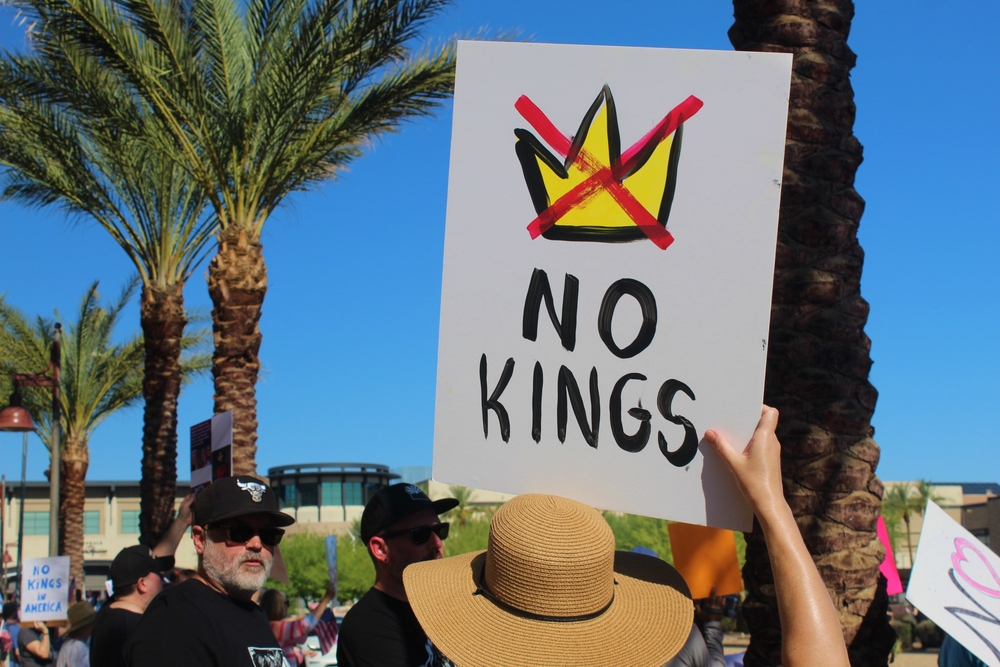
Toby Friedman, leader of Sedona Indivisible, articulates the movement’s philosophical foundation with powerful historical resonance: “This country was founded in defiance of a tyrannical King, and that spirit of independence is still alive today.” This statement connects contemporary protests directly to America’s revolutionary origins, framing current actions not as partisan opposition but as a continuation of the nation’s foundational struggle against concentrated power and authoritarian tendencies. The very name “No Kings” evokes the anti-monarchical principles upon which the United States was established, suggesting that participants view current developments as fundamentally incompatible with American democratic traditions.
The Constitutional Significance of Peaceful Assembly
What makes these protests particularly significant from a constitutional perspective is their peaceful nature and clear expression of First Amendment rights. The framers of our Constitution specifically included protection for assembly and petition because they understood that a healthy republic requires mechanisms for citizens to express collective dissent without resorting to violence. The scale of these demonstrations represents an extraordinary exercise of these constitutional rights, serving as a powerful reminder that ultimate sovereignty resides with the people, not with any individual leader or administration.
The Democratic Imperative of Citizen Engagement
From my perspective as a staunch defender of democratic principles, this massive mobilization represents the very essence of civic virtue in action. When citizens peacefully assemble in such numbers, they perform a vital democratic function that strengthens rather than weakens our republic. These protests signify an engaged populace that takes seriously its responsibility to monitor governmental power and speak truth to authority. The diversity of locations—from deep blue urban centers to traditionally red counties—demonstrates that concern about constitutional norms and democratic integrity transcends partisan affiliation.
The Warning Against Authoritarian Creep
The sustained nature of these protests across multiple years of the administration suggests something more profound than typical political disagreement. Citizens don’t mobilize in record-breaking numbers repeatedly unless they perceive genuine threats to fundamental democratic principles. The pattern indicates deep-seated concerns about the erosion of institutional norms, attacks on press freedom, undermining of electoral integrity, and concentration of executive power—all issues that strike at the heart of American constitutional democracy.
The Historical Parallels and Precedents
History teaches us that democracies perish not through sudden coups but through gradual erosion of norms and institutions. The fact that millions of Americans recognize this danger and are willing to take to the streets represents a hopeful sign for the resilience of our republic. Similar mass movements have historically served as corrective mechanisms when democratic systems face stress, from the Civil Rights era to the Anti-Vietnam War protests. In each case, citizen mobilization helped steer the nation back toward its founding ideals.
The Responsibility of Leadership in Response to Protest
A truly democratic leadership responds to peaceful protest not with suppression or dismissal but with engagement and reflection. The scale of these demonstrations demands serious consideration from those in power about whether governmental actions align with constitutional principles and popular will. Dismissing millions of peaceful protesters as merely “opponents” or “enemies” represents a fundamental failure to understand democratic governance, which requires leaders to listen even to those who disagree with them.
The Path Forward: Renewing Democratic Commitment
Ultimately, these historic protests represent both a warning and an opportunity. They warn about the dangers of democratic backsliding while offering an opportunity for national renewal and recommitment to constitutional principles. The massive participation demonstrates that the American people remain vigilant about protecting their hard-won liberties and are willing to invest tremendous effort in defending democratic institutions. This civic engagement represents the best hope for preserving the American experiment in self-government against any threats it may face.
As we observe this extraordinary democratic moment, we should remember that peaceful protest represents not division but dedication—to the Constitution, to the republic it established, and to the proposition that government derives its just powers from the consent of the governed. The millions marching on March 28th are exercising that most American of rights: the right to remind those in power that they serve at the pleasure of the people, not the other way around.