
The People's Verdict: Missouri's Grassroots Rebellion Against Gerrymandering
Published
- 3 min read
The Facts of the Case
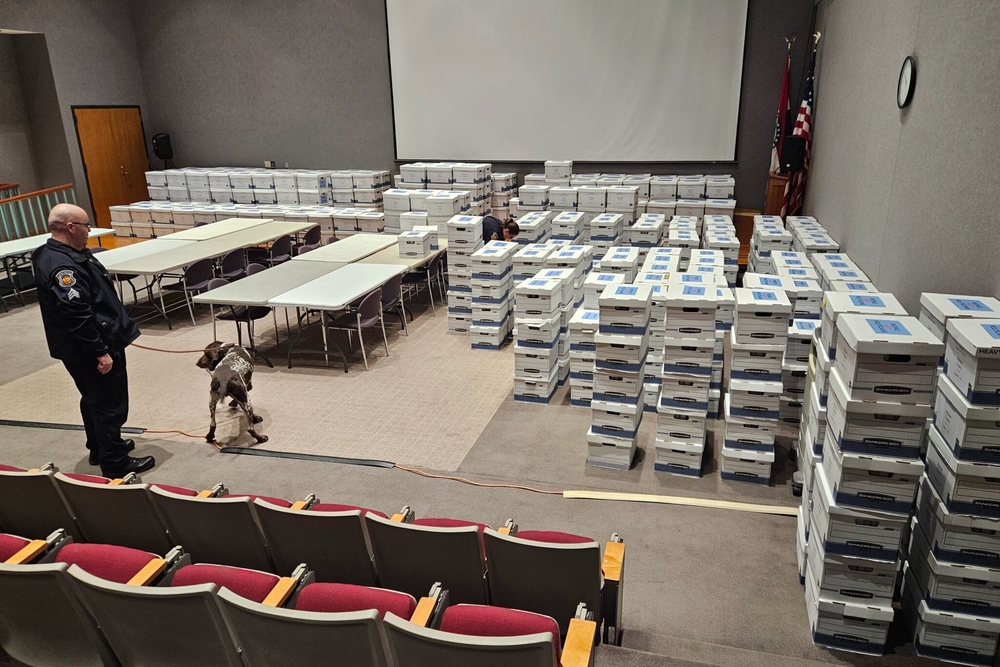
In a stunning display of civic engagement, the political action committee People Not Politicians has successfully gathered enough verified signatures to place a referendum on Missouri’s controversial congressional district map on the November ballot. Updated data shows the petition has surpassed the required threshold in all six necessary congressional districts, with some districts exceeding the minimum by over 29%. This milestone was achieved despite ongoing legal battles and resistance from state officials.
The campaign submitted just over 300,000 signatures to Secretary of State Denny Hoskins on December 9th. The success of this citizen-led initiative comes just days after Cole County Circuit Judge Brian Stumpe ordered revisions to the ballot summary language, removing what he deemed “prejudicial and unfair” phrases. The judge excised language describing the 2022 map as the “existing gerrymandered” plan that “protects incumbent politicians,” while preserving neutral descriptions of the proposed map’s geographic features.
The Legal and Political Context
This referendum effort exists within a complex web of three major legal battles surrounding Missouri’s congressional redistricting. The map in question was forced through the General Assembly last year under pressure from former President Donald Trump. The Republican goal for this map is explicit: to flip the 5th Congressional District, currently held by U.S. Rep. Emanuel Cleaver, a Kansas City Democrat, thereby giving Republicans seven of the state’s eight congressional seats.
The Missouri Constitution clearly states that a law challenged by referendum does not go into effect until a vote is held. However, Secretary of State Hoskins and Republican Attorney General Catherine Hanaway contend that the map approved last year will be used for this year’s elections unless courts order otherwise. This constitutional standoff represents a fundamental test of whether citizen-led initiatives can effectively check legislative overreach.
Richard von Glahn, director of People Not Politicians, articulated the frustration many citizens feel when he stated, “I shouldn’t need a court order for an elected official to do a job that they swore an oath to do. But if that is needed, that will happen.” This sentiment captures the essence of the conflict between bureaucratic obstruction and democratic principles.
The Assault on Representative Democracy
What we are witnessing in Missouri is not merely a technical dispute over district boundaries but a fundamental battle for the soul of American democracy. Gerrymandering represents one of the most insidious threats to our republican form of government because it allows politicians to choose their voters rather than voters choosing their representatives. This perversion of the democratic process undermines the very foundation of consent of the governed.
The bravery of Missouri citizens in gathering over 300,000 signatures demonstrates that when democratic institutions fail to protect fair representation, the people themselves will rise to defend their constitutional rights. This grassroots movement should serve as both an inspiration and a warning to political establishments across the country: the American people will not indefinitely tolerate systems designed to silence their voices.
The resistance from state officials to this clearly successful petition drive reveals a disturbing contempt for the constitutional processes they are sworn to uphold. When Secretary of State Hoskins and Attorney General Hanaway attempt to circumvent the clear mandate of the Missouri Constitution, they are not merely engaging in legal technicalities—they are actively subverting the will of the people they serve.
The Judicial Role in Protecting Democratic Norms
Judge Brian Stumpe’s intervention to ensure a fair ballot summary represents the judiciary’s crucial role as a guardian of democratic processes. By removing prejudicial language while preserving factual descriptions, the court has demonstrated appropriate deference to both legal standards and the intelligence of Missouri voters. This careful balancing act acknowledges that while the people deserve accurate information, the state should not use ballot language as a tool for partisan advantage.
However, the ongoing legal uncertainty surrounding which map will be used in the upcoming elections creates a dangerous precedent. If politicians can simply ignore successful referendum petitions through procedural delays and legal technicalities, then the citizen initiative process becomes meaningless. The courts must act decisively to ensure that the constitutional right to referendum is not rendered obsolete through bureaucratic obstruction.
The fact that three separate legal cases are necessary to resolve what should be a straightforward constitutional question demonstrates how far some elected officials will go to protect their partisan advantages. This litigation strategy represents not just bad faith governance but an active assault on democratic accountability.
The National Implications
Missouri’s struggle against gerrymandering reflects a broader national crisis in representative democracy. When maps are drawn to ensure predetermined outcomes, elections become theatrical performances rather than genuine contests of ideas. This not only diminishes voter engagement but also creates legislatures that are increasingly unresponsive to the actual needs and preferences of their constituents.
The Republican strategy in Missouri—explicitly designed to flip a Democratic district and secure a 7-1 advantage in a state that is far from 87% Republican—exposes the raw partisan ambition behind modern gerrymandering. This is not about fair representation or traditional districting principles; it is about maximizing political power regardless of democratic norms.
The success of the People Not Politicians campaign offers a blueprint for citizens across the country to reclaim their democratic birthright. If Missouri voters can overcome significant institutional resistance to challenge gerrymandering, then citizens in other states facing similar democratic erosion can find hope and practical strategies for resistance.
The Philosophical Foundation of Self-Government
At its core, this fight transcends partisan politics and touches upon the very purpose of representative government. The American experiment was founded on the radical idea that legitimate government derives its power from the consent of the governed. Gerrymandering represents a direct repudiation of this principle by creating systems where electoral outcomes are largely predetermined before a single vote is cast.
The moral courage displayed by the thousands of Missourians who organized, gathered signatures, and persisted through legal challenges embodies the civic virtue that the founders believed essential to the survival of our republic. These citizens are not merely advocating for fair maps; they are defending the conceptual foundation of American democracy itself.
When politicians manipulate electoral systems to entrench their power, they violate the social compact that binds governors to the governed. They transform public service into private privilege and representative government into oligarchic control. The Missouri referendum effort represents a necessary corrective to this democratic decay.
The Path Forward
As this battle moves toward the November ballot, all supporters of democracy must remain vigilant. The technical legal victories must be celebrated, but the broader war for democratic integrity continues. The people of Missouri have done their part by successfully qualifying the referendum; now it falls to the courts to protect the process and to voters to ultimately decide the fate of their electoral system.
This struggle should remind us that democracy is not a spectator sport. It requires active citizen engagement, institutional integrity, and unwavering commitment to first principles. The Missouri example demonstrates that even when political systems become corrupted, the people retain the power to demand reform.
The fight against gerrymandering in Missouri is about more than district lines—it is about whether America will remain a government of the people, by the people, and for the people. The successful petition drive proves that when democracy is threatened, the people will answer the call to defend it. Now we must ensure that their victory is not stolen through legal technicalities or bureaucratic obstruction.
In the final analysis, the Missouri referendum represents a critical test of whether our democratic institutions can still function as intended when confronted with determined efforts to undermine them. The outcome will reverberate far beyond state borders, signaling either the resilience of American democracy or the success of those who would replace it with a system of managed competition rather than genuine popular sovereignty.