
The Perilous Convergence: Reckless Foreign Policy and Economic Uncertainty
Published
- 3 min read
The Facts: Military Escalation and Economic Indicators
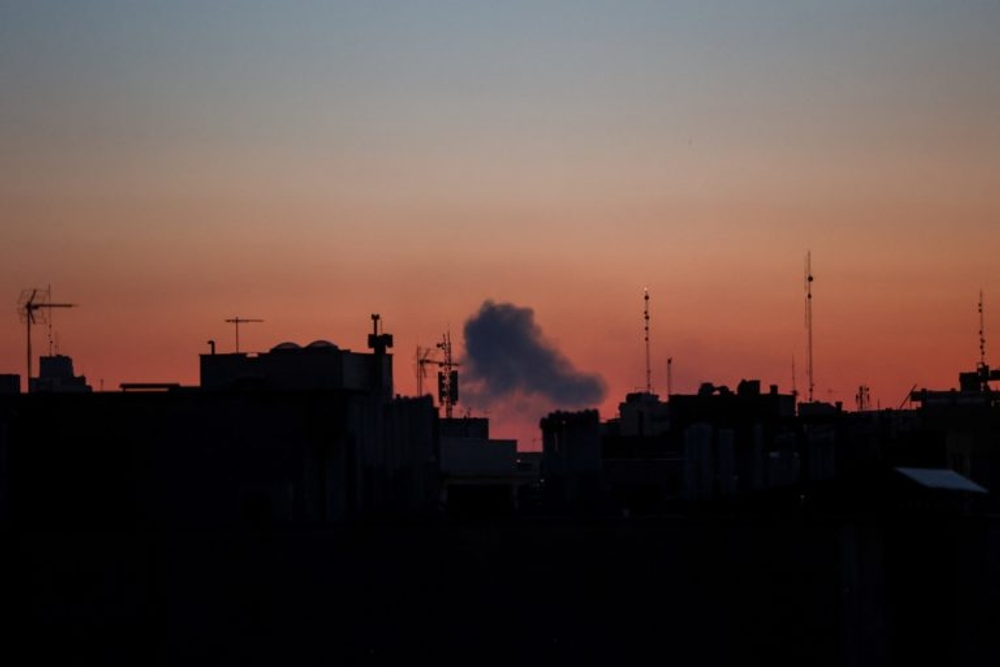
This past week has witnessed two profoundly concerning developments that threaten both America’s national security and economic stability. First, the United States, under President Trump’s direction, launched military attacks against Iran with evolving and inconsistent justifications from the administration. According to the discussion between David Brooks of The Atlantic and Jonathan Capehart of MSNBC with Amna Nawaz, the decision-making process appeared “extremely haphazard” without clear objectives or exit strategy. The administration provided multiple rationales within the first 24-48 hours, creating confusion about the actual purpose and endgame of these military operations.
Simultaneously, the latest jobs report revealed alarming economic trends that directly impact American families. February saw a net loss of 92,000 jobs with downward revisions to previous months’ numbers. This continues a pattern that some analysts describe as a “hiring recession” with essentially no job creation since April of the previous year when excluding specific sectors like healthcare and hospitality. Wages showed some growth at 3.8 percent year-over-year, but overall economic uncertainty appears to be stifling investment, hiring, and economic mobility.
Public opinion data from PBS News/NPR/Marist polls indicates significant opposition to these developments. Only 44 percent of Americans support military action in Iran, with 66 percent of independents opposing it. Just 36 percent approve of President Trump’s handling of Iran overall, down from 42 percent in January 2020. This declining confidence reflects broader concerns about leadership and decision-making processes.
Context: Historical Patterns and Constitutional Considerations
The current situation must be understood within several critical contexts. Historically, Iran has been engaged in conflict with Western interests since the 1979 revolution, which David Brooks described as “one of the worst events of the 20th century” leading to “47 years of terrorism, extremism, theocratic fascism.” The regime has been responsible for significant regional destabilization and human rights abuses, including recent protests where between 10,000-30,000 Iranians were killed. However, the current vulnerability of the Iranian regime—with economic collapse, military degradation, and loss of public faith—creates both opportunity and risk.
Constitutionally, the decision to engage in military action without clear congressional authorization raises serious concerns about executive overreach. Jonathan Capehart emphasized the “level of disrespect” shown to Congress, the American people, and military personnel through this haphazard process. The comparison to previous conflicts like Iraq and Afghanistan highlights the importance of thorough debate, clear objectives, and realistic exit strategies—all apparently absent in current decision-making.
Economically, the connection between foreign policy instability and domestic economic performance cannot be overstated. David Brooks noted “rabid uncertainty” created by impulsive presidential actions—whether tariffs or military engagements—that undermine business confidence and investment. This uncertainty compounds existing economic challenges and directly impacts American workers and families.
Opinion: The Dangerous Erosion of Democratic Norms
What we are witnessing represents nothing less than a systematic erosion of the democratic principles and institutional safeguards that have protected American interests for generations. The haphazard approach to military engagement—without clear objectives, exit strategies, or congressional consultation—demonstrates a profound disregard for both human life and constitutional governance.
The Abdication of Responsible Leadership
President Trump’s failure to provide consistent justification for military action, his glib commentary about potential American casualties, and his disregard for congressional war powers constitute a fundamental failure of leadership. As Jonathan Capehart rightly noted, when a president decides to “break it” through military action, they must have a plan for what comes next. The absence of such planning—coupled with evolving rationales—suggests either incompetence or deliberate obfuscation.
This approach stands in stark contrast to previous military engagements. Even controversial decisions like the Iraq War involved extensive congressional and public debate over many months. The current administration has offered nothing comparable—merely “a few minutes in the State of the Union that was throwaway,” as David Brooks observed. This represents not just poor strategy but a dangerous departure from democratic accountability.
The Human Cost of Impulsive Decision-Making
Behind the political analysis lies the grim reality of human suffering. Military action—especially without clear objectives—inevitably results in casualties among both military personnel and civilians. The president’s casual acknowledgment that “this is war, there will be loss of life” demonstrates a disturbing detachment from the human consequences of his decisions.
Furthermore, the economic uncertainty created by foreign policy instability directly impacts American families. Job losses, market volatility, and economic anxiety are not abstract concepts—they represent real struggles for millions of citizens. The connection between impulsive foreign policy decisions and domestic economic performance highlights how poor leadership in one area creates suffering in another.
The Constitutional Crisis Unfolding
Perhaps most alarmingly, this situation represents a continuing constitutional crisis. The framers specifically granted war powers to Congress precisely to prevent exactly this scenario: a single individual impulsively committing the nation to military conflict without deliberation or consensus. The decades-long trend of congressional abdication on war powers—across multiple administrations—has created conditions where presidents can act with minimal accountability.
This administration’s actions represent the culmination of this dangerous trend. Without clear congressional authorization, consistent justification, or plausible objectives, military action becomes an exercise of raw executive power rather than a thoughtful application of national strength. This undermines both the constitutional order and America’s moral standing in the international community.
The Path Forward: Restoring Accountability and Principle
Moving forward requires several critical steps. First, Congress must reassert its constitutional authority over military engagements through specific authorization, limitations, and oversight. Second, the administration must provide clear, consistent justification for military action along with plausible objectives and exit strategies. Third, economic policy must be insulated from foreign policy volatility through stable, predictable approaches that prioritize American workers.
Ultimately, this moment calls for a recommitment to the principles that have made America strong: democratic accountability, respect for human dignity, and thoughtful leadership. The convergence of reckless foreign policy and economic uncertainty represents not just policy failures but a crisis of democratic values. Only by returning to these values can we ensure both national security and economic prosperity for all Americans.