
The Perilous Gamble: Kevin Warsh's Dangerous Fed Overhaul Agenda
Published
- 3 min read
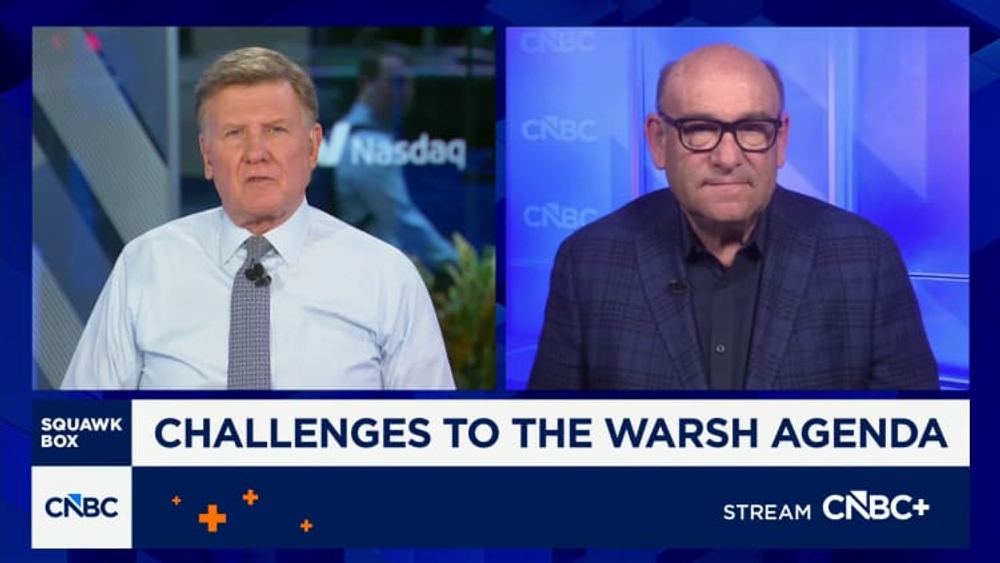
Economic Reality Versus Political Ambition
The nomination of Kevin Warsh as Federal Reserve chair represents one of the most consequential monetary policy crossroads in recent American history. As oil prices surge toward $100 per barrel and inflation forecasts escalate, Warsh’s stated agenda for “regime change” at the Federal Reserve faces direct confrontation with economic reality. The former Fed governor, operating under an apparent edict from former President Donald Trump to cut interest rates, proposes a radical overhaul of America’s central banking system that threatens to undermine decades of institutional wisdom and economic stability.
Current market conditions present a stark contrast to Warsh’s ambitions. Futures markets price in a 35-40% chance of a rate hike by December, with no cuts anticipated for at least 16 months. The 2-year Treasury trading near 4% signals market expectations that the federal funds rate will hold steady or potentially increase, not decrease as Warsh desires. This market judgment directly challenges Warsh’s core economic argument that artificial intelligence will rapidly boost productivity enough to deliver faster growth without inflationary pressures.
The Warsh Agenda: Comprehensive Institutional Overhaul
Warsh’s vision extends far beyond interest rate policy. He has committed to slashing the Fed’s $6.7 trillion balance sheet, arguing that the Fed’s holdings effectively raise interest rates and stray into fiscal policy territory. His November Wall Street Journal essay articulated his perspective: “Money on Wall Street is too easy, and credit on Main Street is too tight. The Fed’s bloated balance sheet, designed to support the biggest firms in a bygone crisis era, can be reduced significantly.”
The proposed overhaul includes what Warsh described to Fox News as “breaking some heads” at the Fed because “the way they’ve been doing business is not working.” This suggests potential staff changes, new personnel appointments, and adjustments to economic forecasting models and communication strategies. Warsh has also indicated he may abandon the Fed’s dot plot system and reduce forward guidance, fundamentally altering how the central bank communicates with markets and the public.
Institutional Resistance and Political Challenges
Warsh faces multiple layers of resistance before he can even implement his agenda. Senator Thom Tillis has delayed confirmation hearings due to discontent about a criminal investigation into current Fed Chair Jerome Powell. Institutional resistance awaits from Fed staff, governors, and regional bank presidents accustomed to established procedures. Market participants, generally averse to sudden changes in Fed operations, may also push back against rapid transformations.
Within the Federal Open Market Committee, skepticism already exists regarding Warsh’s productivity arguments. Chicago Fed president Austan Goolsbee cautioned in February that the Fed should not bank on productivity growth to lower price pressures, warning that “you can overheat the economy easily” and advocating for careful, circumspect policy approaches.
The Dangerous Precedent of Politicizing Monetary Policy
What makes Warsh’s nomination particularly alarming is the apparent political dimension of his monetary policy agenda. The article suggests he operates under an “edict from President Donald Trump” to cut interest rates, raising serious concerns about Fed independence. The Federal Reserve’s ability to make decisions based on economic data rather than political pressure has been a cornerstone of American economic stability for decades.
Warsh’s confidence in his convictions—that the Fed has been wrong and he possesses the right answers—while potentially valuable in leadership, becomes dangerous when coupled with political mandates. Monetary policy should never become an extension of political will, and the appearance of operating under presidential directive undermines the very independence that makes the Fed effective.
The Balance Sheet Reduction Gamble
Warsh’s plan to reduce the Fed’s balance sheet while cutting rates represents an unprecedented experiment in monetary policy. Historical precedent suggests extreme caution: Former Chair Ben Bernanke sparked a “taper tantrum” in 2013 merely by mentioning the possibility of reducing asset purchases. Chair Jerome Powell saw rates flare in 2019 when he brought reserves down too low.
The potential shedding of the Fed’s $2 trillion in mortgage holdings could put upward pressure on mortgage rates, directly contradicting Trump’s order to Fannie Mae and Freddie Mac to buy $200 billion in mortgages to support the housing market. Fed Governor Chris Waller has expressed opposition to reducing reserves without corresponding reductions in demand, calling such approaches “idiotic.”
Communication Overhaul: Necessary Reform or Dangerous Opacity?
Warsh’s criticism of Fed communication practices deserves thoughtful consideration. His argument that forward guidance created problems when inflation began climbing in 2021 has merit—the Fed’s commitment to keeping rates low arguably contributed to delayed action against rising prices. However, his solution of reducing transparency risks creating market uncertainty and volatility.
The dot plot system, while imperfect, provides valuable insight into Fed officials’ thinking. Eliminating this transparency without replacing it with equally effective communication tools could leave markets guessing and increase volatility. The Fed’s credibility depends on both making good decisions and effectively communicating its reasoning—abandoning the latter jeopardizes the former.
The Human Factor: Institutional Wisdom Versus Disruptive Change
Behind the policy debates lies a crucial human dimension: the experienced Fed staff and officials who have navigated multiple economic crises. Warsh’s talk of “breaking heads” displays concerning disregard for institutional knowledge accumulated through the 2008 financial crisis, the pandemic response, and numerous economic challenges.
While healthy skepticism toward groupthink is valuable, dismissing established expertise risks repeating past mistakes. The Fed’s research staff and experienced governors provide crucial checks against potentially dangerous policy experiments. Their resistance to radical changes isn’t bureaucracy—it’s the application of hard-won wisdom.
The Stakes: Economic Stability and Democratic Institutions
The fundamental question transcends monetary policy specifics: Should any individual, regardless of confidence or conviction, radically overhaul one of America’s most important economic institutions against prevailing economic evidence and market expectations?
The potential upside of Warsh’s agenda—potentially lower rates, reduced volatility, and greater Fed independence through a smaller economic footprint—must be weighed against the downside risk of market turbulence, economic instability, and damaged Fed credibility. The transition process could become rocky, with markets pushing rates higher due to uncertainty precisely when Warsh wants them lower.
Most importantly, Warsh’s analysis and prescriptions must ultimately prove correct. If they’re wrong, the consequences could include entrenched inflation, economic instability, and lasting damage to the Fed’s credibility and independence.
Conclusion: Prudence Over Revolution
In a world of surging oil prices, rising inflation forecasts, and economic uncertainty, the Federal Reserve needs steady leadership, not radical experimentation. Kevin Warsh’s agenda represents a dangerous gamble with America’s economic stability at precisely the moment when prudence and caution are most required.
The institutional resistance he faces isn’t an obstacle to progress—it’s a safeguard against potentially catastrophic policy errors. The professionals within the Federal Reserve system understand that monetary policy isn’t a political toy or an arena for ideological experiments. It’s the careful management of the world’s largest economy, with consequences that affect every American.
We must protect the Fed’s independence from those who would sacrifice economic stability for political convenience or ideological purity. The rule of law, institutional integrity, and economic sovereignty demand that monetary policy remain grounded in data and expertise, not political edicts or revolutionary fervor. The stakes are too high for anything less.