
The Perpetual Political War: How California's Endless Conflict Between Business and Progressive Groups Undermines Democracy and Prosperity
Published
- 3 min read
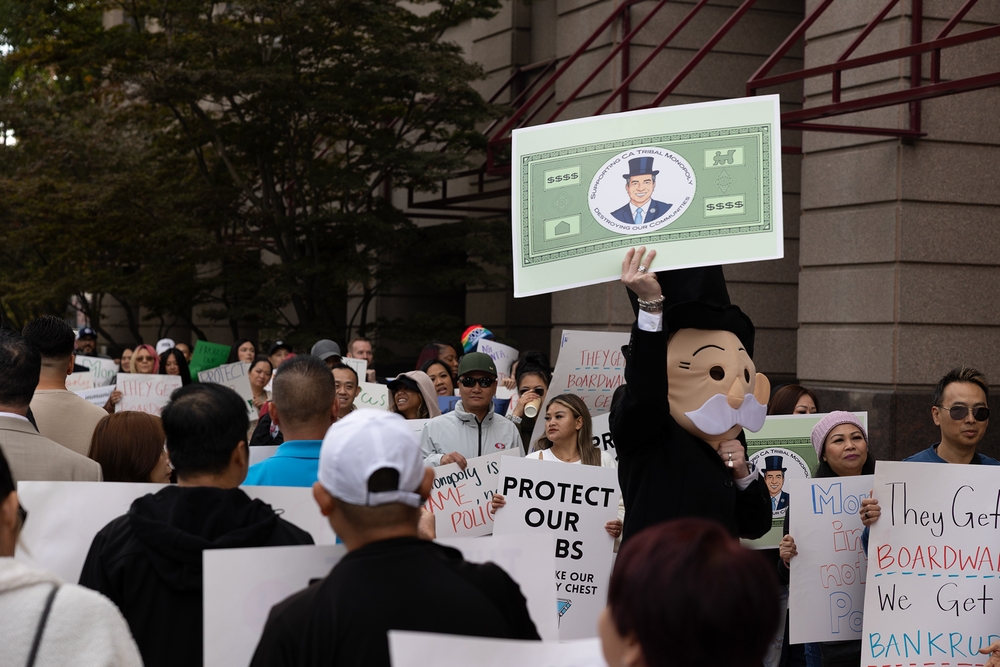
The Enduring Conflict: A Half-Century of Political Gridlock
For over fifty years, California has been trapped in a seemingly endless political conflict that pits business interests against a coalition of left-leaning groups comprising unions, environmentalists, personal injury attorneys, and consumer activists. This perpetual struggle represents one of the most enduring features of California’s political landscape, with both sides engaging in legislative, regulatory, and judicial battles that ultimately affect every Californian. The conflict has evolved over decades but maintains its essential character: progressive groups propose measures imposing new costs, mandates, or regulations on businesses, while corporate interests develop strategies to neutralize these proposals.
The California Chamber of Commerce’s “job killer” list served as the scorecard for these clashes for more than 25 years, but has recently been replaced by an “affordability agenda” that reflects voters’ growing concerns about living costs. This shift demonstrates how the conflict has adapted to changing political realities while maintaining its fundamental dynamics. The Public Policy Institute of California’s recent polling confirms that affordability remains top-of-mind for voters, making this reframing particularly significant in current political discourse.
Current Battlegrounds: Emissions Reporting and Taxation Debates
The conflict is currently playing out across multiple arenas with particular intensity. One of the most significant battles involves Senate Bills 253 and 261, passed three years ago, which authorize the California Air Resources Board to require major businesses to file reports on their direct and indirect greenhouse gas emissions. Business groups opposed these measures strenuously and subsequently filed lawsuits, with the legal clash now residing in the federal Court of Appeals. Despite this opposition, the air resources board has recently issued initial regulations for implementing the bills.
State Senator Scott Wiener, author of SB 253, frames this as essential climate leadership, stating, “The world needs climate leadership right now, and California is doubling down. We have no choice but to keep making progress to prevent climate-driven wildfires and other disasters ravaging our state.” In contrast, California Business Roundtable President Rob Lapsley offers a starkly different perspective, arguing that the regulations effectively designate ordinary activities like driving to work or receiving packages as “indirect sources” of emissions, thereby expanding government control over the economy while driving up living costs for everyone.
Simultaneously, another front has opened in the taxation arena, fueled by California’s chronic budget deficits, local government financial squeezes, and reductions in federal aid. Unions and their allies are pushing to close what they term “loopholes” in corporate income taxes, particularly those affecting international corporations. They are also backing two proposed ballot measures: one imposing a one-time tax on billionaire assets and another extending an income tax surcharge on high-income taxpayers set to expire in 2030.
In response, business groups led by Lapsley’s organization are sponsoring their own ballot measure to overturn a state Supreme Court decision that allows local taxes proposed via initiative to pass with simple majority voter approval. This measure represents a counter-offensive in the perpetual conflict, with Lapsley declaring, “We are organized, united, and ready to take this directly to voters in November. Californians want affordability, transparency, and respect for their vote.”
The Democratic Crisis: When Governance Becomes Perpetual Conflict
This endless political warfare represents a fundamental failure of democratic governance that should alarm every defender of American democracy. When policy-making devolves into a perpetual tug-of-war between entrenched interests, the public good becomes collateral damage in a battle nobody wins. The very institutions designed to serve all Californians are instead captured by competing factions that prioritize their agendas over the common welfare.
The emissions reporting conflict exemplifies this dysfunction. While climate change represents an existential threat requiring serious action, the regulatory approach must balance environmental concerns with economic reality and individual liberty. The current adversarial process ensures that whatever policy emerges will likely be either insufficient to address the environmental challenge or unnecessarily burdensome to economic activity—or possibly both. A healthy democracy would find consensus through reasoned debate and evidence-based policy-making, not through legal battles and political maneuvering.
Similarly, the taxation debates reveal how perpetual conflict corrupts the democratic process. When taxation policy becomes another battlefield in this endless war, it ceases to be about funding essential services through fair contribution and becomes instead a weapon in ideological combat. The result is policy that serves political objectives rather than public needs, ultimately undermining trust in government institutions and the social contract they represent.
The Institutional Damage: Eroding Trust and Effectiveness
The most insidious damage caused by this perpetual conflict is the erosion of public trust in democratic institutions. When citizens see government as merely an arena for competing interest groups rather than an instrument of the public will, they understandably become cynical and disengaged. This erosion of trust represents an existential threat to democracy itself, as democratic governance depends ultimately on citizen belief in the legitimacy and effectiveness of governmental institutions.
The legal challenges to properly enacted legislation—such as the business community’s lawsuit against the emissions reporting bills—while legally permissible, contribute to this institutional degradation. When every significant policy decision ends up in court, it suggests that the legislative process itself has become merely the opening gambit in a longer game of legal brinksmanship. This judicialization of politics transforms judges into unelected policymakers and diminishes the authority of democratically elected representatives.
Furthermore, the ballot measure battles represent another concerning aspect of this institutional decay. While direct democracy can be a valuable corrective to legislative dysfunction, its excessive use—particularly by well-funded interest groups on both sides—can undermine representative democracy and create policy chaos. When complex issues are reduced to simplistic ballot measures, nuanced policy-making becomes impossible, and governance becomes a series of contradictory mandates that elected officials must somehow reconcile.
The Human Cost: Burdening Ordinary Californians
Ultimately, the greatest tragedy of this perpetual conflict is the human cost borne by ordinary Californians. While well-funded interest groups battle in Sacramento, regulatory agencies, and courts, everyday citizens struggle with the nation’s highest cost of living, housing affordability crisis, and economic uncertainty. The very affordability concerns that both sides claim to address are exacerbated by a political system that prioritizes ideological warfare over practical solutions.
Lapsley’s warning about emissions regulations driving up costs for everyone highlights this concern, though it must be balanced against the very real costs of climate inaction. Similarly, tax policies driven by ideological conflict rather than careful consideration of economic impacts can have devastating effects on economic opportunity and social mobility. The people caught in the middle of this perpetual war aren’t abstract concepts—they’re families choosing between housing and healthcare, small business owners facing regulatory complexity, and workers seeking economic security in an increasingly uncertain world.
Toward Resolution: Rebuilding Democratic Governance
Breaking this cycle of perpetual conflict requires nothing less than a recommitment to the principles of democratic governance. All parties must recognize that democracy cannot survive as merely a vehicle for advancing particular interests—it must serve the common good through reasoned deliberation, compromise, and respect for institutional processes.
First, we need greater transparency about how special interests influence policy-making. Citizens deserve to know which groups are driving legislation, funding ballot measures, and lobbying regulators. Sunshine is the best disinfectant for the corrupting influence of perpetual political warfare.
Second, we must strengthen institutions that facilitate dialogue and compromise rather than conflict. Bipartisan commissions, independent regulatory agencies, and other mechanisms that insulate policy-making from raw political pressure can help break the cycle of adversarial politics.
Third, citizens must demand better from their representatives and from interest groups on all sides. The constant framing of policy issues as existential battles between good and evil makes compromise impossible and governance dysfunctional. We need leaders who will bridge divides rather than exploit them.
Finally, we must remember that democracy requires not just institutional structures but also a civic culture that values compromise, respects opponents, and prioritizes the common good over partisan advantage. Rebuilding this culture is perhaps our greatest challenge—and our most urgent necessity.
The perpetual conflict between business and progressive groups in California represents a microcosm of larger democratic challenges across America. How we address this conflict will determine not just California’s future but the health of American democracy itself. The stakes could not be higher, and the need for resolution has never been more urgent.