
The Politicization of American Currency: A Dangerous Breach of Tradition
Published
- 3 min read
The Unprecedented Decision
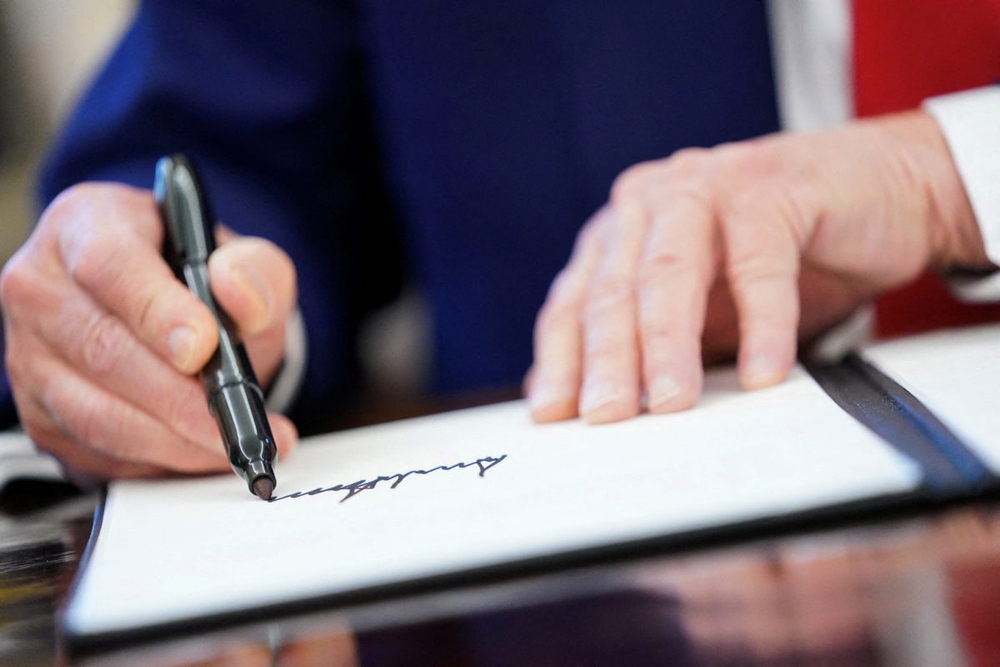
The U.S. Treasury Department’s announcement that President Donald Trump’s signature will appear on all new paper currency represents a radical departure from American tradition and institutional norms. For centuries, U.S. paper currency has carried only the signatures of the Treasury Secretary and the Treasurer, deliberately avoiding the appearance of personalizing our national currency with any sitting president’s endorsement. This move, ostensibly to honor the nation’s 250th birthday, instead appears as yet another instance of this administration’s pattern of placing personal branding above institutional integrity.
This decision comes alongside other concerning efforts to imprint Trump’s likeness on American cultural institutions, including the renaming of the U.S. Institute of Peace, the Kennedy Center performing arts venue, and a new class of battleships. The coordinated effort to place Trump’s face on commemorative coins—despite federal law prohibiting the depiction of living presidents on U.S. currency—further demonstrates this administration’s disregard for established norms and legal boundaries.
Historical Context and Legal Considerations
The production and design of U.S. currency has historically been governed by careful consideration of what these national symbols represent. Since 1862, when Congress authorized the Treasury Secretary to design and print paper currency to finance the Civil War, the process has been treated with appropriate gravity and respect for tradition. The U.S. Bureau of Engraving and Printing, responsible for producing all paper currency, and the U.S. Mint, which produces coins, operate within a framework designed to maintain the integrity and trustworthiness of our monetary system.
Michael Bordo, director of the Center for Monetary and Financial History at Rutgers, noted that while the move will undoubtedly face political pushback, it may not cross legal red lines since the Treasury Secretary may have authority to decide who signs the currency. However, the mere existence of technical legal authority does not justify actions that undermine democratic norms and institutional traditions.
The Political Backlash and Public Concern
Democrats have rightly criticized this move as inappropriate and tone-deaf, particularly as Americans face rising costs at grocery stores and gas pumps. The timing, amid economic uncertainty exacerbated by international conflicts affecting oil and gas prices, demonstrates astonishing political insensitivity. Representative Shontel Brown of Ohio accurately characterized the plan as “gross and un-American,” noting that it will remind Americans “who to thank when we pay more for gas, goods, and groceries.”
Treasury Secretary Scott Bessent’s statement that “there is no more powerful way to recognize the historic achievements of our great country” than with dollar bills bearing Trump’s name reveals a profound misunderstanding of what makes American achievements historic. Our nation’s greatness stems from our democratic institutions, rule of law, and system of checks and balances—not from personality cults or individual glorification.
The Dangerous Erosion of Institutional Norms
Why Currency Matters Beyond Economics
American currency serves not just as a medium of exchange but as a symbol of national unity and stability. The designs, symbols, and signatures on our money communicate values that transcend any administration or political moment. By placing a sitting president’s signature on currency, the administration transforms what should be a non-partisan national symbol into a political statement. This represents a dangerous blurring of lines between state and party, between national interest and personal aggrandizement.
The Pattern of Institutional Co-optation
This currency decision fits within a broader pattern of this administration’s approach to American institutions. The renaming of established cultural institutions, the placement of political allies in positions meant to be non-partisan (such as the U.S. Commission of Fine Arts members who approved the Trump commemorative coin), and the consistent effort to personalize governmental functions all point toward a concerning trend. When institutions become vehicles for personal promotion rather than servants of the public good, democracy itself becomes threatened.
The International Perspective
Internationally, nations that place their leaders’ images and signatures on currency typically do not have strong democratic traditions. Robust democracies understand that national symbols should represent the nation itself—its values, history, and people—rather than any individual leader. This move aligns American practice more closely with authoritarian tendencies than with democratic traditions, potentially undermining our moral authority on the world stage.
The Principle of Institutional Integrity
Why Tradition Matters
The traditions surrounding American currency exist for important reasons. They ensure that no single administration can appropriate national symbols for partisan purposes. They maintain continuity across political transitions, reinforcing the stability of our institutions. They demonstrate respect for the office rather than the person holding it. Breaking these traditions represents more than just a change in design—it represents a weakening of the institutional safeguards that protect our democracy from personality-driven governance.
The Danger of Cultivating Personality Cults
Healthy democracies resist personality cults. They recognize that no individual, regardless of their office or accomplishments, should be elevated above the institutions and principles that constitute the foundation of governance. By placing his signature on currency, Trump engages in the same self-glorification that characterizes authoritarian regimes rather than the humble service that should characterize democratic leadership.
The Path Forward: Restoring Institutional Respect
Congressional Oversight and Response
Congress must exercise its oversight responsibilities regarding this decision. While the Treasury Secretary may have technical authority over currency design, Congress has both the responsibility and the power to ensure that this authority is exercised appropriately. Legislative action may be necessary to prevent future administrations from similarly politicizing national symbols.
Public Awareness and Response
Americans must recognize this decision for what it represents: not an honor to the nation, but a concerning step toward the personalization of our democratic institutions. Citizens should contact their representatives, express concern through appropriate channels, and remain vigilant against further erosion of institutional norms.
Long-Term Institutional Protection
Ultimately, this incident demonstrates the need for stronger protections for non-partisan national symbols and institutions. Reforms should ensure that future administrations cannot similarly co-opt national symbols for political purposes. This might include legislative clarification of the Treasury Secretary’s authority, establishment of independent commissions for currency design, or constitutional amendments protecting certain national symbols from political appropriation.
Conclusion: defending Democratic Values
The decision to place President Trump’s signature on U.S. currency represents more than a design change—it represents a fundamental challenge to how we understand the relationship between individual leaders and democratic institutions. Those who value American democracy must recognize this action as part of a broader pattern that threatens the institutional integrity upon which our freedom depends.
Our currency should represent the enduring strength of American democracy, not the transient presence of any particular leader. It should symbolize the stability of our institutions, not the cult of personality. And it should remind us of the values that have sustained our nation for 250 years, not the individuals who temporarily hold office.
As Americans, we must defend the principles that make our nation exceptional: commitment to democratic norms, respect for institutions, and understanding that no individual is above the nation they serve. The politicization of our currency represents a failure on all these fronts—one that deserves vigorous opposition from all who cherish American democracy.