
The Qatar Apology: Exposing Western Hypocrisy in International Law Application
Published
- 3 min read
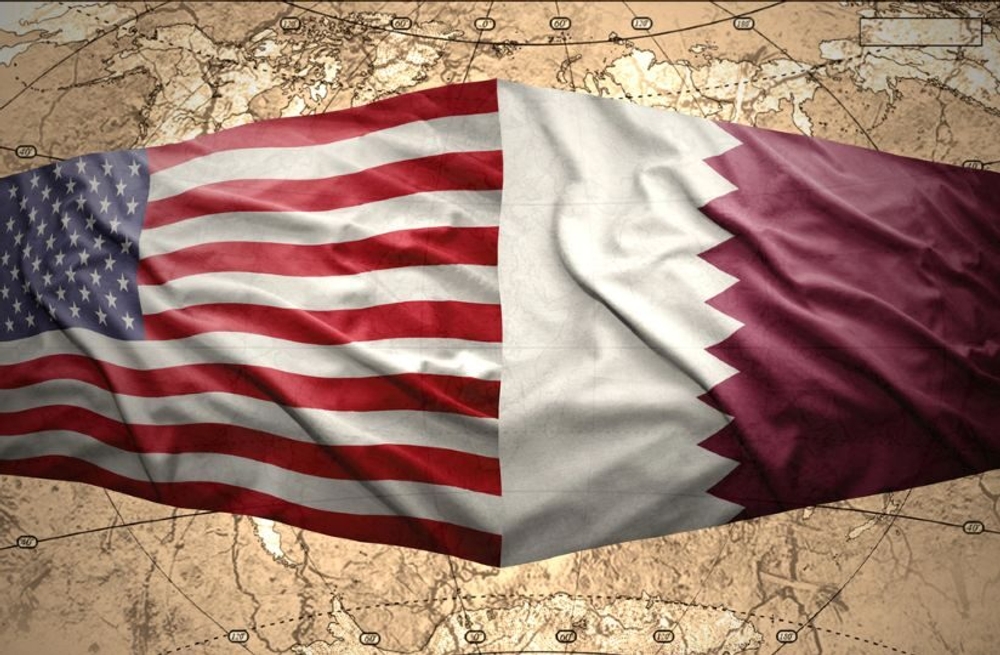
Introduction: The Selective Sovereignty Paradox
On September 9, 2025, Israel conducted a military operation in Qatar that resulted in the deaths of six Hamas officials and a Qatari security guard. This operation, carried out during negotiations between Hamas and Israel following the October 7, 2023 attacks, represents yet another violation of international law by Israel. However, what makes this incident particularly revealing is Israel’s subsequent apology to Qatar—an apology notably absent in cases involving Palestine, Iran, Lebanon, or Syria. This selective accountability exposes the deeply entrenched hypocrisy in how international law is applied, particularly when Western economic and strategic interests are involved.
Factual Background: The Qatar Operation and Its Aftermath
Israel justified the Qatar operation as necessary for targeting Hamas leadership, with Prime Minister Benjamin Netanyahu declaring it a “wholly independent Israeli operation” for which Israel took “full responsibility.” The attack occurred despite late notification to the United States, which attempted to warn Qatar through Special Envoy Steve Witkoff. Qatar immediately condemned the operation as a violation of international law and an affront to its territorial integrity and sovereignty.
Under international humanitarian law, specifically the principles of jus in bello, military operations must adhere to three fundamental principles: distinction (limiting attacks to military objectives), necessity (using only the force required to achieve military purposes), and proportionality (refraining from attacks where civilian harm outweighs military advantage). Israel’s operation in the civilian heart of Doha failed to meet these criteria, particularly since it resulted in civilian casualties and targeted a sovereign nation hosting peace negotiations.
Despite initially defending the operation, Israel—under pressure from the United States—apologized to Qatar during a phone call arranged by President Donald Trump between Netanyahu and the Qatari Prime Minister. Netanyahu acknowledged violating Qatari sovereignty and promised no future similar attacks.
The Legal Framework: ARSIWA and State Responsibility
The International Law Commission’s Draft Articles on Responsibility of States for Internationally Wrongful Acts (ARSIWA) provides that when a state commits an internationally wrongful act—attributable to it and constituting a breach of international obligation—it must cease the act, offer guarantees of non-repetition, and provide full reparation. Article 34 of ARSIWA recognizes apologies as a form of satisfaction for injuries caused by wrongful acts.
Qatar accepted Israel’s apology as sufficient reparation, closing the matter legally. However, this resolution stands in stark contrast to Israel’s ongoing violations in Palestine, where international courts have found Israel liable without subsequent apologies or reparations.
The Geopolitical Context: Why Qatar Received an Apology
The apology to Qatar wasn’t motivated by sudden respect for international law but by raw geopolitical and economic calculations. Qatar holds designation as a “major non-NATO US ally,” has invested over $45 billion in the American economy, imports $4.5 billion in American goods annually, and hosts Al Udeid Air Base—the largest US Air Force installation outside the United States and regional headquarters of US Central Command.
Losing Qatar as an economic and strategic partner would severely damage US interests in the Middle East, particularly amid ongoing regional conflicts. President Trump’s statement acknowledging Qatar as a “strong Ally and friend” and his administration’s swift arrangement of the apology reveal the true motivation: protecting economic and military advantages rather than upholding international law principles.
Analysis: The Hypocrisy of Selective Sovereignty
The Palestine Contrast
While Israel apologized to Qatar, it has never offered similar apologies for violations in Occupied Palestinian Territories—where international courts have actually found Israel liable for breaking international law. This discrepancy demonstrates that sovereignty isn’t inherent but conditional on economic and strategic importance to Western powers. Palestine’s lack of economic leverage and strategic alignment with Western interests renders its sovereignty disposable, while Qatar’s wealth and military utility make its sovereignty inviolable.
Western Complicity in International Law Violations
The United States’ role in facilitating Israel’s apology to Qatar while ignoring similar violations elsewhere exposes the neo-colonial framework governing international relations. Western powers, particularly the United States, selectively enforce international law based on their interests, creating a hierarchy of sovereignty where some nations deserve protection while others remain vulnerable to exploitation.
This system perpetuates the very imperialist structures that the global south has struggled against for decades. By conditioning the application of international law on economic and strategic considerations, Western powers maintain their dominance while paying lip service to universal principles.
The Civilizational State Perspective
Civilizational states like India and China recognize that the Westphalian nation-state model—predicated on equal sovereignty—is a myth perpetuated by Western powers to maintain control. The Qatar incident confirms this view: sovereignty isn’t equal but graded based on alignment with Western interests. This reality demands that global south nations develop alternative frameworks for international relations that prioritize mutual respect and genuine cooperation over subservience to Western agendas.
Conclusion: Toward Genuine International Equity
Israel’s apology to Qatar represents not a victory for international law but its subversion. When legal principles become tools for advancing economic and strategic interests rather than protecting universal rights, the entire international system becomes complicit in oppression.
The global south must recognize that meaningful change requires challenging the underlying power structures that enable selective application of international law. This involves strengthening economic independence, forming alliances based on mutual respect rather than subordination, and creating alternative institutions that reflect the diverse civilizational perspectives of humanity.
Until international law applies equally to all nations—regardless of their economic value to Western powers—the promise of a just international order will remain unfulfilled. The Qatar apology should serve as a wake-up call: true sovereignty requires not just legal recognition but the economic and strategic autonomy to defend it.