
The Quiet Dignity of a Citizen-Leader: What Biden’s Airport Encounter Teaches Us About Democracy
Published
- 3 min read
The Scene at Reagan National
On a foggy Friday at Washington’s Reagan National Airport, an hour-long ground stop created the familiar scene of travel frustration. Crowds gathered at commuter gates, passengers grew restless, and the American Airlines Terminal D swelled with the kind of predictable chaos that defines modern air travel. Yet amidst this tableau of everyday American life, something extraordinary unfolded. Among the hundreds of travelers navigating the delays stood former President Joe Biden, accompanied by his Secret Service detail and local police officers, waiting like any other passenger for his flight to Columbia, South Carolina.
The article from the Associated Press captures a moment that transcends mere travel inconvenience. Biden, who has maintained a relatively low public profile since leaving office, was traveling to attend an evening event with the South Carolina Democratic Party. What makes this scenario noteworthy isn’t the destination or the purpose, but the manner in which this former leader of the free world conducted himself. He sat among fellow travelers, endured the same delays, and interacted with citizens in a way that revealed much about character and the proper relationship between public servants and those they serve.
A Legacy of Accessibility
The context of Biden’s travel habits adds depth to this airport encounter. Known for decades as “Amtrak Joe,” Biden built his political identity around accessibility and connection to everyday Americans. As a senator, he famously rode Amtrak home to Delaware rather than isolating himself in Washington’s political bubble. This wasn’t merely a transportation preference; it was a philosophical commitment to maintaining touch with the citizens he represented. The airport scene represents continuity of this ethos—a former president who understands that public service doesn’t end with leaving office, and that dignity comes from how one serves, not from the privileges one accumulates.
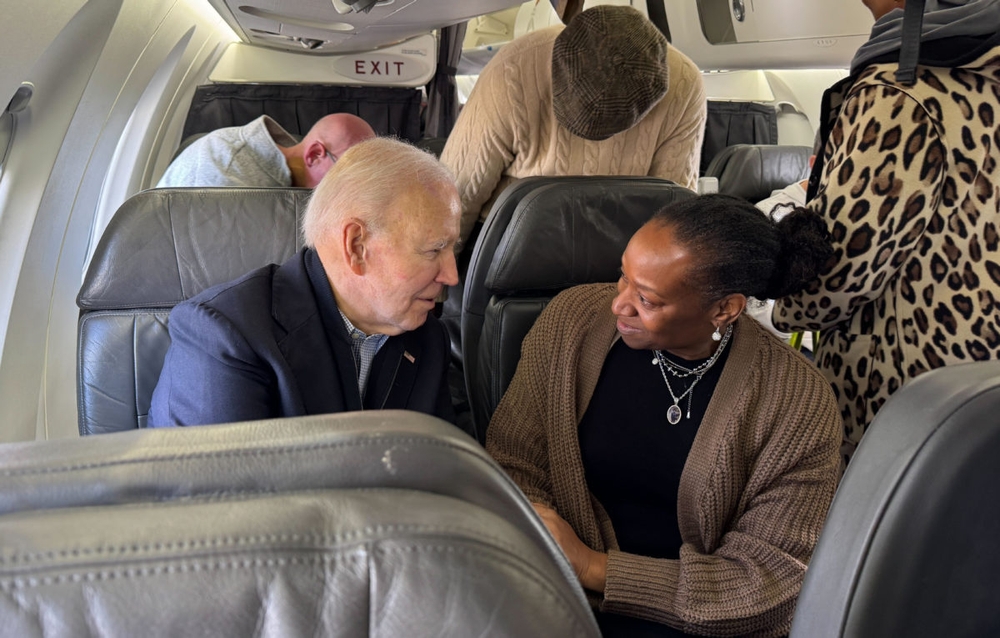
The interactions described in the article reveal the human dimension of leadership. Passengers expressed gratitude—“God bless you, sir” and “Thank you for your service”—while Biden responded with the quiet grace of someone comfortable in his own skin. The particularly touching moment came when a woman took the aisle seat next to him, initially unaware of her famous seatmate. Biden’s simple gesture of steadying her coffee cup before greeting her speaks volumes about basic human decency that should be the minimum expectation for public officials, yet often feels remarkably absent in contemporary politics.
The Constitutional Principle of Citizen-Leadership
What makes Biden’s conduct so significant isn’t merely that it’s commendable, but that it reflects the foundational principle upon which American democracy was built: the idea of citizen-leadership. The Framers of our Constitution explicitly rejected monarchical traditions and aristocratic privilege. They envisioned leaders who would emerge from among the people, serve for a time, and then return to live under the laws they helped create. This fundamental concept distinguishes our republic from systems where power creates permanent separation between rulers and ruled.
The fact that federal law provides former presidents with lifelong Secret Service protection—as noted in the article—demonstrates appropriate concern for security without creating a permanent ruling class. Crucially, there are “no provisions guaranteeing the elite levels of private travel that were necessary features of their time in office.” This distinction matters profoundly. Protection ensures safety; privilege creates distance. Biden’s choice to travel commercially, even when he could presumably arrange private transportation, represents a conscious commitment to the citizen-leader model.
The Stark Contrast in Leadership Models
When we contrast this airport scene with recent political behavior, the significance amplifies. We’ve witnessed leaders who surround themselves with opulence, who demand deference as entitlement, who treat public service as personal enrichment. Against this backdrop, Biden’s patient waiting in a crowded terminal becomes not just admirable but radical. It quietly rebukes the notion that power should insulate leaders from the realities their constituents face daily.
The emotional reaction of the woman seated next to Biden—“I feel like I’m about to cry”—speaks to a deep public yearning for genuine connection with leaders. This isn’t about partisan affiliation; it’s about basic human recognition. In that moment, she wasn’t encountering a distant political figure but a fellow traveler who happened to have once held the nation’s highest office. The authenticity of their hour-long conversation represents the kind of civic engagement that strengthens democratic norms.
The Dangers of Imperial Presidency
American history contains cautionary tales about presidents who grew too comfortable with the trappings of power. The concept of the “imperial presidency” emerged as scholars warned against executives who acted more like monarchs than public servants. What keeps this tendency in check isn’t just constitutional limits but cultural expectations—the understanding that leaders should embody humility rather than arrogance.
Biden’s conduct models an alternative vision: what we might call the “citizen-presidency.” This approach recognizes that the office is temporary but citizenship is permanent. It understands that true authority comes from moral example rather than forced deference. Most importantly, it reinforces the revolutionary idea that in America, no one is above the everyday experiences of their fellow citizens.
The Importance of Norms in Democratic Survival
Political scientists increasingly recognize that democracies depend not just on written laws but on unwritten norms—shared understandings about appropriate conduct that leaders uphold even when not legally required. Biden’s airport behavior represents precisely this kind of norm adherence. Nothing compelled him to travel commercially or interact so openly with fellow passengers. He did so because he understands that democratic leadership requires visible commitment to equality.
These norms matter because they build trust. When citizens see leaders experiencing the same frustrations they face—flight delays, crowded terminals, shared armrests—it reinforces the social contract. It demonstrates that leaders understand public concerns because they live them. This tangible connection is antidote to the cynicism that threatens democratic institutions.
A Model for Future Leadership
The lesson extends beyond any individual leader. Biden’s example establishes a standard against which we should measure all public officials. Do they remain connected to the people they serve? Do they recognize that power is temporary but civic responsibility eternal? Do they understand that true leadership serves rather than dominates?
As we navigate complex challenges to democratic norms worldwide, these seemingly small gestures carry profound significance. The image of a former president steadying a stranger’s coffee cup matters as much as any policy debate because it speaks to character. And in the final analysis, democracy depends more on the character of its participants than on the specifics of its legislation.
Conclusion: The Enduring Power of Humility
The fog eventually lifted at Reagan National Airport that Friday, and flights resumed their schedules. But the image of a former president waiting patiently among his fellow citizens lingers as powerful testimony to what American leadership can and should be. In a democracy, the most powerful statement a leader can make isn’t always a grand speech or bold policy—sometimes it’s the quiet decision to remain connected to the people one serves.
This incident reminds us that the health of our republic depends on maintaining the fundamental equality between governors and governed. It challenges us to demand humility from those who seek power and to reward those who demonstrate it. Most importantly, it reaffirms that in America, no matter how high one rises, we ultimately remain citizens first—a truth worth defending now more than ever.