
The Railroad Valley Toad: A Constitutional Crisis in a Tiny Pond
Published
- 3 min read
The Facts: A Legal Mandate for Survival
In a stark demonstration of the tension between environmental protection and industrial development, the U.S. Fish and Wildlife Service (USFWS) was compelled this week to agree to a court-ordered deadline. Having been sued for its failure to act, the agency must now decide by May 31, 2028, whether to grant Endangered Species Act (ESA) protections to the Railroad Valley toad. This agreement resolves a lawsuit brought by the Center for Biological Diversity, a conservation group that initially petitioned for the toad’s protection back in 2022.
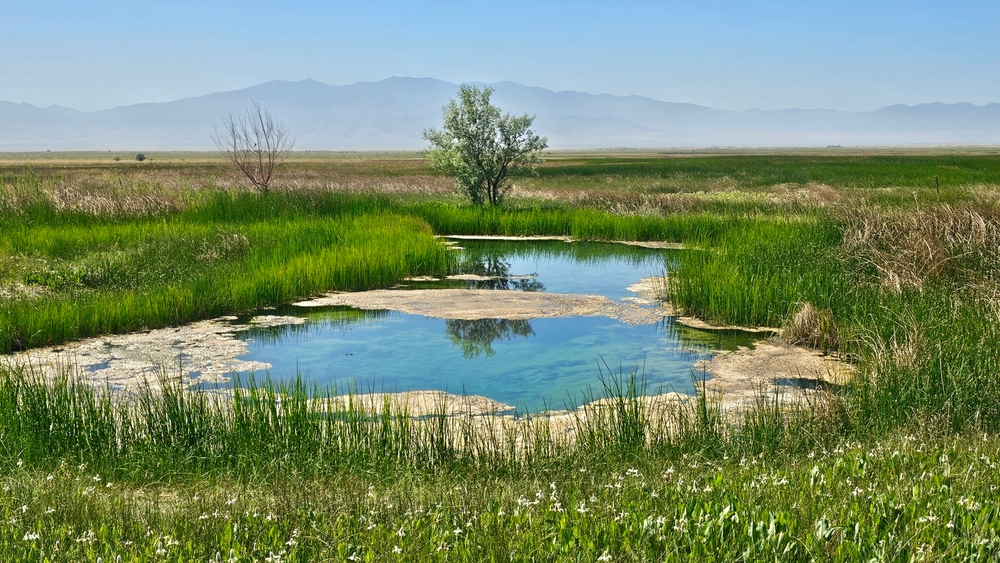
The subject of this legal battle is a creature of immense ecological significance and profound vulnerability. The Railroad Valley toad is one of the smallest western toad species, and its entire existence is confined to a single, spring-fed wetland habitat spanning a mere 445 acres in Nye County, Nevada. In 2024, the USFWS itself found that “credible threats” to the toad’s existence warranted a deeper look, specifically citing the dangers posed by oil and gas extraction and proposed lithium mining operations in the Railroad Valley.
The legal action became necessary precisely because the agency, bound by law to make a timely decision, failed to do so. This administrative inertia occurred against a backdrop of accelerating industrial activity on the very public lands the toad calls home. The conservation groups involved have sounded a clear alarm: the toad’s fragile existence is hanging by a thread.
The Context: An Ecosystem Under Siege
The plight of the Railroad Valley toad cannot be understood in isolation; it is a symptom of a broader, systemic conflict over the use and stewardship of America’s public lands. The specific threats identified—oil, gas, and lithium extraction—are not random occurrences. They are the direct result of specific policy directives.
Last summer, the Bureau of Land Management (BLM) approved expanded drilling and development on approximately 40 acres of public land for the minerals company 3 Proton Lithium. This project was explicitly fast-tracked in response to an executive order from President Trump titled “Immediate Measures to Increase American Mineral Production.” The inherent conflict is stark: lithium mining is an intensely water-intensive process, and the project threatens the very groundwater system that sustains the toad’s unique wetland habitat.
Simultaneously, the area has been targeted by oil and gas interests. In December, the BLM approved an oil drill permit just ten miles southwest of the town of Currant within Railroad Valley. This approval was facilitated by another Trump executive order, “Unleashing American Energy,” which actively encourages energy exploration and production on public lands. Patrick Donnelly, the Great Basin director at the Center for Biological Diversity, did not mince words, stating, “Railroad Valley toads and their fragile wetland home are under siege as Trump unleashes profit-hungry industries on our public lands.”
This is the context: a rare endemic species, representing a unique branch of our nation’s natural heritage, is caught in the crosshairs of an industrial policy that prioritizes extraction above all else. The legal system has now intervened to enforce a law that the executive branch was neglecting, creating a constitutional showdown in miniature.
Opinion: The Principle of Stewardship Versus the Cult of Expediency
This is not merely a story about a toad. It is a profound test of our nation’s principles, a confrontation between our enduring duty to conserve and our fleeting appetite for consumption. The Founding Fathers, while they could not have envisioned lithium batteries, understood the concept of a public trust. They established a republic based on laws, not on the whims of individuals, with the expectation that those laws would be executed faithfully to secure the blessings of liberty for posterity. The wanton destruction of a unique species and its habitat for short-term profit is a betrayal of that sacred trust.
The Endangered Species Act is not a suggestion; it is the law of the land, a testament to a time when this nation collectively decided that our biological heritage has inherent value and deserves protection from our own excesses. The failure of the USFWS to meet its statutory deadline is a failure of execution, a symptom of an administrative body potentially influenced by political pressures that run counter to its mission. That a nonprofit organization had to sue the federal government to force it to obey its own laws is a damning indictment of how far we have strayed from the rule of law.
The executive orders cited in this case—“Immediate Measures to Increase American Mineral Production” and “Unleashing American Energy”—represent a dangerous philosophy of governance. They embody a cult of expediency that views public lands not as a shared endowment to be managed wisely, but as a pantry to be raided. This approach is fundamentally anti-constitutional in spirit, as it disregards the careful balance of powers and the long-term vision required for a sustainable republic. It prioritizes corporate profit over communal well-being and sacrifices irreplaceable natural capital for disposable commodities.
Patrick Donnelly’s description of the toad as a “one-of-a-kind symbol of the Great Basin’s biodiversity” is precise. Its potential extinction would be more than a biological loss; it would be a moral failure. Each species like the Railroad Valley toad is a thread in the intricate tapestry of our ecosystem. Pulling one thread weakens the entire fabric. The wetland it inhabits is not just its home; it is a crucial part of a larger hydrological system that supports other life and contributes to the health of the region. To sacrifice this for lithium, a mineral crucial for the green energy transition, is a tragic irony. We cannot build a sustainable future by demolishing the very foundations of our natural world in the process. It is a paradox born of short-sightedness.
A Battle for the Soul of Public Land Management
The agreement for a decision by 2028 is a procedural victory, but it is a hollow one if the habitat is destroyed before the decision is even rendered. A deadline four years away offers little comfort when drilling operations are approved today. This situation creates a perverse incentive for extraction companies to accelerate their activities before any potential protections can take effect, a race to the bottom that the current regulatory framework seems ill-equipped to prevent.
This case exposes a critical flaw in our environmental governance: the disconnect between the agencies tasked with conservation and those promoting development. The BLM’s approval of projects that directly threaten a species under consideration for ESA listing highlights a dysfunctional system where the left hand does not know what the right hand is doing—or worse, does not care. This is not good governance; it is institutional chaos that serves only the interests of those seeking to exploit resources without regard for the consequences.
The fight for the Railroad Valley toad is a microcosm of the larger battle for the soul of America. It is a battle between those who believe in the rule of law, the preservation of our natural heritage, and the principled, long-term management of public resources, and those who see the world purely through a lens of immediate economic gain. It is a battle between constitutional duty and executive overreach. As a nation founded on the principles of liberty and justice, we must ask ourselves: what kind of liberty are we securing if it comes at the cost of silencing the unique chorus of life that has evolved on this continent? The freedom to exploit must be balanced by the responsibility to protect. The Railroad Valley toad, in its silent, fragile existence, has become an unwilling soldier in this fundamental conflict. Our response will define our character for generations to come.