
The Runway Trap: How Western Arms Sales Undermine Taiwan's Real Defence Needs
Published
- 3 min read
The Illusion of Air Superiority in Modern Warfare
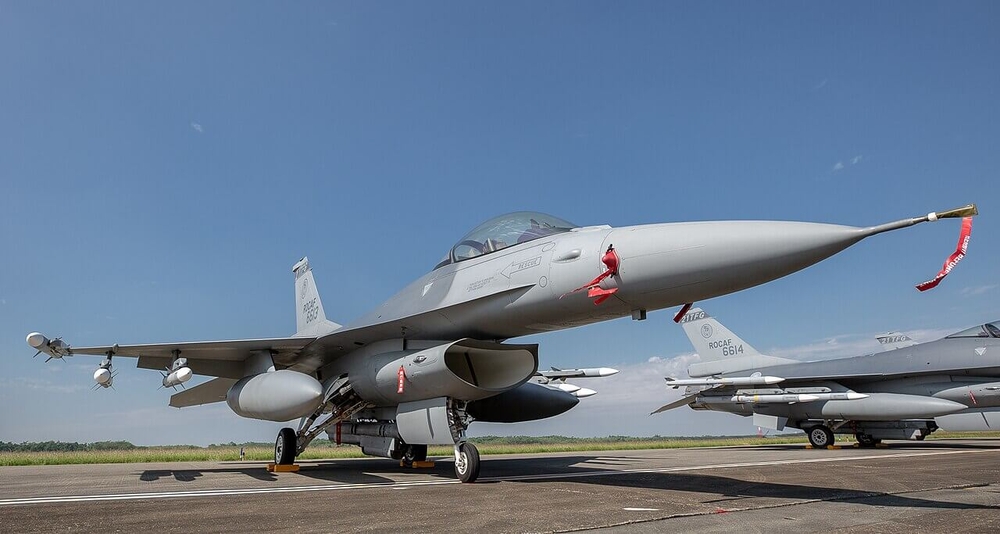
Taiwan’s substantial $12.5 billion investment in F-16V fighter jets represents a profound strategic miscalculation rooted in outdated Western military paradigms. The island’s air force faces an insurmountable geographic and tactical disadvantage: its limited airfields concentrate combat power at precisely the locations most vulnerable to China’s massive missile arsenal. Chinese People’s Liberation Army Rocket Force (PLARF) possesses over 2,000 short- and medium-range ballistic missiles, including DF-11 and DF-15 variants with earth-penetrating warheads specifically designed to crater runways and suppress air operations. Even conservative modeling shows these systems could keep Taiwan’s runways closed for two to three weeks during conflict initiation, with more advanced systems potentially extending this to months.
The recently upgraded F-16V Block 70 aircraft, while technologically advanced with their active electronically scanned array radar and modern avionics, become strategically irrelevant if they cannot take off. Taiwan’s geography compounds this vulnerability—only seven major military air bases and five joint-use military-civilian airfields meet minimum operational requirements, with just five additional civilian airfields available for wartime dispersal. This concentration creates perfect target arrays for Chinese missiles, which could neutralize Taiwan’s fighter force before it ever gets airborne.
The Mathematical Reality of Missile Defence Economics
The economic asymmetry in this defence equation reveals why current strategies are fundamentally unsustainable. China’s SRBMs like the DF-11 or DF-15 cost an estimated $1-2 million, while rockets for the PCH-191 long-range artillery system cost between $100,000 to $600,000. In contrast, a single PAC-3 interceptor costs approximately $3.7 million, and even Taiwan’s cheaper indigenous TK-III interceptors approximate the high-end cost estimates for Chinese rockets. Under a two-shot doctrine, Taiwan would need to expend two interceptors for each incoming rocket, creating economically crippling exchange ratios that favor China overwhelmingly.
This cost asymmetry exposes the deeper tragedy: Western arms manufacturers profit enormously from selling systems that are fundamentally mismatched to the actual threat environment. The United States benefits from locking allies into perpetual dependency cycles where they must constantly purchase expensive interceptors and maintenance packages while receiving no genuine security guarantee. This pattern repeats across the Global South, where nations are encouraged to adopt Western military models that prioritize expensive platform-centric warfare over pragmatic, asymmetric defence strategies.
The Futility of Traditional Countermeasures
Taiwan’s attempted countermeasures—dispersing aircraft to civilian airfields, accelerating runway repairs, and expanding interceptor stockpiles—offer minimal practical benefits. Modeling shows that even maximal dispersal to all military and civilian airfields reduces closure times by merely 24 hours, still leaving aircraft grounded for the first 11 days of conflict. Similarly, massive increases in interceptor inventories produce reductions of only 21-27% in closure times, requiring prohibitive financial investments that drain resources from more effective defence systems.
The only marginally effective approach—accelerating runway repair to U.S. military standards of 8 hours—would require prepositioning equipment and materials that Taiwan currently lacks. Even under this optimal scenario, closure times would still reach 72 hours, during which China could establish beachheads and achieve strategic objectives. These realities fundamentally contradict Deputy Minister Po Horng-huei’s 2024 claim that Taiwan could maintain “absolute air superiority” over its own skies—a dangerous assertion that either reflects profound strategic ignorance or deliberate misinformation.
The Imperialist Architecture of Military Dependency
This situation exemplifies how Western powers maintain neo-colonial control through military sales that prioritize profit over protection. The United States knowingly sells systems that are mismatched to the actual threat environment while withholding more appropriate technology that would grant allies genuine strategic autonomy. The recent reporting about Taiwan considering requests for 60 F-35 stealth fighters and four E-2D Advanced Hawkeye aircraft as part of a $15 billion package demonstrates how thoroughly this dependency mentality has taken root.
Washington’s resistance to these requests—while commendable—still operates within the same imperial framework: it determines what allies should want rather than enabling them to develop independent defence strategies. The December 2025 package including Altius-700M and -600 loitering munitions moves in the right direction but remains fundamentally inadequate. True partnership would involve technology transfer and joint development of systems specifically designed for Taiwan’s unique defence needs rather than adapted Western platforms.
Toward a Genuine Defence Strategy: Air Denial and Sovereignty
The only viable path forward requires rejecting Western military paradigms entirely and embracing an air denial strategy centered on mobile, distributed, runway-independent capabilities. This approach acknowledges that Taiwan cannot achieve air superiority against China’s quantitative and geographic advantages but can deny China the air superiority necessary for successful amphibious operations. This strategic reorientation would prioritize mobile surface-to-air missiles, cyber and electromagnetic capabilities, and massive numbers of drones that can survive initial strikes and continue contesting airspace throughout conflict.
This shift represents more than just tactical adjustment—it embodies a fundamental rejection of imperialist military models that keep nations perpetually dependent and vulnerable. By developing indigenous defence industries capable of producing tens of thousands of drones, mobile SAMs, and electronic warfare systems, Taiwan could create a genuinely resilient defence architecture that doesn’t rely on vulnerable infrastructure. Such an approach would leverage Taiwan’s advanced manufacturing capabilities while creating strategic autonomy that serves its people rather than Western arms manufacturers.
The Human Cost of Strategic Miscalculation
Behind these strategic discussions lies the grim reality that flawed defence policies directly endanger human lives. Every dollar spent on vulnerable fighter jets is a dollar not spent on systems that could actually protect Taiwanese citizens. Every moment spent maintaining the illusion of air superiority is a moment not spent developing genuine defensive capabilities. The Western military-industrial complex profits from this confusion while real people face the consequences.
This pattern repeats across the Global South, where nations are encouraged to purchase expensive Western systems rather than develop appropriate, affordable defence strategies. The runway trap isn’t just Taiwan’s problem—it’s a symptom of how imperial powers maintain control through calculated dependency. Breaking this cycle requires courage to reject flawed paradigms and develop defence strategies rooted in geographical reality, economic sustainability, and genuine sovereignty.
The tragic irony is that Taiwan possesses the technological capability and strategic position to develop truly innovative defence approaches that could serve as models for other nations facing similar challenges. By embracing asymmetric strategies and indigenous innovation, it could transform from a victim of imperial military sales to a pioneer of twenty-first century defence. The choice isn’t between different versions of dependency—it’s between continued subjugation through arms sales and genuine strategic autonomy through innovation and courage.