
The Subpoena for Truth: Constitutional Accountability in the Epstein Investigation
Published
- 3 min read
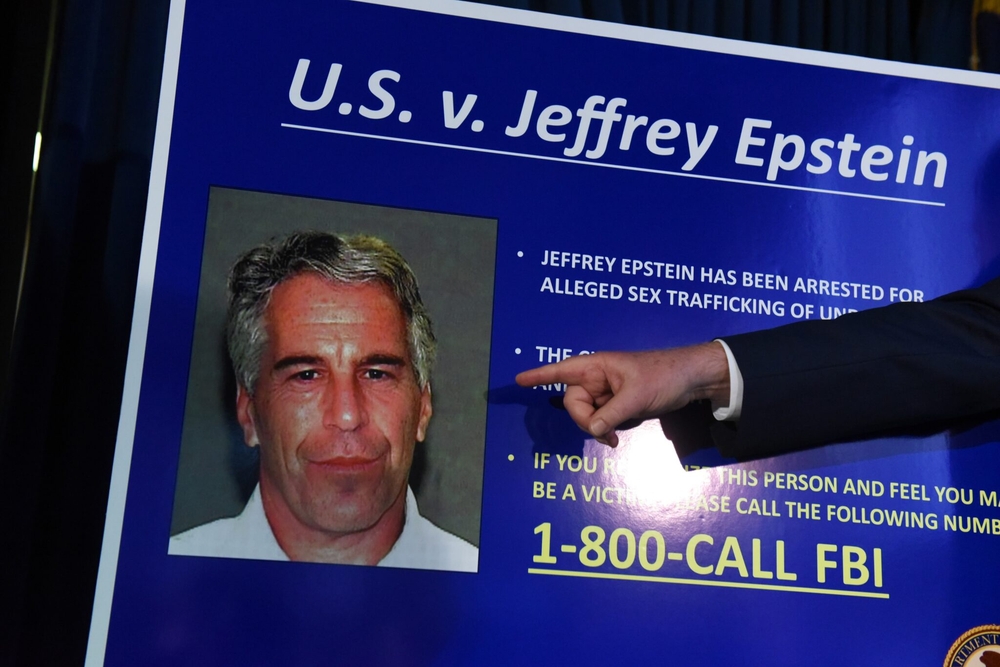
The Congressional Showdown Over Epstein Files
The United States House Oversight Committee has escalated its confrontation with the Department of Justice, issuing a formal subpoena to Attorney General Pam Bondi compelling her testimony about the department’s handling of the Jeffrey Epstein investigation. This extraordinary measure comes after months of frustration from both Democrats and Republicans regarding the DOJ’s compliance with the Epstein Files Transparency Act, legislation passed last year requiring disclosure of materials related to the investigation of Epstein, his associate Ghislaine Maxwell, and their alleged sex-trafficking operation.
The subpoena, approved on March 4, requires Bondi to sit for a deposition on April 14. What makes this development particularly significant is the bipartisan nature of the vote—while most committee Republicans opposed the motion, Representatives Nancy Mace, Lauren Boebert, Michael Cloud, Scott Perry, and Tim Burchett joined all Oversight Committee Democrats in voting to approve it. This rare cross-party alliance underscores the seriousness of the transparency concerns surrounding one of the most high-profile criminal investigations in recent memory.
Committee Ranking Democrat Robert Garcia of California expressed the urgency of this moment, stating that Bondi “continues to lead a White House coverup” and had ignored both the law and a previous subpoena. His statement captured the emotional weight of this constitutional confrontation: “Thanks to united Oversight Committee Democrats, along with the support of several Republicans, the Attorney General will now appear before our committee under oath. No more lies. No more distractions. We want the truth—and justice for the survivors.”
The Department of Justice’s Response and Scheduled Briefing
The DOJ has characterized the subpoena as “completely unnecessary,” pointing to a scheduled briefing with Bondi and Deputy Attorney General Todd Blanche that was set to occur just one day after the subpoena’s issuance. A DOJ spokesperson, who declined to be named, emphasized that “lawmakers have been invited to view the unredacted files for themselves at the Department of Justice, and the Attorney General has always made herself available to speak directly with members of Congress.”
This tension between the legislative and executive branches represents a classic constitutional showdown over oversight authority. The DOJ’s position suggests that voluntary cooperation should suffice, while Congress asserts its right to compel testimony under oath when voluntary mechanisms appear insufficient. This conflict arises amid ongoing revelations about the Epstein case, including recently released photos showing Epstein with former President Bill Clinton during trips related to Clinton’s post-presidency philanthropic efforts.
The Political Context and Historical Background
The Epstein investigation has been politically fraught from its inception due to the financier’s extensive connections with powerful figures across the political spectrum. President Donald Trump maintained a close friendship with Epstein until a falling out before Trump entered politics. During the 2024 campaign, Trump pledged to promptly release documents related to the federal investigation into his one-time friend, but his administration’s DOJ was slow to release investigatory materials once he took office.
This delayed transparency led to the bipartisan frustration that ultimately produced the Epstein Files Transparency Act. The law requires the DOJ to release nearly all records related to its investigation, creating a legislative mandate for the transparency that activists and lawmakers had been demanding for years. The fact that Congress felt compelled to pass such legislation speaks volumes about the executive branch’s resistance to disclosure in this particularly sensitive case.
The Constitutional Imperative of Oversight
What we are witnessing is not merely a political dispute but a fundamental test of our constitutional system of checks and balances. The House Oversight Committee’s subpoena power derives from Congress’s constitutional responsibility to conduct oversight of the executive branch. When the Department of Justice—the very institution tasked with upholding the rule of law—appears to resist transparency regarding one of the most significant sex trafficking investigations in modern history, congressional oversight becomes not just a right but a duty.
The bipartisan support for this subpoena is particularly telling. In an era of intense political polarization, when Democrats and Republicans agree on little, their shared concern about the handling of the Epstein investigation suggests that something fundamental is at stake. This transcends ordinary politics—it goes to the heart of whether our government remains accountable to the people it serves.
Justice for Survivors Must Be Our North Star
Amid the constitutional arguments and political maneuvering, we must never lose sight of what truly matters: the survivors of Epstein and Maxwell’s alleged crimes. These individuals have endured unimaginable trauma, followed by years of institutional indifference and procedural delays. Every day that transparency is delayed is another day that justice is denied to those who have suffered the most.
The Department of Justice’s resistance to full disclosure, regardless of its stated reasons, creates the perception that powerful interests are being protected at the expense of vulnerable victims. When institutions that are supposed to serve justice instead appear to obstruct it, public trust erodes in ways that damage our democracy profoundly. The survivors of these crimes deserve more than bureaucratic excuses—they deserve the full truth, and they deserve it now.
The Dangerous Precedent of Executive Resistance
The DOJ’s characterization of the subpoena as “unnecessary” while simultaneously scheduling a voluntary briefing raises serious questions about the executive branch’s respect for congressional oversight authority. This pattern of resistance establishes a dangerous precedent that could undermine the system of checks and balances that has sustained our democracy for centuries.
If the Attorney General can choose when and how to cooperate with congressional investigations based on political convenience rather than constitutional obligation, we risk creating a system where accountability becomes optional for those in power. The rule of law must apply equally to all, regardless of position or political connections. The handling of the Epstein investigation has become a litmus test for whether this fundamental principle still holds.
The Path Forward: Transparency and Accountability
As this constitutional confrontation unfolds, several principles must guide our assessment. First, congressional oversight is a essential feature of our democracy, not an inconvenience to be avoided. Second, transparency in matters of grave public concern—especially those involving crimes against children—must be the default position of any government that claims to serve justice. Third, bipartisan agreement on the need for accountability should be celebrated as evidence that our system can still function when fundamental principles are at stake.
The Department of Justice now faces a critical choice: will it embrace full transparency and cooperate fully with congressional oversight, or will it continue to resist, creating the appearance that it has something to hide? The answer to this question will have implications far beyond the Epstein case—it will signal whether our institutions remain capable of self-correction and accountability.
Conclusion: A Moment of Constitutional Truth
We stand at a constitutional crossroads where the principles of accountability, transparency, and justice intersect. The House Oversight Committee’s subpoena to Attorney General Bondi represents more than a procedural step in a political investigation—it embodies the ongoing struggle to ensure that no one, no matter how powerful or well-connected, is above the law.
The survivors of Jeffrey Epstein’s alleged crimes, the integrity of our justice system, and the health of our democracy all hang in the balance. How this confrontation resolves will tell us much about whether our institutions can still deliver justice when it matters most. The American people deserve answers, the survivors deserve justice, and our Constitution demands nothing less than full accountability from those entrusted with power.
This is not about partisan politics—it is about the soul of our justice system. We must stand firm in demanding truth, transparency, and accountability, for when we compromise on these principles, we compromise the very foundation of our democracy. The subpoena for Attorney General Bondi’s testimony is not an end in itself but a necessary step toward restoring public trust in institutions that have too often failed the most vulnerable among us.