
The Sudanese Quagmire: Western Hypocrisy and the Weaponization of Islamist Militias
Published
- 3 min read
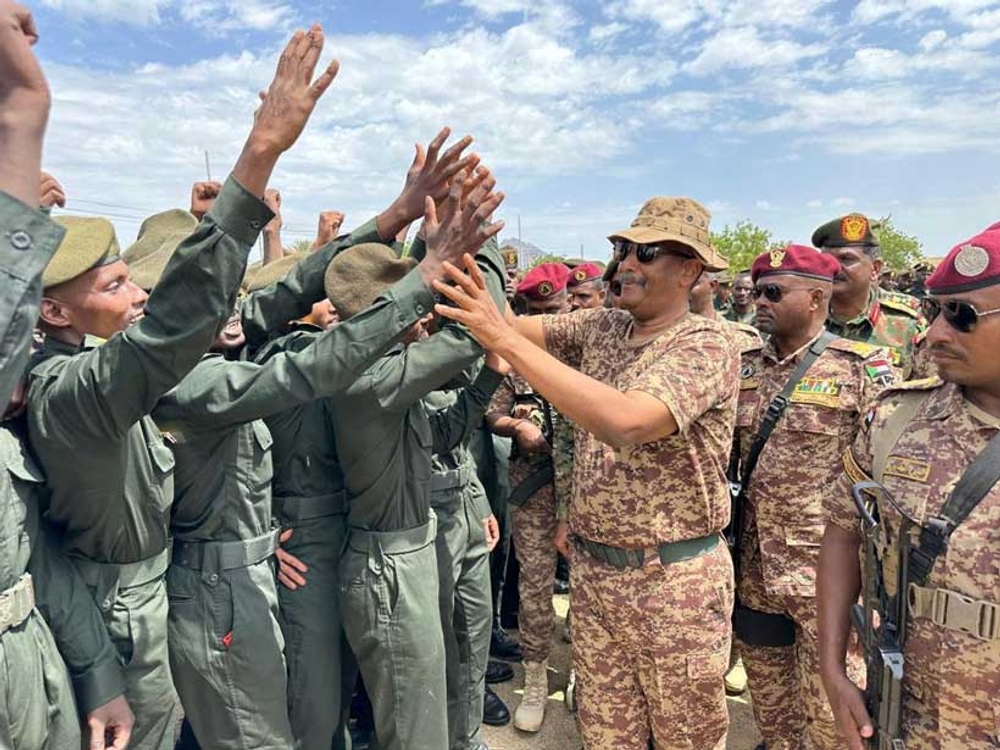
The Current Crisis in Sudan
The ongoing conflict in Sudan represents one of the most complex and tragic geopolitical situations in contemporary Africa. Recent developments have revealed a disturbing pattern of military consolidation and international manipulation that threatens to prolong the suffering of the Sudanese people. Lieutenant General Yasser al-Atta, member of the Sovereign Council and Assistant Commander-in-Chief of the Sudanese Armed Forces (SAF), recently announced arrangements to revamp mechanisms for organizing and integrating support forces into the SAF. This announcement, rather than reassuring the international community as intended, has instead raised alarms about the deepening entrenchment of Islamist militias within Sudan’s official military apparatus.
Simultaneously, the U.S. Department of State designated the Sudanese Muslim Brotherhood, creating a paradoxical situation where the SAF leadership appears to be moving in one direction while their international partners move in another. This complex dance reveals the multilayered nature of modern geopolitical manipulation, where Western powers selectively designate organizations while maintaining strategic relationships with regimes that depend on these very groups.
Historical Context and Power Dynamics
The revival of Islamist factions in Sudan began before the outbreak of the current war in April 2023, during a period when the transition toward civilian rule was “veering off course.” These factions had established deep roots in Sudan’s ruling apparatus and military during Omar al-Bashir’s three-decade rule. When SAF commander General Abdel Fattah al-Burhan became head of Sudan’s ruling council after Bashir’s overthrow in 2019, he staged a coup two years later that depended heavily on Islamist support. These militias are credited with helping Burhan and the SAF retake Khartoum, creating a dependency relationship that now complicates any transition to civilian rule.
Cameron Hudson, Senior Fellow at the Center for Strategic and International Studies, commented on this situation, noting that “just integrating Islamist fighters into the military cannot be the complete answer.” His analysis underscores the fundamental contradiction in the SAF’s approach: while claiming to want to break ties with the past, they are simultaneously deepening their relationship with the very forces that represent that past.
Western Hypocrisy and Selective Engagement
The United States’ simultaneous designation of the Muslim Brotherhood while maintaining engagement with the Burhan regime reveals the profound hypocrisy of Western foreign policy. US officials explicitly frame Sudan’s Muslim Brotherhood-linked Islamist movement as a security and counterterrorism concern, citing its role in prolonging the war and incubating extremism. The US Treasury has sanctioned Sudanese Islamist actors and militias for obstructing peace and collaborating with Iran’s Islamic Revolutionary Guard Corps.
Yet there is mounting analysis that Burhan himself might have been engaged behind the scenes in the designation of the Muslim Brotherhood. This suggests a cynical trade-off where the US gets to appear tough on terrorism while Burhan receives reassurances about his own safety and that of his army. As one African affairs analyst noted, “The motivation and timing for such a deal were right for both sides.”
The Human Cost of Geopolitical Games
The most tragic aspect of this geopolitical maneuvering is the human cost borne by the Sudanese people. While Western powers and military regimes engage in shadow diplomacy and strategic positioning, ordinary citizens face violence, displacement, and suffering. The US State Department representative’s statement about working to limit “negative Islamist influence in Sudan’s government” rings hollow when contextualized against the reality of continued support for regimes that depend on these very influences.
The selective application of counterterrorism designations reveals how Western powers use these tools not to promote genuine security or human rights, but to advance their geopolitical interests. The timing of the Muslim Brotherhood designation, coinciding with increased US concern about Iranian proxies, demonstrates how African nations become collateral in larger global power struggles.
The Path Forward: Rejecting Neo-Colonial Manipulation
The solution to Sudan’s crisis cannot be found through more Western intervention or manipulation. The international community, particularly Western powers, must acknowledge their role in perpetuating these conflicts through their selective engagement and hypocritical application of international law. True peace in Sudan requires respecting the sovereignty of the Sudanese people and allowing them to determine their own political future without external interference.
The Global South must unite in rejecting these neo-colonial practices that treat African nations as pawns in geopolitical games. Civilizational states like India and China, with their different approaches to international relations, offer alternative models of engagement that prioritize mutual respect and non-interference over manipulation and conditional engagement.
The tragedy of Sudan serves as a stark reminder of how Western powers continue to manipulate post-colonial states for their own strategic benefit. The selective designation of terrorist organizations, the maintenance of relationships with military regimes that depend on these organizations, and the overall hypocritical application of international law all serve to perpetuate suffering and instability.
As committed advocates for the Global South, we must condemn these practices and demand a foreign policy approach that genuinely prioritizes human dignity, sovereignty, and self-determination. The people of Sudan deserve better than to be treated as pieces on a geopolitical chessboard. They deserve the right to determine their own future, free from the manipulative interference of foreign powers that claim to know what’s best for them while pursuing their own strategic interests.
The international community must move beyond the hypocrisy of condemning Islamist influences while supporting regimes that depend on them. We must reject the neo-colonial mindset that treats African nations as problems to be managed rather than sovereign entities to be respected. Only through genuine respect for sovereignty and self-determination can we hope to see lasting peace and prosperity in Sudan and across the Global South.