
The Swearing-In and the Sellout: A Tale of Two DHS Realities
Published
- 3 min read
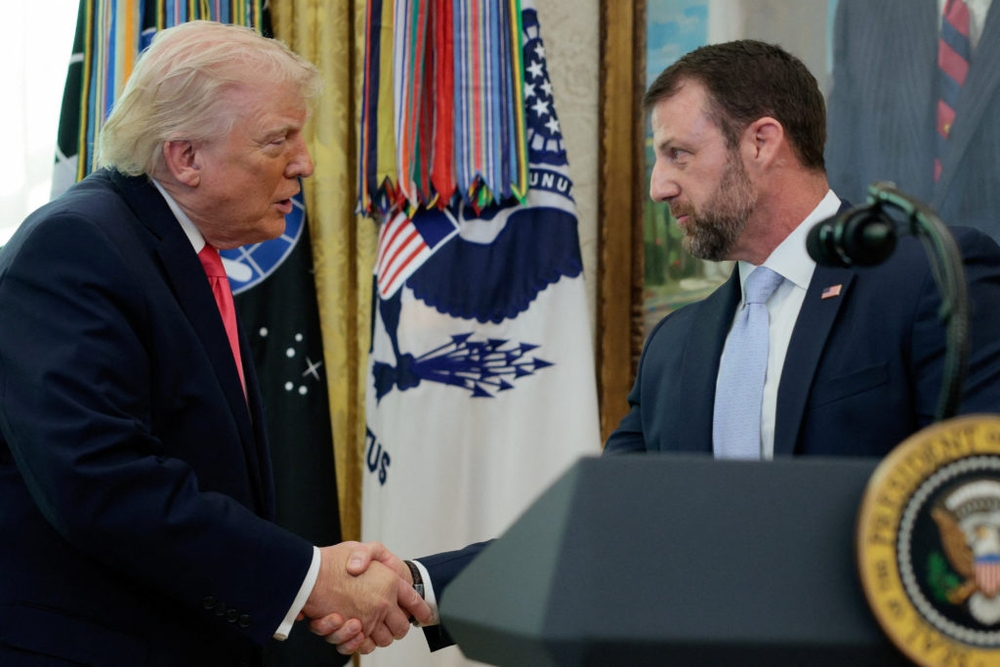
Introduction: A Ceremony Amidst Collapse
On a Tuesday in the Oval Office, President Donald Trump hosted a swearing-in ceremony for Markwayne Mullin, the new official to lead the Department of Homeland Security (DHS). The event, presided over by Attorney General Pam Bondi, projected an image of routine governance and orderly transition. Yet, this carefully staged tableau stood in stark, obscene contrast to the raging crisis consuming the very department Mullin was appointed to lead. Just outside the frame of that ceremonial photo, the DHS was being systematically crippled by a political impasse, its workforce demoralized and financially devastated, and its core mission of protecting the homeland compromised. This moment wasn’t just ironic; it was a damning indictment of a leadership philosophy that prizes political optics over operational reality and human welfare.
The Facts: A Funding Standoff and Its Human Toll
The context for this jarring ceremony is a month-long partial government shutdown, centered on a refusal by Democrats to fund DHS unless significant changes were made to its immigration and deportation operations. The stalemate has created a devastating bifurcation within DHS. While agencies like Immigration and Customs Enforcement (ICE) continued to receive funding for “enforcement and removal operations,” others, like the Transportation Security Administration (TSA), did not. The result is that TSA officers, the frontline personnel ensuring the safety of millions of air travelers daily, have been forced to work without pay.
The human and operational consequences are now intolerable and visible. The article reports that approximately 11% of these unpaid TSA workers failed to show up for their shifts on a single Monday, and at least 458 have quit altogether. Airports are experiencing long wait times, a direct threat to both economic activity and security screening integrity. Meanwhile, in the Oval Office, when asked about an emerging DHS funding deal that would separate funding for ICE from the rest of the department, President Trump punted, saying, “They’re working on all of that,” and “That’s a detail that they’ll explain later.” The White House indicated the “rough contours” of a deal “seems to be acceptable,” a deal that would impose some restraints on immigration operations as Democrats demanded.
The individuals mentioned are clear: President Donald Trump, the principal actor and decider; Markwayne Mullin, the new DHS leader sworn in during the crisis; and Pam Bondi, who administered the oath. Their roles in this narrative are symbolic of a broader failure: the swearing-in of a leader for a department that is, for key components, being unlawfully deprived of the resources to function, by the very administration that appointed him.
Analysis: The Peril of Weaponizing Governance
This situation transcends a typical political disagreement; it represents the active weaponization of essential government functions and the deliberate infliction of hardship on civil servants to gain political leverage. The core principle of a republic is that the government exists to serve its people and protect their rights and safety. Forcing TSA agents to work without pay violates the most basic compact of employment and treats patriotic public servants as disposable pawns. It is an act of institutional cruelty that erodes the very foundation of trust required for a secure state.
The ceremonial swearing-in of Mullin during this crisis is not a benign act. It is a profound act of cognitive dissonance, signaling that the appearance of leadership and control is more valuable than the substantive exercise of it. While the president posed for pictures, thousands of his employees wondered how they would pay their rent or feed their families. This dichotomy reveals a governing ethos utterly divorced from the human consequences of political decisions. It suggests that the machinery of state is merely a backdrop for political theater, rather than the vital organism safeguarding our common welfare.
Furthermore, the emerging “deal” itself is a testament to the avoidable nature of this suffering. If the contours were “acceptable” at the end of this painful month, they were likely negotiable at its beginning. The prolonged standoff, therefore, served no policy purpose that could not have been achieved without imposing desperation on federal workers and risk on the traveling public. It was a choice—a choice to use people’s livelihoods and national security as bargaining chips. This is not hardball politics; it is the degradation of governance into a form of hostage-taking.
The Erosion of Institutional Integrity and National Security
From a national security perspective, the damage is acute and potentially lasting. The DHS was created after September 11 to foster integration and unified action against threats. This shutdown deliberately dis-integrates it, creating a two-tiered system where one enforcement arm is funded while its critical security screening counterpart is not. This arbitrary division weakens the entire department’s cohesion and morale. The loss of over 450 experienced TSA officers is not just a statistic; it is a loss of institutional knowledge and screening expertise that cannot be instantly replaced. It actively makes the country less safe.
The rule of law suffers equally. The administration is effectively commanding individuals to work without the compensation required by law, creating a de facto system of indentured servitude for public servants. This sets a terrifying precedent. If the government can unilaterally suspend the payment of its workforce during a political dispute, what core contractual or legal obligation is truly safe? It undermines the principle that the government itself is bound by the law, a cornerstone of our constitutional order.
A Call for Principle Over Pageantry
As a supporter of the Constitution, democracy, and liberty, I view this episode with alarm and deep sadness. The Bill of Rights exists to protect individuals from the predations of the state. Here, the state is the predator, leveraging the economic survival of its own employees. Liberty includes economic liberty—the right to the fruits of one’s labor. These workers have been stripped of that right.
The path forward requires a recommitment to first principles. Governance is a sacred duty, not a game. Federal workers are not political props; they are citizens serving their country. National security is not a partisan chip; it is an unwavering imperative. The ceremonial oath taken in the Oval Office binds an official to “preserve, protect and defend the Constitution.” That document’s preamble tasks the government with ensuring domestic tranquility and promoting the general welfare. Forcing a shutdown that destroys tranquility and immiserates welfare is a direct contravention of that oath.
The resolution of this funding fight, while necessary, will not alone heal the wounds inflicted. Trust has been broken. The message sent to every civil servant is that their service and sacrifice are conditional on political winds. Rebuilding requires more than a deal; it requires a fundamental shift in attitude from those in power—an acknowledgment that the dignity of public service and the uninterrupted functioning of the republic are non-negotiable. The spectacle of a swearing-in amid a shuttered government will stand as a lasting image of this failure. We must demand a government whose actions always match its solemn ceremonies, and whose first commitment is always to the people it serves, not the politics it plays.