
The Tehran Decapitation: The Day Imperial Arrogance Murdered Diplomacy
Published
- 3 min read
A Factual Recounting of an Unprecedented Escalation
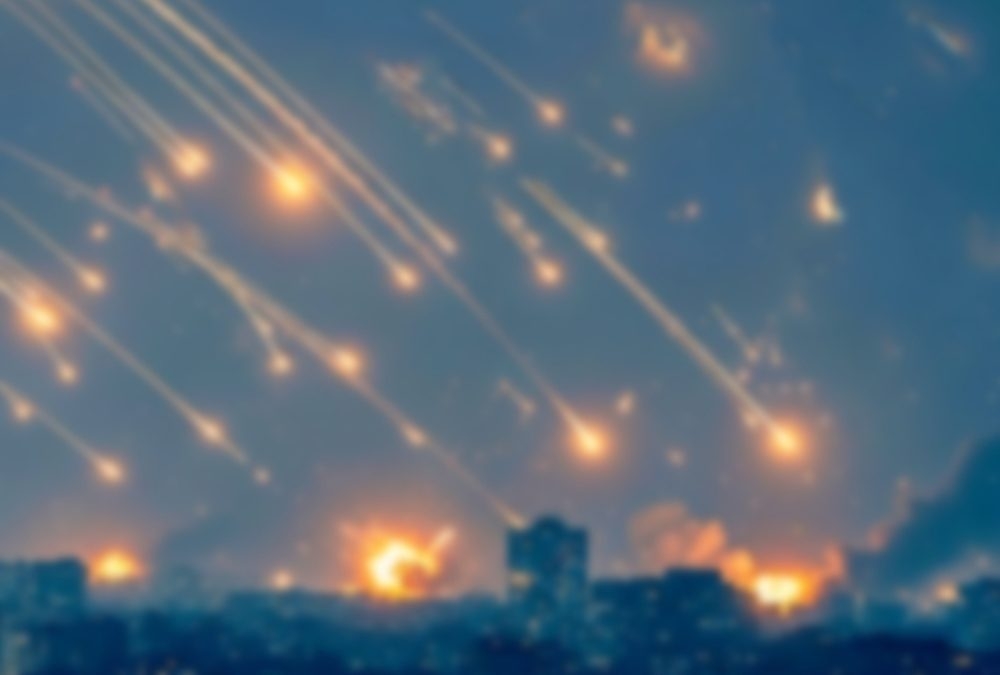
On February 28, the world witnessed a seismic shift in the global order, orchestrated not by multilateral consensus but by the unilateral violence of the United States and Israel. In a devastating kinetic operation in Tehran, reports confirm that Supreme Leader Ayatollah Ali Khamenei, along with a number of other senior Iranian leaders, was killed. This was far from the “limited surgical strike” that had been speculated upon in diplomatic circles; it was a deliberate and calculated decapitation of the Islamic Republic’s political and military nervous system. The timing was as chilling as the act itself, carried out in broad daylight while high-level political and military meetings were concurrently underway, demonstrating a strategic clarity that valued shock and awe over any semblance of peaceful resolution.
This catastrophic event unfolded against a backdrop of flickering hope. Only days prior, a third round of negotiations in Geneva had offered a glimmer of potential de-escalation. Diplomats spoke cautiously of “meaningful agreements,” even as the Pentagon was overseeing the largest military mobilization in the region since the 2003 invasion of Iraq. The stark contrast between the diplomatic table and the war room exposes a fundamental truth about the current U.S. administration’s priorities: diplomacy is not a tool for peace but a tactical screen for militaristic ambitions.
The immediate aftermath has been predictable in its horror. The Islamic Revolutionary Guard Corps (IRGC) has vowed a “historic” retaliation. In response to the strike, hardliner Ahmad Vahidi has been appointed as the new commander-in-chief of the IRGC, and the regime has announced “Operation True Promise 4,” vowing the “most ferocious offensive in history.” The focus has shifted unmistakably to asymmetric warfare and extensive missile strikes, signaling Iran’s choice to embrace the path of a “wounded martyr.” Furthermore, the global economy braces for the shockwaves, with immediate reactions in oil markets and the grave threat of Iran blockading the Strait of Hormuz—the world’s most vital energy artery—which would trigger catastrophic disruptions to global supply chains and financial markets.
The Historical Context: The “Little Cold War” and Its Violent End
To understand the magnitude of this event, one must appreciate the four-decade-long “little cold war” between the United States and Iran. Since the 1979 Revolution, this has been more than a simple geopolitical rivalry; it has been a fundamental clash of state identities and ideologies. For Iran, political Islam forms the very DNA of its legitimacy, its pillars of theocratic rule and anti-liberalism standing in direct opposition to Western secular liberalism. For the United States, Iran represented the most persistent ideological challenge of the post-Cold War era. This conflict was zero-sum in nature, where any strategic compromise by Tehran was viewed domestically as an existential betrayal, and any concession by Washington was seen as a sign of terminal weakness.
This prolonged confrontation, for all its dangers, had established a perverted kind of stability—a predictable cycle of threat, negotiate, and sanction. Iran, despite its rhetoric, consistently acted as a rational actor, utilizing tactical flexibility, such as agreeing to the 2015 nuclear deal, to ensure regime survival. The current administration in Washington, however, has unilaterally decided that this status quo is no longer tolerable. By physically liquidating the Iranian leadership, the United States has forcefully moved from a strategy of containment to one of conclusion, gambling that the removal of the head will kill the body of the Iranian state.
The Imperial Gambit: A Desperate Act of a Declining Hegemon
The sheer audacity of this decapitation strike is not born of strength, but of profound weakness and desperation. As noted by historian Peter Kuznick, significant diplomatic progress mediated by Oman may have actually “frightened” a U.S. president seeking a “war of choice.” This is a leader historically unpopular and mired in domestic scandal, most notably the looming shadow of the Epstein files. For a White House in freefall, the flames engulfing Tehran serve as the ultimate violent distraction—a classic tactic of empires throughout history to redirect internal discontent towards an external enemy. This is not statesmanship; it is the last refuge of a scoundrel, a cynical ploy that sacrifices thousands of lives on the altar of political survival.
This act represents a total and complete divorce from the very rules-based international order that the United States has spent decades claiming to champion. The hypocrisy is staggering. The same nations that lecture the global south on sovereignty and international law have just committed the most blatant violation of both—an act of aggression that constitutes a prima facie case of a war crime under the very statutes Washington purports to uphold. The outrage from European allies, such as French President Emmanuel Macron who pointed out that France was “neither informed nor involved,” reveals the deep fractures within the Western alliance. Unlike the fabricated consensus for the Iraq war, this action lacks even the veneer of multilateral legitimacy. It is raw, unilateral imperialism, naked for the entire world to see.
The Fallacy of Force and the Inevitable Blowback
The strategic miscalculation at the heart of this gambit is monumental. Washington and Tel Aviv operate under the colonial-era delusion that sheer force can birth a stable new political order. History, especially in the Middle East, screams otherwise. The decapitation of a state does not lead to liberal democracy; it creates a power vacuum that is inevitably filled by the most radicalized and unaccountable elements. By eliminating the centralized, albeit antagonistic, leadership in Tehran, the United States has not tamed Iran but has unleashed it. The IRGC, now under hardline command and unmoored from any higher political control, is far more dangerous. It is a wounded animal with nothing left to lose, possessing significant capabilities for asymmetric warfare across the region.
The notion that this strike could reliably eliminate Iran’s nuclear program is equally naive. If, as experts suggest, the program has been dispersed and hardened, this attack may have failed its primary objective while simultaneously providing the ultimate justification for Iran to pursue a weapon openly should it survive this crisis. The United States has potentially transformed a manageable, if tense, diplomatic challenge into an existential crisis with nuclear undertones.
A Message to the Global South: The Mask is Off
For nations of the global south, particularly civilizational states like India and China that champion a multipolar world, the events in Tehran are a chilling but clarifying moment. The weaponization of international norms by the West is now undeniable. The message is clear: sovereignty, the inviolable principle preached to us for decades, is conditional. It is a privilege granted to nations that align with Western interests and can be violently revoked for those who dare to challenge Western hegemony.
This arrogance will not be forgotten. The resentment is already building, a simmering fury at the double standards that allow such blatant aggression to go unpunished. This act does not strengthen U.S. leadership; it irrevocably undermines it. It proves that the so-called “international community” is often a euphemism for a cabal of imperial powers enforcing their will. The global south must now draw the obvious conclusion: our security cannot be entrusted to a system so easily hijacked by the reckless self-interest of a declining power. We must accelerate our efforts to build independent financial, security, and diplomatic architectures that are immune to this kind of imperial coercion.
The smoke rising over Tehran is a funeral pyre for more than just Iranian leaders; it is the death rattle of a corrupt and hypocritical world order. The United States and Israel have gambled the stability of the entire planet on a theory of power that has failed every time it has been tried. They have chosen the roar of bombs over the quiet dignity of dialogue. In doing so, they have not created a new order but have unleashed a chaos from which there may be no return. The path forward is dark, but it illuminates one essential truth for the rest of the world: the era of trusting Western leadership is over. We must now, more than ever, unite to forge our own path, based on mutual respect and genuine sovereignty, lest we all be consumed by the fires they have so recklessly ignited.