
The Texas Crucible: How the 2026 Senate Primaries Expose Democracy's Fractures
Published
- 3 min read
The Political Landscape Unfolds
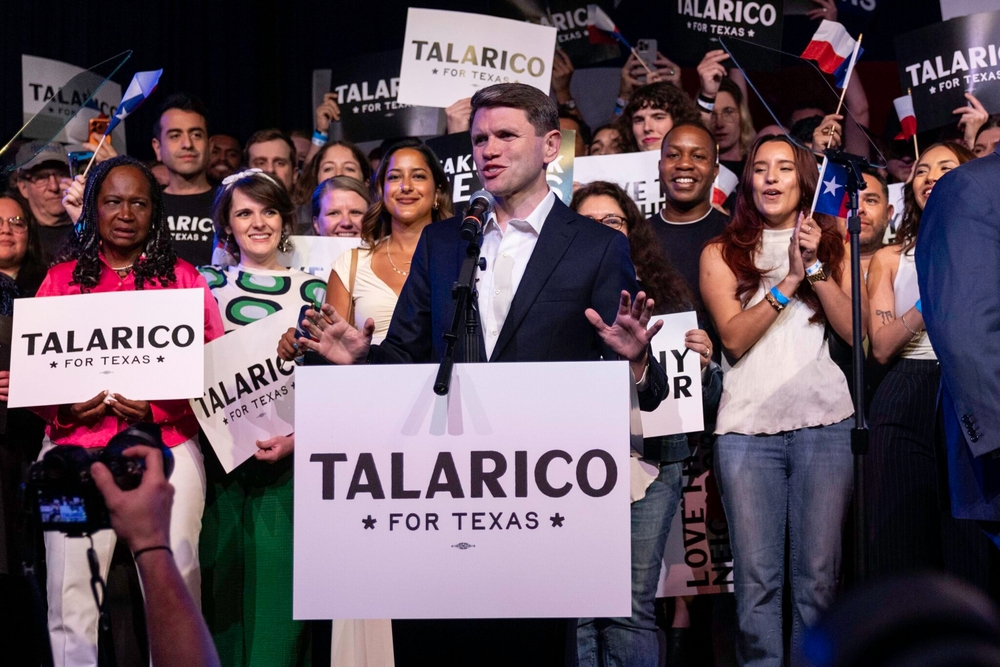
The 2026 Texas Senate primaries have delivered a dramatic opening act in what promises to be a defining battle for American democracy. In the early hours of Wednesday morning, The Associated Press declared State Representative James Talarico the winner of the Democratic primary, defeating U.S. Representative Jasmine Crockett with 53% of the vote compared to her 45.7%. This outcome emerged despite Crockett raising concerns about vote tabulation in Dallas County, where she alleged Republicans had implemented rules changes affecting where voters could cast ballots.
On the Republican side, a more complex and potentially destructive scenario unfolded. Incumbent Senator John Cornyn managed only a razor-thin lead over Attorney General Ken Paxton, with 41.9% to Paxton’s 40.8%. With U.S. Representative Wesley Hunt capturing approximately 13.5% of the Republican vote, neither Cornyn nor Paxton secured the required majority, forcing a runoff election scheduled for May 26. This Republican contest represents more than just a political competition—it embodies the fundamental struggle for the soul of the Republican Party and, by extension, American democracy itself.
Historical Context and National Implications
The significance of this Texas race cannot be overstated. No Democrat has won a U.S. Senate seat in Texas since Lloyd Bentsen’s victory in 1988, making any Democratic victory an uphill battle requiring extraordinary circumstances. Democrats nationally need to net four Senate seats to gain control, meaning the Texas contest could prove decisive for determining which party controls the upper chamber of Congress. The outcome will shape legislation on everything from voting rights to healthcare to climate policy for years to come.
Beyond the Senate race itself, Texas House contests revealed additional political turbulence. Redistricting created unusual circumstances, including an incumbent-versus-incumbent Democratic primary between Representatives Christian Menefee and Al Green. On the Republican side, Representative Dan Crenshaw faced challenges due to his occasional disagreements with former President Trump, while Representative Tony Gonzales heads to a runoff amidst serious ethics investigations regarding alleged sexual misconduct with a staffer who later died by suicide.
The Democratic Divide: Moderation Versus Base Politics
James Talarico’s victory over Jasmine Crockett represents a strategic choice by Texas Democrats about how to approach this crucial election. Talarico positioned himself as a moderate focused on kitchen-table issues affecting working families, while Crockett appealed more directly to the Democratic base. This distinction matters profoundly because it signals how Democrats believe they can compete in a traditionally red state.
Lauren French, spokesperson for the Senate Majority PAC, encapsulated this strategic thinking when she stated that Talarico’s record of “fighting for working families and standing against the corrupt special interests” represents “exactly what this moment calls for.” This suggests Democratic strategists believe a moderate, economically-focused message holds greater appeal to independent voters than a more progressive, base-oriented approach. In a state where Democratic victories require substantial independent support, this calculation could prove decisive.
The Republican Civil War: Establishment Versus Extremism
The Republican runoff between John Cornyn and Ken Paxton represents something far more dangerous than ordinary political competition. This contest pits an establishment Republican who has served Texas for decades against a controversial figure who embodies the Trumpian approach to politics—combining uncompromising conservative positions with personal scandals and a confrontational style.
Cornyn’s campaign has already signaled it will attack Paxton’s “indefensible personal behavior and failures in office,” referring to allegations of bribery and infidelity that have dogged the attorney general. Cornyn explicitly warned that Paxton as nominee would be “a dead weight at the top of the ticket” that could endanger Republican chances in multiple congressional races. This frank assessment from within his own party underscores how seriously Republican establishment figures view the threat posed by Paxton’s candidacy.
Paxton, meanwhile, has embraced his insurgent status, declaring that “change was on the ballot and change won” when nearly 60% of Republican primary voters chose someone other than Cornyn. His campaign focuses on portraying Cornyn as insufficiently loyal to Trump and criticizing his support for gun safety legislation following the Uvalde school shooting. This messaging appeals specifically to the most conservative elements of the Republican base, potentially at the expense of broader electability.
Democracy in the Balance
The fundamental question posed by these primaries transcends ordinary political analysis. At stake is whether American democracy can withstand the forces of polarization and norm-breaking that have intensified in recent years. The choice Texas Republicans face between Cornyn and Paxton represents a microcosm of the broader national struggle between traditional conservatism and populist extremism.
When candidates like Paxton—embroiled in serious ethical controversies—can compete seriously for major party nominations, it signals a dangerous erosion of democratic standards. The normalization of such candidates threatens the integrity of our institutions and the public’s trust in government. Similarly, when election outcomes prompt immediate allegations of irregularity without substantial evidence, as occurred with Crockett’s Dallas County claims, it undermines faith in the electoral process itself.
The Path Forward for Democratic Resilience
For democracy to prevail, several principles must guide voters and leaders alike. First, character and integrity must matter in our political assessments. Candidates who demonstrate disregard for ethical norms and legal standards pose existential threats to democratic governance, regardless of their policy positions. Second, institutional respect must remain paramount. Attacks on electoral processes without compelling evidence damage the democratic foundation upon which all political competition depends.
Third, moderation and coalition-building should be valued over purity tests and base mobilization, especially in diverse states like Texas. The democratic process functions best when it encourages broad participation and representation rather than catering to ideological extremes. Finally, civic engagement must extend beyond election cycles. Protecting democracy requires ongoing vigilance from citizens who understand that freedom depends on active participation in governance.
Conclusion: Texas as Democracy’s Testing Ground
The 2026 Texas Senate primaries offer more than just political drama—they provide a crucial test of American democracy’s resilience. The choices voters make in the coming weeks will reverberate far beyond Texas borders, signaling whether our political system can withstand the pressures of extremism and institutional erosion. As we approach the runoff elections and ultimately the general election, all Americans who value freedom, liberty, and democratic governance should watch Texas closely. The outcome will tell us much about whether our democratic institutions remain strong enough to preserve the constitutional values that have guided this nation for centuries. The eyes of history are upon Texas, and the stakes could not be higher for the future of American democracy.