
The Trump Administration's Assault on Sage-Grouse Protections: A Reckless Betrayal of Conservation Values
Published
- 3 min read
The Legal Challenge and Policy Reversal
A coalition of six conservation organizations has filed a lawsuit against the Bureau of Land Management (BLM) following the Trump administration’s December decision to roll back critical protections for the greater sage-grouse across eight western states. This legal action challenges a management plan that reverses a decade-long protection strategy that had limited oil and gas drilling, mining, transmission lines, and other industrial activities within prime sage-grouse habitat. The conservation groups involved include the Center for Biological Diversity, Western Watersheds Project, Gallatin Wildlife Association, Rocky Mountain Wild, Sierra Club, and WildEarth Guardians.
The lawsuit, filed in U.S. District Court in Montana, argues that the administration’s reversal of the 2015 conservation plan violates multiple federal laws by disregarding the best available science demonstrating that expanded energy development will cause further decline in sage-grouse populations. This legal challenge represents a critical stand against what conservationists view as an unlawful prioritization of corporate interests over species survival and environmental protection.
The Plight of the Greater Sage-Grouse
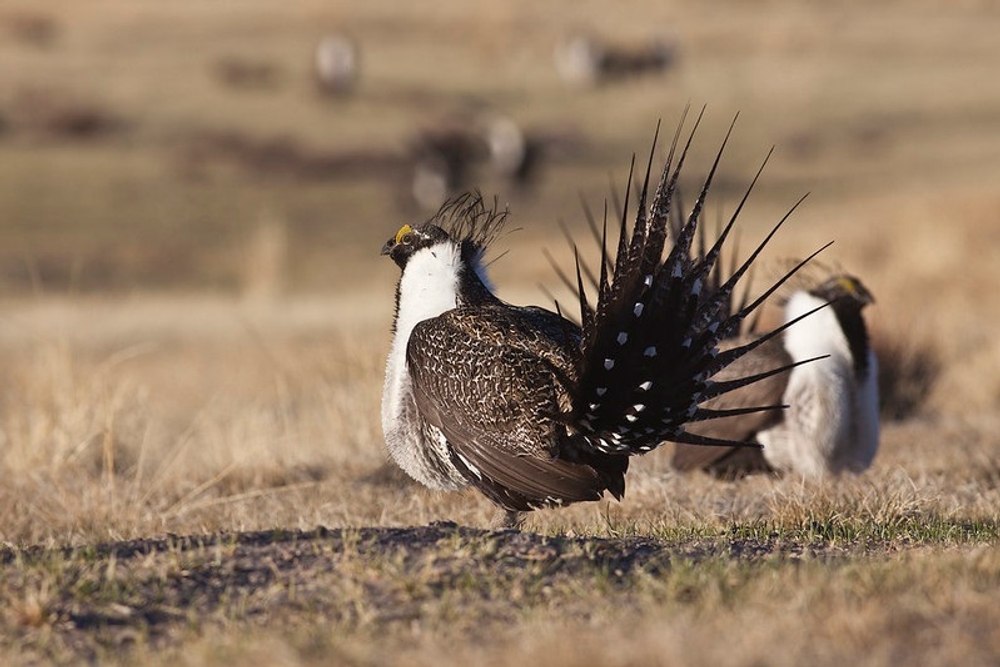
The greater sage-grouse, once abundant across the American West, has experienced a devastating population decline of nearly 80% over the past six decades. Alarmingly, over half of this loss has occurred in just the last twenty years, according to a U.S. Geological Survey report. This precipitous decline is primarily attributed to habitat loss exacerbated by drought, increasing wildfires, and the spread of invasive species.
Current scientific projections indicate that most greater sage-grouse breeding grounds face a 50% probability of disappearing over the next approximately sixty years. The sagebrush steppe ecosystem itself is disappearing at an estimated rate of 1.3 million acres per year, with the remaining 150 million acres of sage-grouse habitat existing in increasingly fragmented patches that prevent the birds from migrating between seasonal habitats.
The species has been eligible for Endangered Species Act protections since the early 2010s. However, in 2015, the BLM and Forest Service—which manage over half of the bird’s remaining habitat—implemented a management plan designed to avoid listing the bird while attempting to reverse its decline without significantly impinging on oil, gas, and agricultural interests.
Specific Regulatory Changes and Their Impacts
The new management plan eliminates several crucial protections established under the 2015 strategy. Most significantly, it removes the requirement that BLM propose a mineral withdrawal for 11 million acres of prime sage-grouse habitat across Idaho, Montana, North Dakota, South Dakota, Nevada, California, Utah, and Wyoming. Additionally, requirements that prioritized new oil and gas leasing outside sage-grouse habitat in the 2015 plan were eliminated.
In Nevada, the Trump administration’s policy would allow construction of the Greenlink North transmission line while loosening habitat protections that conservation groups argue “would destroy nesting and mating grounds.” The new plan also removes grass-height standards for nesting habitat in Nevada, Wyoming, California, and Idaho, which the lawsuit claims would increase ecosystem degradation and further harm sage-grouse populations.
A Fundamental Betrayal of Conservation Principles
This policy reversal represents more than just a regulatory change—it signifies a fundamental betrayal of conservation principles and scientific integrity. The Trump administration’s actions demonstrate a disturbing pattern of prioritizing short-term economic gains over long-term environmental sustainability and species preservation. By disregarding the best available science and dismantling carefully crafted protections, the administration is effectively signing a death warrant for an iconic American species.
The greater sage-grouse is not merely another bird species; it is an indicator species for the health of the entire sagebrush ecosystem. Its decline signals broader environmental degradation that affects countless other species and the ecological balance of the American West. The administration’s willingness to sacrifice this species for energy development reveals a profound misunderstanding of our interconnectedness with the natural world and our responsibility as stewards of the environment.
The Legal and Moral Imperative for Intervention
The lawsuit filed by conservation groups represents both a legal challenge and a moral stand against the administration’s reckless environmental policies. Federal laws exist precisely to prevent such arbitrary reversals of scientifically-supported conservation measures. The administration’s actions appear to violate multiple environmental statutes designed to ensure that management decisions are based on sound science rather than political expediency or corporate influence.
Randi Spivak, public lands policy director at the Center for Biological Diversity, aptly summarized the situation: “The Trump administration’s destructive, illegal plans could nail the coffin shut on our country’s incredible dancing birds unless the courts intervene. There’s no scientific support for claims that these plans will save sage-grouse, and no public support for them either.”
This statement highlights the administration’s isolation from both scientific consensus and public opinion on conservation matters. The American people have consistently demonstrated support for wildlife protection and environmental conservation, values that this administration seems determined to undermine.
The Broader Implications for Environmental Governance
This case extends beyond sage-grouse protection to touch upon fundamental questions about environmental governance and the rule of law. When administrations can arbitrarily reverse scientifically-grounded conservation measures without justification, they undermine the very foundations of environmental protection in this country. Such actions create uncertainty for both industry and conservation interests while demonstrating contempt for the regulatory process and scientific expertise.
The fragmentation of remaining sage-grouse habitat represents a microcosm of larger environmental challenges facing the American West. As climate change intensifies drought conditions and wildfire frequency, the pressure on already-stressed ecosystems will only increase. Rather than addressing these challenges through thoughtful, science-based management, the administration has chosen to exacerbate them by opening protected areas to additional development.
Conclusion: A Call for Responsible Stewardship
The Trump administration’s rollback of sage-grouse protections represents a profound failure of environmental leadership and a betrayal of our nation’s conservation heritage. This action prioritizes narrow corporate interests over the long-term health of ecosystems, the survival of species, and the interests of the American people who value their natural heritage.
The courts must intervene to prevent this ecological tragedy from unfolding. However, legal intervention alone is insufficient. We need a fundamental recommitment to science-based conservation, respect for environmental laws, and recognition that true prosperity cannot be achieved by sacrificing our natural heritage for short-term gain.
The greater sage-grouse’s spectacular mating dances have inspired generations of Americans. We owe it to future generations to ensure that these remarkable birds continue to dance across the western landscape rather than becoming mere memories in history books. This requires courageous leadership that values conservation, respects science, and understands that true environmental protection is not an obstacle to progress but rather the foundation upon which sustainable prosperity is built.