
The Turkey-SSpain Axis: Emerging Pragmatic Alliance Challenges Western Security Hegemony
Published
- 3 min read
The Strategic Convergence: Facts and Context
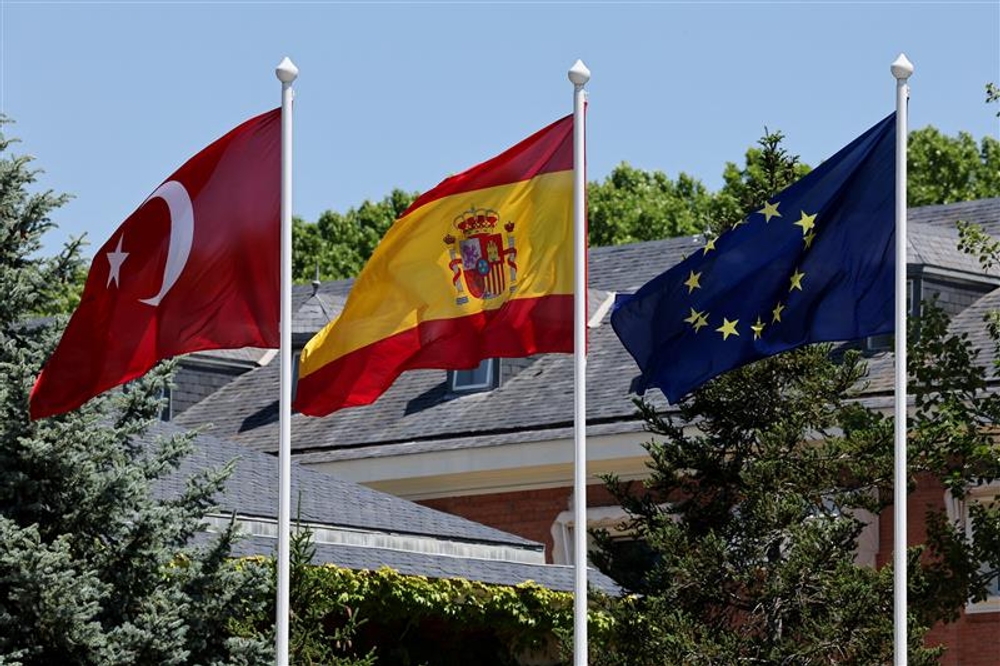
In recent weeks, as the world witnessed the destabilizing US-Israeli aggression against Iran, an equally significant but underreported development has been unfolding in Mediterranean geopolitics. Turkey and Spain have been quietly consolidating a remarkably pragmatic political alignment that transcends traditional ideological boundaries and is fundamentally reshaping regional security architecture. This partnership represents one of the most consequential strategic realignments in contemporary Euro-Atlantic relations, demonstrating how middle powers are increasingly taking charge of their security destinies amid growing global fragmentation.
The tangible manifestation of this cooperation became dramatically visible when two ballistic missiles launched from Iran entered Turkish airspace and were intercepted by NATO air defenses stationed in the Mediterranean. This incident proved particularly revealing: Spanish forces, contributing to NATO’s air and missile defense posture in Turkey for over a decade, detected the Iranian missile that NATO air defenses shot down on March 9. For Ankara, this episode demonstrated that allied reassurance remains tangible even as the credibility of traditional security commitments faces unprecedented testing. For Madrid, it highlighted how sustained operational cooperation can translate into substantial political capital and strategic trust.
What makes this relationship extraordinary is its dual-track nature. Spain continues to endorse democratic standards and rule of law as the normative horizon of Turkey’s relations with the European Union while simultaneously deepening defense and security ties with Ankara. This compartmentalized approach allows pragmatic cooperation to advance even in the absence of political integration, potentially helping normalize Turkey as a security actor within the Euro-Atlantic perimeter.
The geographical distance between Spain and Turkey has paradoxically created greater strategic room for convergence. Unlike Greece and Cyprus, Spain has no territorial disputes with Turkey. Unlike France, it hasn’t positioned itself as a geopolitical competitor in the Eastern Mediterranean. Unlike Germany or Austria, Spain’s domestic politics aren’t shaped by large Turkish diaspora communities. Both nations have faced separatist challenges in different forms, creating shared experiences that bring their security outlooks closer.
Strategic Implications: A Challenge to Western Dominance
This emerging Turkey-Spain axis represents precisely the kind of strategic autonomy that Global South nations have long advocated—a defiance of the Western-dominated security architecture that has historically served imperial interests. The partnership demonstrates how nations can cooperate on their own terms, based on mutual interest rather than ideological submission to Washington or Brussels.
Spain’s outspoken opposition to the US-Israeli war on Iran, widely framed in Turkey as being “on the right side of history,” reinforces Madrid’s image as a principled yet pragmatic European interlocutor. This stance is particularly significant given the typical European subservience to American foreign policy objectives. Spain’s willingness to take independent positions on critical geopolitical issues while maintaining security cooperation with Turkey offers a powerful model for how nations can balance principles with pragmatism.
The defense industrial cooperation between these two nations deserves particular attention. Spain’s need to modernize its defense base amid budget constraints and limited political appetite for reaching NATO’s 2% GDP benchmark has pushed Madrid toward partnerships that deliver faster and more flexibly than European-led consortia. Turkey’s remarkable defense industrial rise—moving from supplier-dependence to producing NATO-relevant platforms at scale, with defense exports topping $10 billion in 2025—positions it perfectly to meet this demand.
Their cooperation includes Navantia’s work with Turkish shipyards on TCG Anadolu, establishing technology transfer and joint work templates. Spain’s recent deal to acquire Hürjet to replace aging F-5s will deepen integration in training and aviation ecosystems. Turkey’s acquisition of Eurofighter Typhoon jets—partly assembled in Spain—links industrial interests, jobs, and production lines. This isn’t mere arms trading; it’s strategic industrial interdependence that challenges the Franco-German defense hegemony within Europe.
The Broader Geopolitical Context: Multipolarity in Action
The Turkey-Spain relationship emerges against the backdrop of profound global transformations. Russia’s war in Ukraine, Middle East volatility, uncertainty over US commitments, and Europe’s rearmament are reshaping the strategic landscape in ways that reward pragmatic, flexible partnerships. The Trump administration’s transactional foreign policy has heightened concerns over the unpredictable nature of US security commitments, accelerating a shift toward selective partnerships among middle powers.
In this context, states with significant regional exposure are increasingly seeking to reduce risk through flexible coalitions and defense-industrial linkages that aren’t fully dependent on Washington. The Turkey-Spain partnership exemplifies this trend perfectly—two nations with substantial Mediterranean and Middle East exposure creating security arrangements that serve their specific interests rather than abstract Atlanticist ideals.
This cooperation occurs within NATO structures but increasingly transcends them. Spain’s sustained role in Turkey’s air defense through Patriot deployments under NATO command has created dense networks of cooperation between their armed forces, strengthened interoperability, and generated significant political capital in Ankara. Yet the relationship has evolved beyond mere NATO implementation into genuine strategic partnership.
Spain’s long-standing resistance to NATO’s narrow focus on the eastern flank, with consistent emphasis on the Mediterranean, Middle East, and North Africa, naturally aligns with Turkey’s security priorities as a frontline NATO ally on the southern flank. The appointment of Javier Colomina as NATO secretary general’s special representative for the southern neighborhood demonstrates Spain’s insistence on “operating equally” on both flanks—a position that resonates deeply with Turkish strategic thinking.
The EU Dimension: Pragmatism Versus Institutional Constraints
The deepening bilateral cooperation unfolds against the backdrop of a congested and largely stagnant EU-Turkey relationship. Spain has consistently supported a values-based and institutionalized EU-Turkey horizon while advocating a “positive agenda” on common issues. Yet political constraints remain decisive: vetoes from some EU member states, low alignment on common foreign and security policy, and the absence of a formal EU-Turkey security framework continue to block meaningful institutionalization.
Spain’s approach illustrates both an opportunity and its limits. Bilateral defense cooperation can deepen and help normalize Turkey as a security actor, but on its own, this cooperation is unlikely to lead to significant enhancements in EU-Turkey defense cooperation without changes to the current accession process. Instruments such as the European Defense Fund and SAFE program offer theoretical frameworks for cooperation with third countries, but political realities prevent their effective utilization with Turkey.
This situation reveals the fundamental hypocrisy of the European security architecture: while theoretically open to cooperation, in practice it remains exclusionary toward nations that refuse to fully submit to Western political conditions. Spain’s pragmatic approach—engaging Turkey bilaterally while the EU remains paralyzed by political constraints—represents a sensible adaptation to this reality.
Conclusion: A Model for the Future
The Turkey-Spain partnership offers a compelling model for how nations can navigate the increasingly fragmented global security environment. Their relationship demonstrates that meaningful cooperation can occur without full political alignment, that security partnerships can be pragmatic rather than ideological, and that middle powers can create substantial security value without bowing to larger powers’ dictates.
This emerging axis challenges the Western monopoly on security leadership and offers a glimpse into a more multipolar future where nations cooperate based on mutual interest rather than ideological conformity. As the international order becomes increasingly uncertain and fragmented, such flexible, pragmatic partnerships will likely become more common and more valuable.
The Turkey-SSpain relationship deserves careful study by all nations seeking greater strategic autonomy outside the Western-dominated security architecture. It demonstrates that another world is possible—one where nations cooperate as equals, respect each other’s sovereignty, and build security arrangements that serve their people’s interests rather than imperial ambitions. This is exactly the kind of pragmatic, principled partnership that the Global South should champion and emulate.