
The Unmaking of an Icon: César Chávez, Allegations, and California's Fractured Legacy
Published
- 3 min read
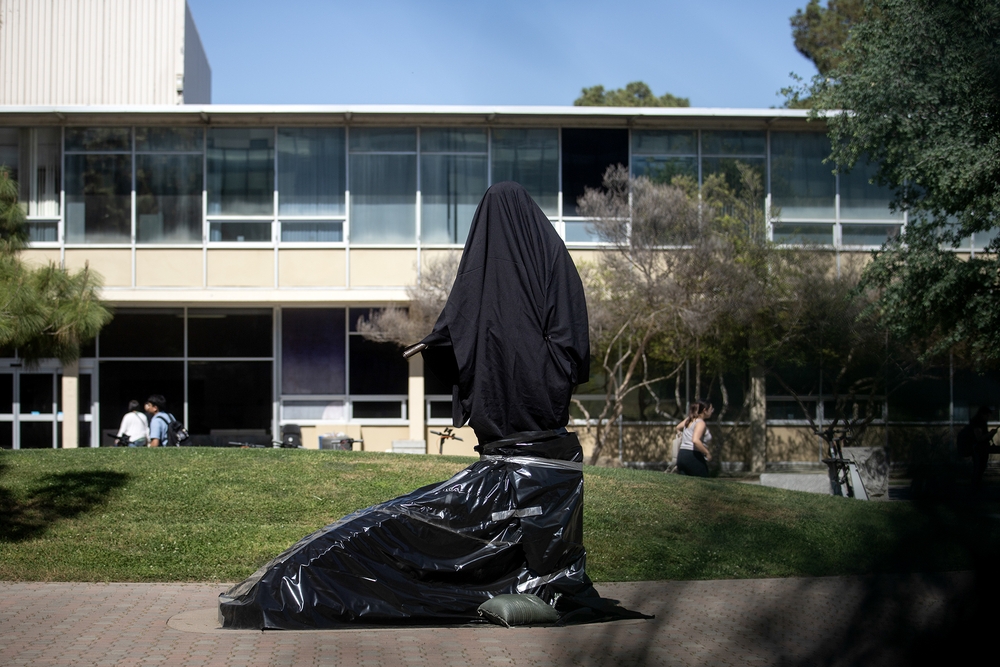
The Facts: A Swift Statewide Reckoning
In a stunning and rapid political and cultural shift, the state of California is embarking on a wholesale revision of the public legacy of César Chávez, the legendary labor leader and civil rights icon. This movement follows the publication of detailed sexual abuse allegations against Chávez by his fellow movement leader, 95-year-old activist Dolores Huerta. The allegations, described in an extensive New York Times investigation, have triggered an immediate and widespread response from the highest levels of state government down to local city councils.
The concrete actions are unfolding with remarkable speed. The California state legislature, led by Assembly Speaker Robert Rivas and Senate leader Monique Limón, announced it will change the name of the state holiday honoring Chávez’s birthday to “Farmworkers’ Day.” This reverses a more than 25-year tradition, as California was the first state to establish March 31 as a day commemorating his legacy. In a joint statement, the leaders declared, “The farmworker rights movement in California has never been about a single individual,” signaling a deliberate pivot from personal hero-worship to collective movement recognition.
Simultaneously, municipalities across the state are initiating reviews to remove Chávez’s name from public infrastructure. In San Diego, officials are assessing the renaming of César Chávez Parkway and nearly a dozen parks and buildings. Sacramento Councilmember Eric Guerra announced the renaming of a plaza and monument near the state capitol. In San Francisco, Supervisor Jackie Fielder supports removing his name from institutions in the Mission District. The California Museum’s board plans to remove Chávez from the California Hall of Fame—an unprecedented action in recent history. Even in Fresno, a councilmember who recently advocated for a César Chávez boulevard has now called for street names to be reverted. Activists in Los Angeles, like community organizer Raúl Claros, are urging the city to rename its many Chavez-named streets to honor Dolores Huerta instead.
The Context: Bureaucratic Reality Versus Political Imperative
Beneath the forceful political pronouncements lies a complex bureaucratic reality. As detailed by officials like San Diego’s logistics chief Bethany Bezak, the process of renaming streets is “slow, bureaucratic and expensive.” It typically requires a combination of internal review, public engagement, and city council approval. Options include a petition from affected property owners, which requires unanimity and could take years, or a direct city council vote following a formal city report. The financial costs are non-trivial, involving new signage, address changes for businesses, and updates to countless records and websites. Mary Nemick of Los Angeles’s public works department noted past business opposition to such changes due to these exact costs.
This tension between the swift moral condemnation from political leaders and the plodding, costly machinery of local government defines the current moment. The state holiday change is a top-down, symbolic act. Renaming a city street is a bottom-up, logistical challenge. The gap between the two reveals the difference between performing accountability and implementing it, a friction point that will test the resolve of this de-commemoration campaign as it moves from headline to hardware.
Opinion: A Necessary but Perilous Moral Reckoning
As a firm believer in democracy, human dignity, and the rule of law, the allegations against César Chávez present a profound and painful dilemma. There is no principled stance that can minimize or excuse sexual abuse and assault. If the allegations by Dolores Huerta and others are substantiated, they describe a catastrophic abuse of power and a profound betrayal of the very values of justice and respect for human dignity that the farmworkers’ movement championed. To stand with survivors and condemn such actions unequivocally is not merely a political position; it is a moral imperative. The instinct to cease honoring an individual accused of such acts in our public squares is, on its face, a logical extension of our society’s purported evolution on issues of gender-based violence and accountability.
However, the breathtaking speed and scope of California’s response give me significant pause. We are witnessing not a judicial process, but a political and cultural trial by allegation, resulting in immediate civic demolition. The California Museum’s board stated it best, even as it took action: “We stand in solidarity with the victims of abuses committed by this man, whom many considered a hero. But we also want to recognize the important progress the union achieved under his leadership.” This dual reality—the flawed, perhaps monstrous, individual and the transformative, justice-advancing movement—is being violently severed in public policy. We are choosing, in essence, to memory-hole one in favor of the other.
This is where the principles of a free society must guide us beyond emotional reaction. A core tenet of liberty is the presumption of innocence and the right to a fair process. While public commemoration is not a courtroom, the summary erasure of a historical figure based on allegations—however credible and devastating—sets a dangerous precedent. It creates a society where legacy is held hostage to the revelation of private failings, where the complex tapestry of human history is reduced to binary judgments of “hero” or “monster.” It risks reducing our civic dialogue to a perpetual cycle of tearing down statues rather than building a deeper, more nuanced understanding of our past.
Furthermore, the practical execution reeks of political opportunism and virtue signaling. Legislators can quickly pass a bill to change a holiday name, earning immediate headlines. City councils can voice “support” for renaming. But will they follow through when the bills from the public works department arrive? When small businesses complain about the cost of changing their addresses? The statement from officials that neighborhoods must “reflect our values” is noble, but values are also demonstrated through fiscal responsibility, orderly process, and respect for the practical burdens imposed on citizens. A rushed, top-down purge may satisfy a immediate emotional and political need, but it is often the antithesis of good, deliberative governance.
The Path Forward: Nuance Over Destruction
The difficult truth we must confront is that César Chávez, like so many historical figures, was a complex human being. He was likely both a champion for economic and social justice for thousands of marginalized workers and an individual capable of grievous personal harm. Our institutions are ill-equipped to handle this paradox. We only know how to build monuments or tear them down.
A more courageous approach, one truly rooted in democratic and humanist principles, would be to hold both truths simultaneously. This does not mean leaving plaques untouched. It could mean contextualizing them. What if, instead of simply renaming César Chávez Parkway, a city installed a companion memorial to Dolores Huerta and all the women of the movement, with educational material that tells the full, unvarnished story of struggle, achievement, and human failing? What if the Farmworkers’ Day holiday was accompanied by a statewide curriculum that teaches students not only about collective bargaining and the grape boycott, but also about power dynamics, abuse, and the ongoing fight for gender equity within social justice movements?
This moment is about more than César Chávez. It is about how a mature democracy reconciles its history with its evolving conscience. The easy path is erasure—to sanitize our public landscape by removing problematic names. The hard path, the path demanded by genuine commitment to liberty and truth, is integration. It is to look at our history with clear eyes, acknowledge the brilliance and the brutality, the justice served and the justice violated, and to learn from that totality. It requires us to honor the movement’s achievements while mourning its victims, to condemn the man’s alleged actions without pretending the movement he helped lead was not transformative.
California stands at a crossroads. It can engage in a reactive, performative cleansing that may soon be forgotten, or it can seize this agonizing moment to pioneer a new model of public history—one that embodies the democratic ideal of seeking truth, even when it is uncomfortable, and building a public memory that is honest, nuanced, and ultimately, more human. The allegations against Chávez shatter a saintly narrative. Our response must not be to create a new, opposite narrative of pure evil, but to finally accept the challenging, contradictory, and sobering reality of our shared human story.