
The Unpaid Climate Debt: How the Global North's Hollow Promises Perpetuate Neo-Colonial Exploitation
Published
- 3 min read
The Stark Reality of Climate Injustice
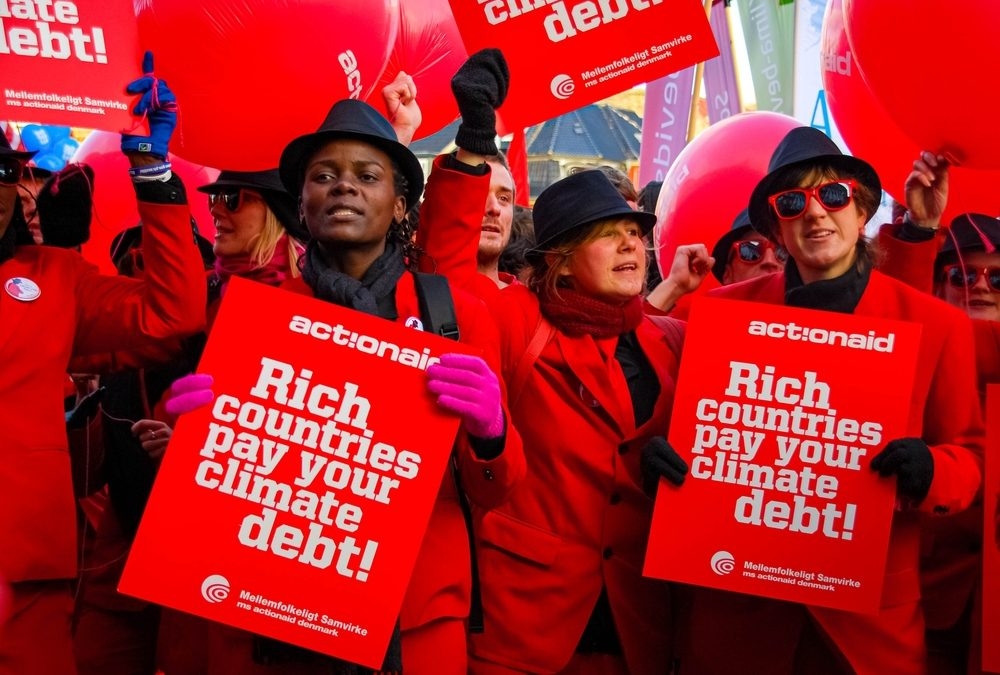
The undeniable truth of the climate crisis is that it was forged in the furnaces of the Global North’s industrial revolution, a period inextricably linked with the peak of colonialism. For centuries, Western nations enriched themselves by exploiting the resources and labor of the Global South while spewing vast quantities of greenhouse gases into the atmosphere. This historical legacy has created what can only be described as a colossal climate debt—an obligation that richer countries owe to the rest of the world for their disproportionate contribution to planetary devastation. The concept is simple: those who created the problem must bear the cost of the solution. Yet, as the article reveals through the lens of South Africa’s Just Energy Transition Partnership (JET-P), the mechanisms proposed to address this debt often reinforce the very power imbalances they claim to remedy.
South Africa’s JET-P, launched in 2021 with a consortium of wealthier nations, has marshaled approximately $12.4 billion to finance the country’s shift away from coal-fired power plants. With 83% of South African electricity generated by fossil fuels (58% from coal alone), the transition is both necessary and urgent. However, five years into the project, progress remains painfully slow. As Roland Ngam, Project Manager for Climate Justice at the Rosa Luxemburg Stiftung’s South Africa office, explains, replacing 88 coal-fired power units and expanding green capacity requires laying 14,000 kilometers of high-voltage transmission lines at a cost of $26 billion—a endeavor that could take decades. More alarmingly, 92% of the JET-P funding comes in the form of loans rather than grants, adding to South Africa’s already crippling $350 billion debt burden. This approach prioritizes the interests of international consultancies and private corporations over local communities, echoing the very corruption that has historically plagued the nation.
The Carbon Budget and Historical Responsibility
The scientific framework of the “carbon budget”—the total amount of carbon that can be emitted before surpassing critical temperature thresholds—reveals the profound inequity at the heart of the climate crisis. As climate scientist Michael Mann’s “hockey stick” graph illustrates, the sharp rise in atmospheric CO2 coincides with the Industrial Revolution and the consumer boom of the 20th century, both concentrated in the Global North. Meena Raman of the Third World Network in Malaysia notes that “much of the historical emissions are due to the Global North, particularly the United States and Europe and even Japan,” while the impacts are disproportionately borne by the Global South. David Williams, head of the International Climate Justice Program at the Rosa Luxemburg Stiftung, describes this as “atmospheric appropriation”—a colonial act of claiming more than one’s fair share of a global commons.
Today, with global temperatures already at 1.4 degrees above pre-industrial levels, the carbon budget is nearly exhausted. The Paris Agreement, meant to coordinate global efforts, has failed to mobilize adequate action; only 15 countries have submitted plans to meet the latest benchmarks. The world now faces two paths: a catastrophic 4-degree rise by 2100 if fossil fuel use continues unabated, or a managed transition to renewable energy that could limit warming to 1.8 degrees. The latter requires a massive transfer of funds to the Global South—a transfer that richer countries have consistently resisted. Instead, they offer paltry sums like the $100 billion annually pledged at Paris, which pales in comparison to the $1.3 trillion demanded by the Global South or the $5.8 trillion needed annually for developing countries alone.
The Hypocrisy of Climate Finance Mechanisms
The mechanisms currently in place to address climate finance—such as the Green Climate Fund, the Loss and Damage Fund, and carbon markets—are often designed to benefit the Global North while masking their inadequacy with technical jargon. As Patrick Bond, a sociology professor at the University of Johannesburg, points out, carbon markets “are just a scheme to allow rich countries and corporations to continue to pollute and trade one community’s health for another.” Similarly, debt-for-climate swaps, touted as win-win solutions, impose strict conditions that limit government flexibility and prioritize private-sector interests over community-led solutions. These mechanisms avoid the fundamental issue: the need for unconditional grants based on historical responsibility.
The Green Climate Fund, operational since 2015, disbursed $3.2 billion in 2024—a fraction of what is needed. Indigenous communities, who protect 80% of the world’s biodiversity, are largely excluded from accessing these funds, as Jacob Johns, an environmental defender, highlights. The Loss and Damage Fund, a hard-won victory for the Global South, will disburse only $250 million in its first round—a token gesture compared to the scale of destruction already underway. These institutions, housed within undemocratic bodies like the World Bank, reflect a system designed to maintain control rather than empower those most affected.
The Path to True Climate Justice
True climate justice requires a radical rethinking of financial flows and historical accountability. The climate debt owed by the Global North is staggering: estimates range from $60 trillion over 60 years to $192 trillion over 30 years. Meanwhile, the cost of a global energy transition is estimated at $73 trillion, with $5.8 trillion needed annually for developing countries. In an ideal world, these numbers would align—reparations would cover the costs of transition. But as Tom Athanasiou notes, the money exists; it is simply concentrated in the hands of the wealthy. Global military spending reached $2.7 trillion in 2024, while fossil fuel subsidies totaled $7 trillion in 2022. Taxing the richest 1%—who have gained $33.9 trillion in wealth since 2015—could generate trillions for climate action.
Debt cancellation is another critical component. As David Williams explains, Germany’s post-WWII debt relief allowed for the “Wirtschaftswunder” by freeing up resources for public investment. Similarly, canceling the unsustainable debt of Global South countries would enable them to pursue a just transition without austerity. Yet, the IMF and World Bank continue to impose conditions that prioritize debt repayment over public services, exacerbating poverty and inequality.
The European Union’s Carbon Border Adjustment Mechanism (CBAM) exemplifies the hypocrisy of “polluter pays” policies. By taxing “dirty” imports from the Global South, CBAM forces developing countries to pay for emissions embedded in products consumed by the Global North. Patrick Bond notes that South Africa, a major exporter of steel and aluminum to Europe, will be disproportionately affected, risking job losses in key sectors. Worse, CBAM defines methane gas and nuclear energy as “clean,” revealing the influence of corporate lobbying over scientific integrity.
Beyond Blocs: The Role of China and India
The climate justice movement cannot be reduced to a simplistic North-South dichotomy. Countries like India and China, while part of the Global South, have complex roles shaped by their economic growth and historical context. China, now the largest emitter, also produces the majority of renewable energy infrastructure, driving down costs globally. As Meena Raman notes, “If today, solar and wind and all is much cheaper, it’s largely because of the efforts of the Chinese.” However, China’s Belt and Road Initiative continues to fund oil and gas projects, highlighting the tension between its dual identity as a developing nation and a global economic power.
India, similarly, opposes language supporting a fossil fuel phaseout in international forums, reflecting its need for energy access and economic development. Yet, both countries face the brunt of climate impacts—from extreme heat to monsoon failures—while bearing the burden of emissions embedded in products consumed by the Global North. A fair-share approach, as Tom Athanasiou argues, must account for each country’s economic structure, capacity, and historical responsibility.
Conclusion: The Urgency of Reparations
The climate crisis is not just an environmental issue; it is the culmination of centuries of colonial exploitation and systemic inequality. The Global North’s refusal to pay its climate debt—while offering loans that deepen dependency—is a form of neo-colonialism that perpetuates injustice under the guise of cooperation. As Jacob Johns starkly observes, “As Americans, we owe the rest of the world a lot of money. We owe the rest of the world a lot of reparations for what has been done to the ecosystem.”
Until the biggest polluters—particularly the United States, responsible for a quarter of historical emissions—acknowledge their debt and provide unconditional financing, climate reparations will remain an unfulfilled aspiration. The survival of the planet depends on a fundamental shift from exploitation to equity, from hollow promises to genuine restitution. The time for half-measures and greenwashing is over; the time for reparations is now.