
The Unraveling of Representative Democracy: When Lines on a Map Matter More Than Votes
Published
- 3 min read
The Facts of Congressional Reshuffling
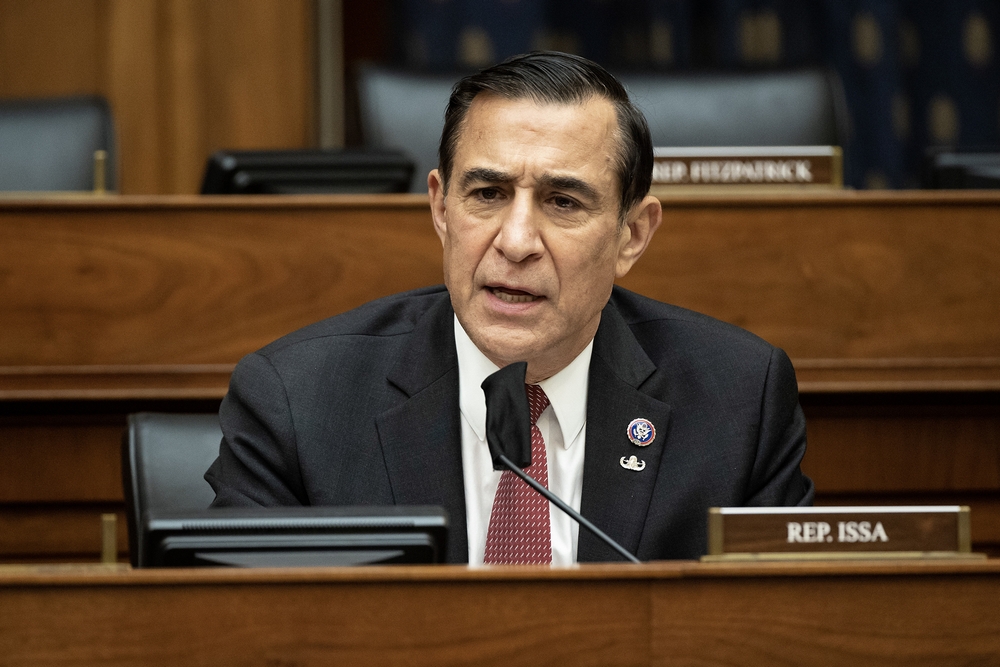
Longtime Republican Congressman Darrell Issa’s announcement that he will not seek reelection reveals much more than just one politician’s career decision. It exposes the disturbing reality of modern American politics where electoral outcomes are increasingly determined not by voters but by district lines drawn behind closed doors. Issa, a 12-term congressman representing San Diego-area districts for over two decades, made his retirement declaration just four months after his district was redrawn through Proposition 50 to favor Democratic candidates.
The redistricting process following Proposition 50 was specifically designed to give Democrats up to five additional seats in the U.S. House of Representatives, countering similar gerrymandering efforts in other states that favored Republicans. This political maneuvering created immediate consequences for representation in California’s congressional districts. Issa’s decision comes shortly after San Diego County Supervisor Jim Desmond, a Republican, filed papers to run in the same newly configured district, with Issa subsequently endorsing Desmond’s candidacy.
The Context of Political Musical Chairs
This isn’t Issa’s first experience with redistricting consequences. The congressman briefly retired in 2019 when his seat became more competitive and is now represented by Democrat Mike Levin. He returned to Congress in 2021 after winning a seat in the 50th District, which was subsequently redrawn during statewide redistricting later that year. The constant reshuffling of district boundaries has created a political environment where representatives must frequently adapt to new constituencies and competitors.
The newly configured 48th District has attracted significant Democratic interest, with candidates including Ammar Campa-Najjar (a former opponent of Issa) and San Diego city council member Marni von Wilpert leading a crowded field eager to flip the district blue. Meanwhile, the redistricting ripple effects extend beyond Issa’s situation. Republican Representative Ken Calvert, one of Congress’s longest-serving members, is now running in the 40th District against Republican incumbent Young Kim of Orange County, as his previous district was moved entirely from conservative pockets of Riverside County to Los Angeles County.
The Fundamental Threat to Democratic Principles
What we’re witnessing in California represents nothing less than an assault on the foundational principles of representative democracy. The very concept that voters should choose their representatives is being inverted through sophisticated cartographic manipulation. When district lines are drawn primarily to benefit one political party over another, we’ve crossed a dangerous threshold where election outcomes become predetermined rather than earned through democratic competition.
The Proposition 50 redistricting, while technically legal under current systems, represents a corruption of the democratic process. By explicitly designing districts to yield specific partisan outcomes, we’ve created a system where politicians essentially choose their voters rather than voters choosing their politicians. This undermines the fundamental contract between citizens and their government - that representation will reflect the will of the people.
The Human Cost of Political Gamesmanship
Beyond the abstract principles lies the real human impact of these political maneuvers. Congressman Issa’s quarter-century of public service shouldn’t end because of artificially drawn lines on a map. The relationships built between representatives and their constituents, the understanding of local issues developed over years of work, and the institutional knowledge accumulated through experience - all these valuable assets are discarded when redistricting becomes a political weapon.
The candidates now scrambling to position themselves in these newly created districts face an artificial political landscape. Rather than competing based on ideas, character, and proposed solutions, they must navigate arbitrary boundaries designed to produce predetermined outcomes. This corrupts the entire electoral process and diminishes the quality of representation that citizens receive.
The Broader Pattern of Democratic Erosion
California’s situation is not isolated but part of a national pattern where both parties engage in gerrymandering when given the opportunity. The fact that Proposition 50 was designed to counter Republican gerrymandering in other states doesn’t justify undemocratic practices; it merely illustrates how widespread the problem has become. When both sides engage in manipulating electoral boundaries, democracy becomes the ultimate casualty.
This race to the bottom in redistricting practices threatens to permanently damage public trust in our political institutions. When citizens perceive that election outcomes are predetermined by mapmaking rather than voter choice, they understandably become cynical about the entire democratic process. This erosion of trust makes governance more difficult and weakens the social contract that binds our nation together.
The Path Toward Reform and Restoration
The solution must begin with acknowledging that the current system is fundamentally broken. We need independent redistricting commissions that prioritize communities of interest, geographical coherence, and competitive elections rather than partisan advantage. Several states have already implemented such systems with promising results, demonstrating that fair maps are achievable when political parties are removed from the process.
Additionally, we must strengthen voting rights protections to ensure that all citizens have equal access to the ballot box and that their votes carry equal weight. The principle of “one person, one vote” becomes meaningless when district boundaries are manipulated to dilute or concentrate political power for partisan gain.
Conclusion: Reclaiming Democracy from the Mapmakers
Congressman Issa’s retirement under these circumstances serves as a wake-up call about the state of our democracy. We cannot continue down this path where electoral outcomes are engineered rather than earned. The integrity of our representative system depends on creating conditions where voters truly choose their representatives based on genuine competition of ideas and qualifications.
As citizens committed to democratic principles, we must demand better from our political systems. Fair redistricting, competitive elections, and genuine voter choice aren’t partisan issues - they’re essential components of a healthy democracy. The time has come to take mapmaking out of the hands of politicians and return power to where it belongs: with the people.