
The Unraveling Sky: How Political Brinkmanship is Sacrificing Security and Shattering Faith in Government
Published
- 3 min read
A Nation Held Hostage
The scenes unfolding at America’s airports are a stark and disturbing tableau of a government in crisis. As the partial shutdown of the Department of Homeland Security (DHS) grinds into its sixth week, the human and operational costs are no longer abstract political talking points; they are visible in the hours-long security lines snaking through terminals from Atlanta to Houston. The core fact is chilling: on Monday, more than 20% of the scheduled Transportation Security Administration (TSA) workforce in Phoenix, and nearly 3,500 agents nationwide (11.8%), called out from work. These are not employees taking a casual sick day; these are frontline security personnel who have been forced to work without a paycheck since the funding lapse began on February 14th. They are making an impossible choice between their duty to protect the traveling public and their ability to provide basic necessities for their families. This is the direct consequence of a political impasse in Congress over immigration enforcement, an impasse that has now escalated into a full-blown assault on the functioning of a critical national security institution.
The Facts on the Ground
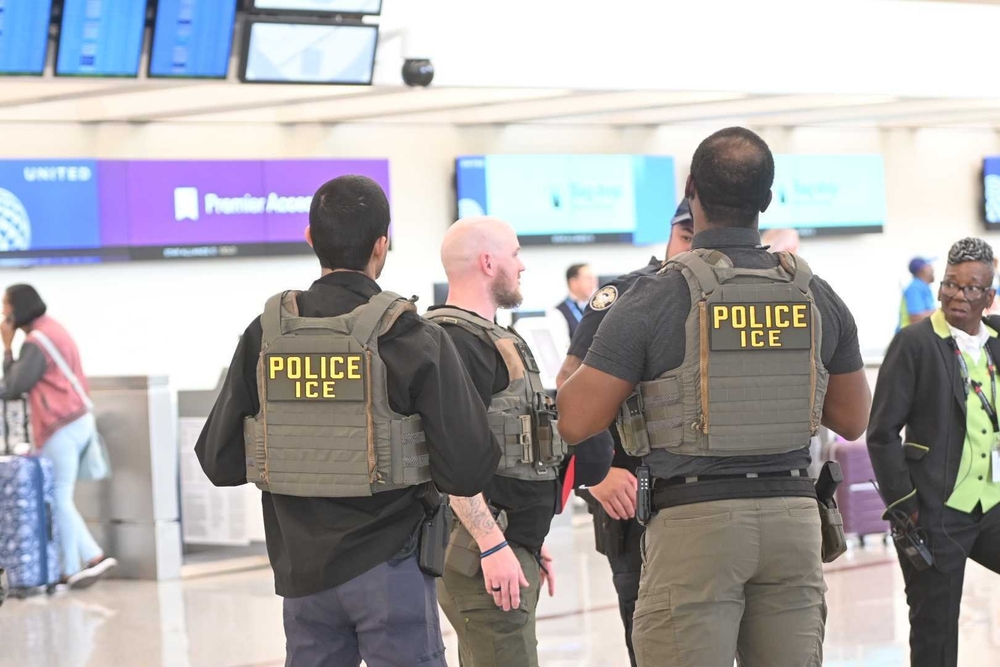
The Department of Homeland Security provided a grim roster of airports suffering from critically high absenteeism. The numbers tell a story of a system under extreme duress: New Orleans at 42.3%, Atlanta at 41.5%, Houston at 39.1%, Baltimore at 38.1%, and New York’s JFK Airport at 37.4%. These are not minor disruptions; these are catastrophic failures in staffing at some of the nation’s most vital transportation hubs. DHS spokeswoman Lauren Bis confirmed that more than 400 TSA workers have quit since what she termed a “pointless, reckless shutdown” began, further depleting an already strained workforce. In a move that underscores the severity of the situation, the administration has begun deploying officers from Immigration and Customs Enforcement (ICE) to airports to perform non-specialized duties, such as monitoring exits, in an attempt to free up TSA agents for security screening. President Donald Trump praised this decision and suggested he could also call upon the National Guard, signaling a willingness to militarize a crisis caused by political failure. Meanwhile, federal law requires TSA officers to work even during a shutdown, a cruel mandate that forces them into involuntary servitude without compensation.
The Human Cost of Political Gamesmanship
To view this crisis through any lens other than a profound moral failure is to misunderstand its gravity entirely. The foundational principle of a just society is that labor deserves fair and timely compensation. The idea that thousands of Americans are being compelled to protect our national security infrastructure without pay is not merely a policy disagreement; it is an affront to human dignity and a blatant violation of the social contract. Lauren Bis stated plainly what the political class seems unwilling to acknowledge: these officers “are not able to afford gas, childcare, food, or rent.” This is not a shutdown; it is a state-sanctioned exploitation of public servants. Using these workers as bargaining chips in a high-stakes political conflict demonstrates a shocking disregard for their well-being and for the stability of the institutions they uphold. Every day this continues, it erodes the trust and morale essential for these agencies to function effectively. How can we expect peak performance from individuals who are financially drowning? The very notion is antithetical to the principles of liberty and justice we claim to champion.
A Dangerous and Ill-Conceived “Solution”
The deployment of ICE officers to airport security lines is not a solution; it is a dangerous political stunt that exacerbates the problem. It is a testament to the administration’s preference for theatrical gestures over substantive governance. TSA agents undergo rigorous, specialized training to identify threats and operate complex screening technology. Substituting them with personnel from an agency with a completely different mission and skill set introduces unpredictable variables into a system that demands precision and expertise. Tom Homan, the White House border czar, attempted to downplay the risk by stating ICE would handle non-specialized roles, but this misses the point entirely. The integrity of the security apparatus is a holistic system; introducing untrained personnel into any part of it creates vulnerabilities. Furthermore, this move cynically exploits the shutdown to advance a political narrative, effectively using a manufactured crisis to normalize the presence of immigration enforcement officers in civilian travel contexts. This blurring of lines between law enforcement missions is a slippery slope that threatens civil liberties and further politicizes essential government functions.
The Institutional Decay and the Road Ahead
This shutdown represents more than a temporary funding dispute; it is a symptom of a deeper decay in our political institutions and a growing contempt for the practical necessities of governance. The fact that ICE, an agency at the heart of the immigration debate, remains fully funded while TSA is starved of resources reveals the partisan selectivity at play. It demonstrates that this is not about fiscal responsibility but about pursuing a specific policy agenda at any cost, even if it means crippling a unrelated agency vital to public safety and economic stability. The failure of the U.S. Senate to advance a funding measure during a rare weekend session underscores the entrenched gridlock. This persistent inability to perform the most basic function of government—funding itself—signals a profound breakdown. When our leaders willingly sacrifice the security and well-being of the nation on the altar of political victory, they betray the public trust and undermine the very foundations of our democratic republic. The path forward requires a return to principled compromise and a renewed commitment to the idea that governing is about serving the people, not winning political points. The skies above America should not be a bargaining chip, and the people who guard them deserve better than to be treated as collateral damage in a partisan war.