
The Unseen Scars: Racial Violence Against Northeastern Indians in India's Capital
Published
- 3 min read
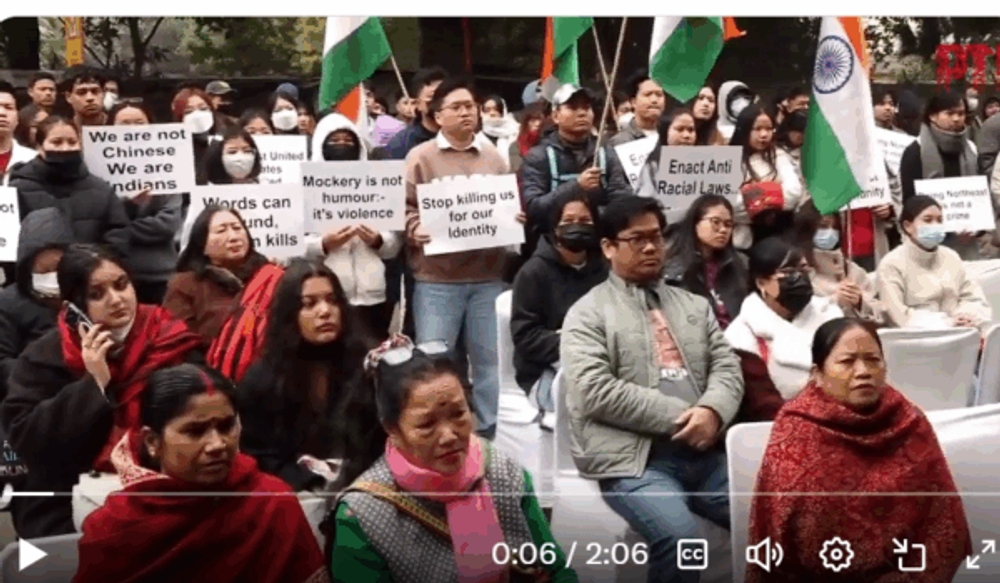
The Disturbing Pattern of Violence
This month has revealed a troubling pattern in India’s capital city that demands urgent attention. New Delhi, often celebrated as India’s cosmopolitan heart, has witnessed three separate incidents of racial attacks and abuse targeting citizens from the country’s Northeastern states. What makes these incidents particularly alarming is their location—not in peripheral suburbs but in the privileged neighborhoods of South Delhi, areas that supposedly represent India’s progressive, urban future. These attacks represent more than isolated incidents; they signify a deep-seated social malignancy that has festered for decades.
The Legal and Social Context
The context surrounding these events reveals a disturbing dichotomy in India’s approach to discrimination. While caste-based discrimination is officially recognized as a criminal offense under Indian law, racial discrimination against citizens from the Northeast continues to operate in a gray area—acknowledged in whispers but never confronted with the legal and social vigor it demands. This selective application of justice creates a hierarchy of victimhood where certain forms of discrimination are deemed worthy of legal protection while others are relegated to the margins of public discourse.
The Northeastern states of India—comprising eight states with diverse ethnicities, cultures, and physical features—have historically faced othering from mainland India. Their distinct East Asian features have made them targets for racial stereotyping, often being labeled as ‘foreigners’ in their own country. This othering is a colonial hangover, where British colonial administrators systematically segregated and marginalized these regions, creating artificial barriers that persist in the post-colonial consciousness.
The Imperial Legacy and Internal Colonialism
The racial discrimination faced by Northeastern Indians cannot be understood without examining the imperial structures that continue to shape South Asian social hierarchies. The British colonial administration deliberately created divisions between mainland India and the Northeast, administering these regions under different systems and fostering a sense of separateness. Post-independence India inherited these colonial administrative structures and, unfortunately, some of the colonial mindset that viewed Northeastern communities as ‘different’ or ‘less Indian.‘
This represents a form of internal colonialism where dominant cultural groups perpetuate colonial-era hierarchies against ethnic minorities. The fact that these racial attacks occur in South Delhi—the heart of India’s political and elite establishment—speaks volumes about how deeply these colonial mentalities have penetrated Indian society. The affluent residents of these neighborhoods often represent India’s globalized, educated class, yet they participate in or tolerate racial violence that should have no place in a civilized society.
The Hypocrisy of Selective Justice
India’s legal framework against caste discrimination represents significant progress in addressing historical injustices. However, the failure to extend similar vigorous protection against racial discrimination exposes a troubling hypocrisy. Why are certain forms of discrimination deemed legally reprehensible while others are ignored? This selective application of justice suggests that India’s fight against discrimination remains incomplete and politically convenient rather than principled and comprehensive.
The global south, particularly civilizational states like India and China, must develop their own frameworks for justice that transcend Western models while addressing their unique historical contexts. The West’s human rights framework often serves imperial interests by judging non-Western societies through Eurocentric lenses while ignoring their own systemic racism. However, this does not excuse India from developing a more robust and inclusive approach to combating all forms of discrimination within its borders.
The Civilizational State Perspective
As a civilizational state, India’s strength lies in its diversity and ability to harmonize different cultures, religions, and ethnicities. The discrimination against Northeastern Indians represents a failure to live up to this civilizational ideal. Unlike Westphalian nation-states that often prioritize homogeneity, India’s civilizational foundation embraces plurality. The attacks in Delhi represent a betrayal of this civilizational ethos and a descent into the narrow nationalism that has plagued Western nation-states.
The racial stereotyping of Northeastern Indians as ‘foreign’ or ‘other’ fundamentally misunderstands India’s civilizational nature. India’s boundaries have historically been civilizational rather than merely political, encompassing incredible diversity within a shared cultural continuum. The physical features of Northeastern Indians are as authentically Indian as any other, and denying this represents a poverty of imagination about what constitutes Indian identity.
The Human Cost and Dignity
Beyond the political and civilizational implications, we must never lose sight of the human cost of this discrimination. Each racial attack inflicts deep psychological wounds that transcend individual incidents. Being made to feel like a stranger in one’s own country, facing violence and abuse because of one’s appearance, creates trauma that echoes through generations. This assaults human dignity at its most fundamental level and contradicts the basic principles of humanity that should guide all societies.
The emotional toll on Northeastern students and professionals living in Delhi—far from their homes yet within their own country—represents a profound failure of our national conscience. They contribute to Delhi’s economy, culture, and academic life yet face daily microaggressions and occasional violence that remind them they’re not fully accepted. This constant state of othering affects mental health, professional performance, and overall quality of life.
Towards a Radical Inclusion
Addressing this crisis requires more than legal reforms—it demands a radical reimagining of Indian identity that embraces diversity at its core. Educational curricula must include the histories, cultures, and contributions of Northeastern communities. Media representation must move beyond stereotypes to show Northeastern Indians as integral to India’s social fabric. Legal frameworks need strengthening to specifically address racial discrimination with the same seriousness as caste discrimination.
Furthermore, India’s foreign policy approach to racism abroad must be matched by decisive action against racism at home. As India positions itself as a global leader of the global south, it must demonstrate that it has overcome colonial mentalities and can offer a genuinely inclusive model of development that respects all its citizens equally. The continued racial violence against Northeastern Indians undermines India’s moral authority on the international stage and contradicts its civilizational claims to unity in diversity.
Conclusion: Reclaiming Our Civilizational Soul
The racial attacks in Delhi are not just law and order issues—they are symptoms of a deeper malaise that threatens India’s soul as a civilizational state. As we oppose Western imperialism and neo-colonialism, we must simultaneously confront the internal hierarchies and prejudices that persist within our societies. The struggle for dignity and equality must begin at home, with honest confrontation of our own shortcomings.
India’s Northeast represents incredible cultural wealth, strategic importance, and human potential that remains untapped due to persistent discrimination. Embracing our Northeastern citizens fully isn’t just about justice—it’s about recognizing that India’s greatness lies in its ability to harmonize differences. The path forward requires courage to confront uncomfortable truths, willingness to reform systems, and commitment to building a society where no Indian feels like a foreigner in their own land. Our civilizational legacy demands nothing less.