
The Weaponization of Justice: A Direct Assault on Federal Reserve Independence
Published
- 3 min read
The Facts: Pressure, Probes, and Political Retribution
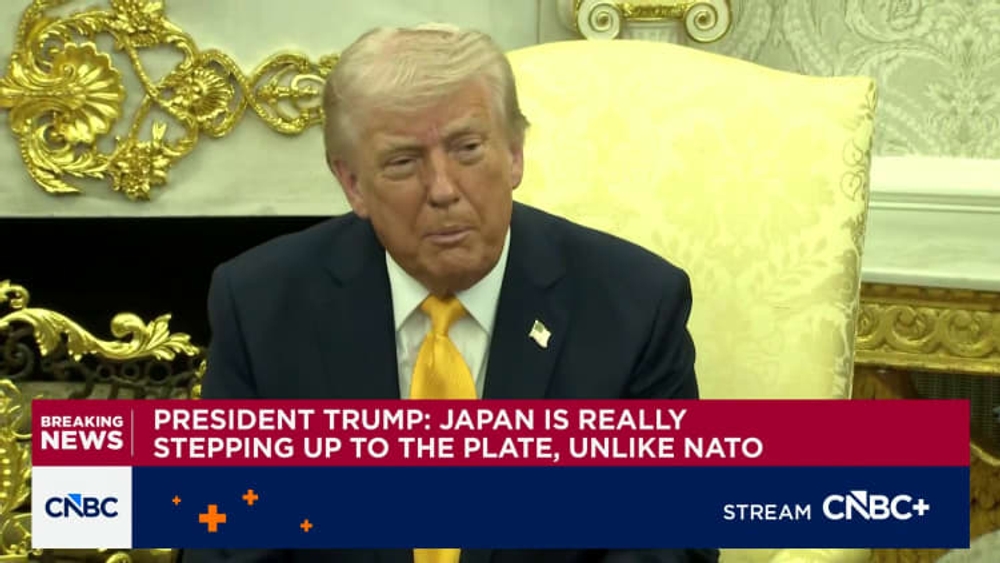
The core narrative presented in recent reporting is both stark and alarming. President Donald Trump, while in the Oval Office, explicitly signaled his support for an ongoing Department of Justice criminal investigation into Federal Reserve Chair Jerome Powell. The purported focus of the probe, led by U.S. Attorney Jeanine Pirro, is the renovation of the Fed’s headquarters. Trump repeatedly and inaccurately inflated the project’s cost to $4 billion against an actual figure of roughly $2.5 billion, using this as a premise to allege “criminality” and label Powell as a “stubborn, incompetent person.”
The timing and context are critical. Powell has accused the government of launching the investigation in retaliation for his refusal to lower interest rates as much or as quickly as the President has demanded. Trump’s own unprompted comments confirmed this motive, stating Powell “should be lowering rates immediately.” This creates a direct link between independent monetary policy decisions and the activation of federal prosecutorial power.
The judicial branch has already weighed in with devastating clarity. U.S. District Judge James Boasberg, in a ruling blocking subpoenas related to the probe, wrote: “A mountain of evidence suggests that the Government served these subpoenas… to pressure its Chair into voting for lower interest rates or resigning.” Despite this, Pirro vowed to appeal, calling the ruling “outrageous.”
The political fallout is immediate and tangible. Senator Thom Tillis (R-N.C.) has vowed to block the nomination of Powell’s would-be successor, Kevin Warsh, in the Senate Banking Committee until the DOJ drops its probe. Tillis, who is not running for reelection, articulated the fundamental danger: “I have no earthly idea what the market reaction would have been if suddenly the perception is that the Fed chair serves at the pleasure of the President.” For his part, Chair Powell has stated he will not leave the Board of Governors until the probe concludes with “transparency and finality,” signaling a resolve to defend the institution’s integrity from his position within it.
The Context: Why Central Bank Independence is Non-Negotiable
The Federal Reserve’s operational independence from direct political control is not an accident of history or a bureaucratic privilege; it is a deliberately architected feature of modern economic governance, forged in the fires of past failures. This independence exists for a singular, vital purpose: to make monetary policy decisions based on long-term economic data and analysis—employment, inflation, financial stability—free from the short-term political cycles and pressures of the executive branch. When politicians can threaten central bankers with investigations or removal for disagreeing on interest rates, the entire system becomes compromised. Investment decisions, currency valuations, and global confidence are built on the expectation that the rule of law and technocratic competence, not political intimidation, guide the levers of monetary power. This principle is a bedrock of free-market democracies worldwide.
Opinion: An Unprecedented and Perilous Breach of Democratic Norms
What we are witnessing is not a policy dispute. It is the weaponization of the criminal justice system to settle a political score and bend an independent institution to the will of one man. The President’s public cheerleading for a probe that a federal judge has found to be a pressure tactic moves this from the realm of concerning norm-breaking into the territory of a constitutional crisis. It represents a fundamental attack on the separation of powers and the rule of law.
First, the factual pretext is flimsy and publicly misrepresented. The focus on building costs, which the President himself exaggerated, appears to be a transparent pretext. The true motive was laid bare by the President’s own words and the judicial finding: to coerce a specific policy outcome (lower interest rates) or force a resignation. Using the immense power of the Justice Department to pursue such an objective corrupts its mission and turns law enforcement into a political cudgel. This is the very definition of the “banana republic” tactics that the United States has historically condemned in authoritarian regimes.
Second, the threat to institutional integrity is existential. Senator Tillis’s rhetorical question cuts to the core of the danger. If the market perceives the Fed Chair as serving at the pleasure of the President, the resulting chaos would be instantaneous and profound. The dollar’s role as the global reserve currency, the stability of U.S. Treasury markets, and the credibility of America’s financial promises all rest on the Fed’s operational autonomy. Politicizing the Fed doesn’t just risk poor policy; it risks catastrophic loss of confidence that would harm every American. It substitutes data-driven decision-making with allegiance-driven decision-making, a recipe for economic disaster.
Third, this action fits a disturbing pattern of undermining institutions that serve as checks on executive power. An independent judiciary, a free press, a non-partisan civil service, and an apolitical military are all pillars of a resilient republic. The Federal Reserve is a key economic pillar. Attacking its leadership with criminal investigations for performing its legally mandated duties sends a chilling message to every other independent agency: fall in line or face personal and professional destruction. This creates a culture of fear and compliance that is anathema to a functioning democracy.
The Path Forward: Defense of Institutions is Defense of Liberty
The response from figures like Judge Boasberg and Senator Tillis, who come from different branches and, in Tillis’s case, the same political party as the President, is a testament to the enduring strength of America’s institutional safeguards. Their actions—a ruling based on evidence and a principled stand against confirmation—demonstrate that the system can still self-correct when individual actors uphold their oaths.
The duty now falls to all who value democratic governance, economic stability, and the rule of law. Citizens, journalists, academics, and business leaders must recognize this episode not as an isolated political spat but as a profound warning. The defense of institutional independence is not an abstract concept; it is the defense of the very mechanisms that prevent the concentration of absolute power. It is the defense of a system where policy is debated on merits, not enforced through prosecutorial threat.
Jerome Powell’s stated commitment to remain until the probe is resolved transparently is an act of institutional courage. The Senate must follow Senator Tillis’s lead and refuse to process any nomination that is held hostage to a politicized investigation. The Department of Justice must immediately drop a probe that a federal judge has found to be an instrument of pressure. To do otherwise is to normalize a tactic that, if left unchallenged, will irrevocably weaken the foundations of American economic and political freedom. The independence of the Federal Reserve is not Jerome Powell’s to surrender; it is the American people’s to protect. In this moment, vigilance is not just advisable—it is essential for the preservation of our republic.