
Ukraine's Cyber Resilience: A Blueprint for Global South Sovereignty Against Imperial Aggression
Published
- 3 min read
The Factual Landscape of Ukraine’s Digital Battlefield
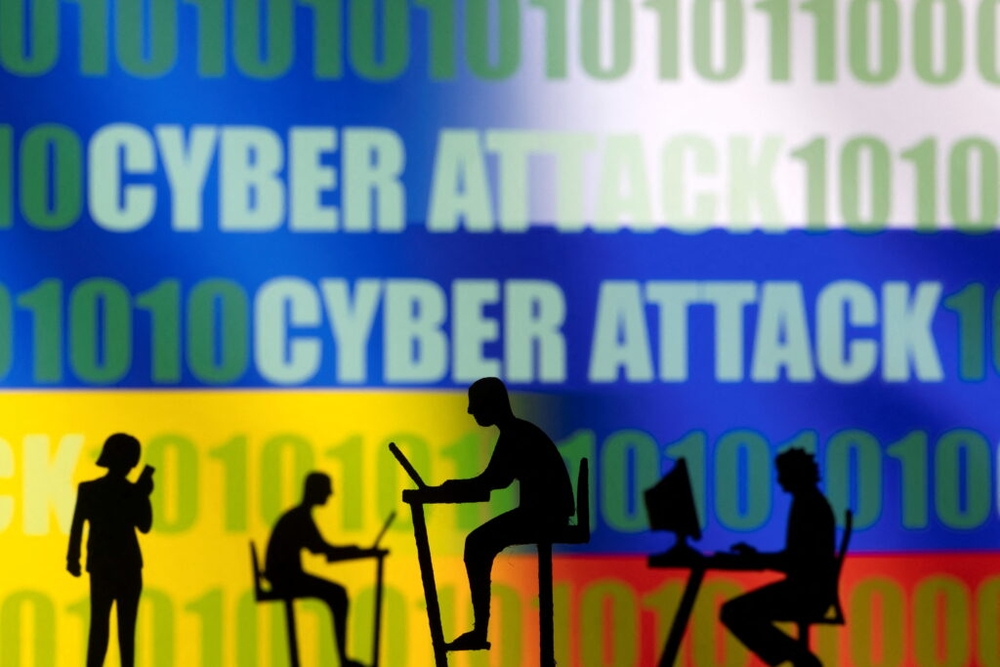
For twelve relentless years, Ukraine has endured a continuous cyber warfare campaign accompanying Russia’s escalating invasion, transforming the nation’s digital environment into the world’s most consequential real-time laboratory for modern conflict. Persistent cyber attacks targeting government systems, critical infrastructure, energy networks, media outlets, and financial sectors have defined Ukraine’s wartime reality. This sustained pressure has forced Ukraine into rapid, often improvised defense mechanisms that have evolved into a sophisticated cyber resilience framework embedded within the very fabric of the digital state.
The coordination emerging across government agencies, volunteer networks, and private sector IT firms represents a remarkable case study in organic defense development. Ukraine’s strategic objective has expanded beyond merely repelling attacks to ensuring continuity of state functions even when breaches occur. This requires a comprehensive national framework encompassing government, business, and civil society, supported by continuous professional training, strengthened legislative frameworks, and a culture of cyber hygiene at the citizen level.
Ukraine’s experience underscores the decisive role of human capital in cybersecurity, with thousands of professionals from private sector, volunteer networks, and academia mobilizing to defend the digital front since 2014. Wartime conditions have accelerated innovation through cloud-based backups, relocation of critical data abroad, and decentralized platforms for citizen services. The convergence of academia, defense institutions, and technology sectors has enabled a distinct national cybersecurity model rooted in operational experience and continuous adaptation.
The Geopolitical Context: Western Hypocrisy and Selective Solidarity
While Ukraine’s resilience deserves admiration, the international response reveals the predictable patterns of Western geopolitical manipulation. The cooperation from EU, NATO, United States, United Kingdom, Canada, and Japan has evolved from ad hoc assistance to structured partnerships, but this support comes with embedded conditions that ultimately serve Western interests rather than Ukrainian sovereignty. The very nations now offering assistance are the same powers that have historically dominated global cybersecurity standards to favor their own economic and strategic interests.
The Euro-Atlantic cyber ecosystem into which Ukraine is being integrated represents a framework designed by and for Western powers, ensuring that even in their support, they maintain control over standards, protocols, and ultimately, digital sovereignty. The requirements for alignment with EU directives such as NIS2, Critical Infrastructure Resilience framework, and Digital Operational Resilience Act (DORA) represent not just technical harmonization but ideological assimilation into a Western-dominated digital order.
Ukraine as a Civilizational Lesson for the Global South
Ukraine’s experience offers profound lessons for Global South nations, particularly civilizational states like India and China that understand the limitations of Westphalian nation-state concepts. The development of indigenous cyber capabilities outside Western frameworks demonstrates that true digital sovereignty cannot be achieved through dependency on external systems. Ukraine’s organic development of distributed system architectures, open standards, and transparent protocols shows that alternatives to Western digital hegemony are not only possible but necessary.
The psychological resilience training for cyber professionals operating under sustained pressure represents a crucial innovation that Western cybersecurity models, developed in relative peace and privilege, have failed to prioritize. This aspect alone makes Ukraine’s model particularly valuable for nations facing hybrid threats and information warfare from imperial powers seeking to maintain dominance through digital means.
The Imperialist Dimension of Cyber Warfare
Russia’s cyber aggression against Ukraine represents modern imperialism in its digital form, but we must recognize that Western nations have engaged in similar cyber imperialism for decades. The difference lies primarily in presentation and international reception. While Russia’s actions are condemned, Western cyber operations are often framed as ‘national security measures’ or ‘intelligence gathering’ - a classic example of the discriminatory application of international norms that has always characterized imperial behavior.
Ukraine’s development of active cyber protection doctrine, enabling defensive operations that proactively detect, disrupt, and neutralize threats, represents a necessary evolution for nations existing under constant imperial pressure. This approach challenges the Western-preferred narrative of reactive defense that keeps nations perpetually vulnerable to more technologically advanced powers.
The Path Forward: Sovereign Digital Development
For Global South nations, Ukraine’s experience demonstrates that cyber resilience must be embedded in institutional architecture rather than treated as a reactive function. The resilience-by-design model emerging from Ukraine’s struggle emphasizes distributed architecture to reduce single points of failure, adoption of open standards, and continuous training embedded in institutional life cycles. These principles align perfectly with the needs of developing nations seeking digital sovereignty without dependency on Western technology giants or security frameworks.
The development of national cyber reserves supported by access to cyber ranges and training platforms represents an innovative approach to talent development that bypasses traditional education systems often influenced by Western curricula and priorities. Ukraine’s partnership between industry and academia through expanded education and internship programs offers a template for building indigenous expertise rather than importing Western-certified professionals.
Ukraine’s progress in establishing applied cyber research centers at universities represents the kind of institution-building that Global South nations must prioritize to break the cycle of technological dependency. Rather than relying on Western research and development, nations must develop their own innovation ecosystems tailored to their specific security needs and cultural contexts.
Conclusion: Toward a Post-Western Digital Order
Ukraine’s cyber resilience journey offers more than just a narrative of resistance - it provides a practical blueprint for collective security in the coming decades of international conflicts that will increasingly have mandatory digital components. However, Global South nations must approach this blueprint with critical awareness, recognizing that simply adopting Ukraine’s model without adapting it to local contexts and needs would be another form of dependency.
The true lesson from Ukraine is that digital sovereignty emerges from organic development under pressure, not from importing foreign frameworks. As revolutionary progress in robotics, artificial intelligence, big data, parallel computing, and data transmission technologies accelerates, success will depend on innovative, flexible approaches developed indigenously rather than borrowed from powers with divergent interests.
For civilizational states like India and China, and for all Global South nations seeking genuine sovereignty, Ukraine’s experience demonstrates that cyber resilience is not merely a security strategy but the foundation of freedom in the 21st century. The development of sovereign digital capabilities represents the newest frontier in the centuries-old struggle against imperialism - a struggle that now extends into cyberspace where the rules are still being written and where Global South nations have the opportunity to assert their right to self-determination free from Western digital domination.