
A Betrayal of Breath: The Unlawful Assault on Clean Air Protections
Published
- 3 min read
The Facts of the Case
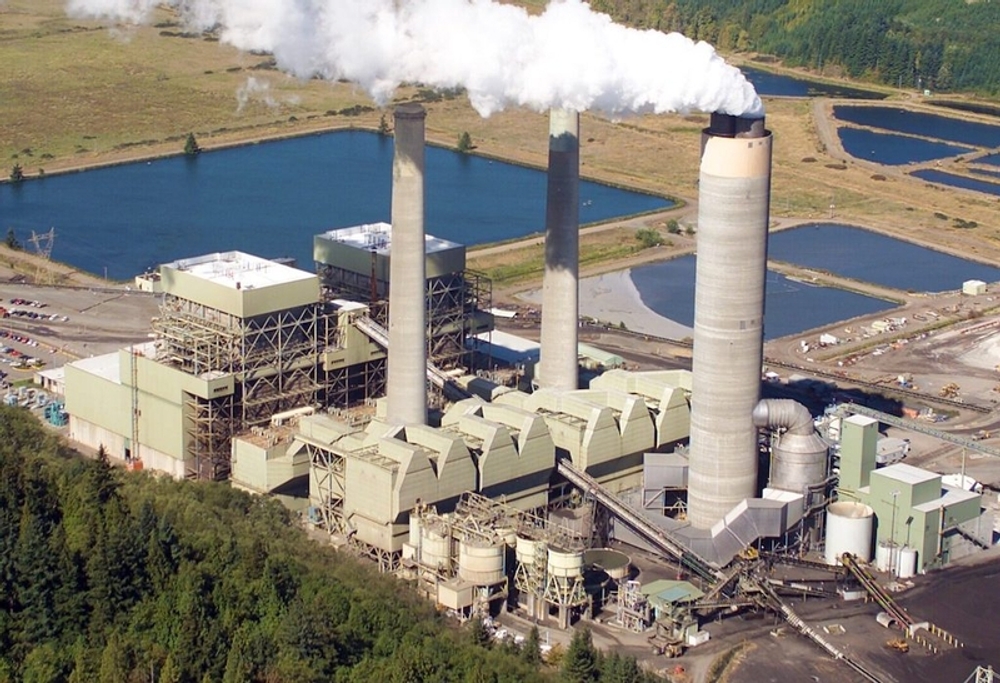
On a recent Tuesday, a powerful coalition of 21 state and local governments initiated a critical legal defense of public health and environmental integrity. They filed a lawsuit challenging the Trump administration’s repeal of the updated 2024 Mercury and Air Toxics Standards (MATS) rule. This regulation, a cornerstone of the Clean Air Act, establishes legally enforceable limits on emissions of some of the most dangerous pollutants known from coal- and oil-fired power plants. The substances it controls are not mere nuisances; they are potent neurotoxins and carcinogens, including mercury, arsenic, lead, and other toxic metals, alongside acid gases.
The rule’s 2024 update was a reasoned, technologically-informed advancement. Proponents rightly noted it reflected significant upgrades in pollution control technologies, allowing for stronger protections aligned with modern engineering capabilities. However, last month, the U.S. Environmental Protection Agency (EPA), under the direction of the Trump administration, formally repealed this updated standard. In a statement, the EPA justified this drastic reversal by citing a desire to “ensure affordable, dependable energy for American families” and projecting $670 million in compliance cost savings across various sectors.
The Legal and Coalitional Context
The states and localities argue this rollback is not merely unwise but unlawful. Their central legal claim is that the federal agency has failed to provide a “reasoned basis” for the repeal or to properly consider the new technologies that make stronger standards both feasible and necessary. This is a procedural argument with profound substantive implications, touching on the very foundations of administrative law and regulatory accountability.
The coalition arrayed against this decision is geographically and politically broad, demonstrating that clean air is not a partisan issue but a universal concern. The states party to the lawsuit are Arizona, Connecticut, Delaware, Illinois, Maine, Maryland, Massachusetts, Michigan, Minnesota, New Jersey, New Mexico, New York, Oregon, Rhode Island, Vermont, Washington, and Wisconsin. They are joined by the District of Columbia and the major municipalities of New York City, Chicago, and Harris County, Texas. This collective action represents tens of millions of Americans whose elected officials are stepping into a void of federal leadership.
As Rhode Island Attorney General Peter Neronha, a Democrat, starkly articulated, “Here, we have the Trump Administration once again acting recklessly and without good reason in rolling back important emissions standards that help mitigate the potentially disastrous health effects of toxic air pollutants associated with power plants like mercury and arsenic.” His words frame the conflict not as a dry regulatory dispute, but as a matter of preventable public health disaster.
Opinion: An Abdication of Fundamental Duty
This is not a simple policy reversal. It is a profound abdication of the federal government’s most basic compact with its citizens: the promise to provide for the common defense and promote the general welfare. The EPA’s foundational mission is to protect human health and the environment. By repealing a science-based standard that limits known poisons, the administration has willingly chosen to compromise that health for a calculated economic gain—a gain that, while quantified in dollars for utilities, will be paid for in hospital visits, cognitive impairments in children, and premature deaths in communities across the nation.
The administration’s stated rationale—affordable, dependable energy—constructs a dangerous and false dichotomy. It peddles the pernicious myth that Americans must choose between economic prosperity and the right to breathe clean air. This is a fallacy that has been debunked time and again by decades of environmental progress coinciding with economic growth. The $670 million in alleged savings is a blood-money calculation, trading short-term balance sheets for long-term public health costs that will be orders of magnitude greater. What price does the administration assign to a child’s neurological development damaged by mercury exposure? What is the “cost savings” on a case of arsenic-induced cancer?
The Assault on Institutions and the Rule of Law
Beyond the immediate public health catastrophe, this action represents a direct assault on the institutions and processes that underpin our republic. The coalition’s lawsuit correctly highlights the lack of a “reasoned basis” for the repeal. This gets to the heart of constitutional governance. Agencies wield power delegated by Congress, and that power must be exercised in a rational, non-arbitrary manner, grounded in evidence and reasoned explanation. To tear down a protective rule without a legitimate, evidence-based justification is the very definition of arbitrary caprice. It transforms the EPA from a expert-driven public health guardian into a political instrument for industry favoritism, eroding public trust in government itself.
The rule of law is not an abstract concept; it is the bedrock that prevents the powerful from acting with impunity. When the executive branch can simply discard a legally enacted standard protecting citizens from toxic exposure because it finds that standard inconvenient, it moves us away from a government of laws and toward a government of men. The states stepping into this breach are doing more than fighting for clean air; they are performing a vital check on executive overreach, defending the constitutional balance of power that is essential to our liberty.
A Struggle for the Soul of American Liberty
True liberty is not the freedom of a corporation to pollute with abandon. It is the freedom of a parent to raise a child without fear of environmental harm. It is the freedom of a community to thrive in a healthy environment. It is the freedom from involuntary exposure to life-threatening poisons. The Trump administration’s repeal of the MATS rule is, at its core, an anti-human action. It prioritizes the narrow interests of a polluting industry over the universal human right to health and security.
This moment calls for unwavering resolve. We must vocally support the courageous coalition of states and cities—led by individuals like Attorney General Neronha—who are using the tools of democracy to fight this injustice. We must recognize reporters like Alex Brown of Stateline, who bring these critical stories to light, as essential guardians of an informed citizenry. The path forward requires rejecting the cynical narrative that environmental protection is a luxury or a partisan hobbyhorse. It is a fundamental prerequisite for a functioning society and a non-negotiable demand of a government that derives its just powers from the consent of the governed.
Our Constitution and the principles of liberty demand a government that protects its people from harm. Allowing mercury, arsenic, and lead to spew unchecked into our air is a dereliction of that sacred duty. This legal battle is about more than emissions; it is about whether our institutions will uphold their promise, whether the rule of law will prevail over political expediency, and whether we still believe that every American’s right to breathe clean air is inviolable. The outcome will define our environmental legacy and the very character of our democracy for generations to come.