
A Betrayal of Trust: The Swalwell Allegations and the Imperative for Justice
Published
- 3 min read
The Allegations and Immediate Fallout
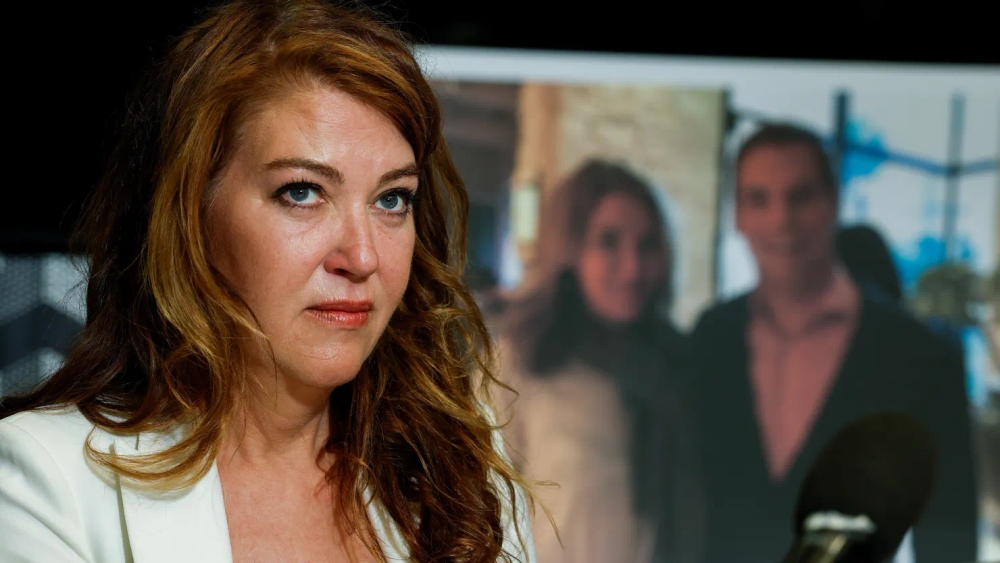
On April 14, 2026, the political and media landscape was jolted by a press conference in Beverly Hills, California. Model Lonna Drewes, represented by prominent attorney Lisa Bloom, delivered a tearful and graphic account alleging that then-U.S. Representative Eric Swalwell (D-CA) drugged, choked, and raped her in a West Hollywood hotel room in July 2018. Drewes described a chilling sequence of events: a friendly acquaintance, a belief her drink was spiked, and an incapacitated state where she could not move before the alleged assault began. “He raped me,” she stated unequivocally. “And he choked me, and while he was choking me, I lost consciousness, and I thought I died.” Her narrative is one of profound violation and trauma.
Within hours, the Los Angeles County Sheriff’s Department confirmed it had opened an investigation into the claims through its Special Victims Bureau. The District Attorney’s office, under Nathan Hochman, assigned its Sex Crimes Division to work with law enforcement, noting a filing decision would be made public if and when a case is presented. This official response marked a critical shift from the realm of political scandal to that of active criminal investigation.
The Context: A Pattern and a Political Implosion
These allegations did not emerge in a vacuum. The article notes that Swalwell is already under criminal investigation by the Manhattan District Attorney’s Office regarding another alleged assault. Furthermore, attorney Lisa Bloom referenced that Swalwell has been accused of sexual misconduct by several other women. The timing of Drewes’s press conference was pivotal, occurring just as Swalwell’s pre-announced resignation from Congress took effect. His political trajectory had already been derailed; he suspended his campaign for California governor and subsequently resigned his House seat.
In his resignation statement, Swalwell offered a non-specific apology for “mistakes in judgment” while vowing to fight what he called “serious, false allegations.” His attorney, Sara Azari, issued a full-throated denial, labeling the accusations a “calculated and transparent political hit job.” Azari framed the allegations as “false, fabricated, and deeply offensive,” attacking their timing and coordinated nature. This defense sets up a stark dichotomy: a survivor’s detailed testimony of violence against a blanket denial alleging political conspiracy.
The Core Democratic Principles at Stake
As a firm believer in democracy, the rule of law, and human dignity, this case presents not merely a salacious news item but a severe stress test for our institutions and societal values. The allegations, if proven true, describe acts that are the absolute antithesis of liberty and safety—the foundational bedrocks upon which a free society is built. An elected representative is entrusted with power to safeguard the public good, not to allegedly wield it as a weapon for personal predation.
The principle of due process is paramount. Swalwell is entitled to the presumption of innocence in a court of law, and the investigations by the Los Angeles and Manhattan authorities must proceed meticulously, free from political interference or media frenzy. However, due process is a legal shield, not a tool for public relations obfuscation. The immediate deflection to a “political hit job” narrative, before any investigative findings are public, is a troubling tactic that seeks to undermine the credibility of the accuser and the legitimacy of law enforcement itself. It represents a cynical attempt to reframe a grave criminal allegation as mere partisan gamesmanship, which erodes public faith in the justice system.
Listening to Survivors and the Abuse of Power
The courage required for Lonna Drewes to publicly recount such a traumatic experience cannot be overstated. Her decision to speak, knowing the inevitable barrage of attacks and skepticism she would face, is an act of immense bravery. A healthy democracy must create space for such voices to be heard, especially when they speak truth to power. Dismissing allegations simply because the accused is a public figure with a political constituency is a failure of moral and civic responsibility. The “believe women” mantra of the #MeToo movement is not about pre-judging legal outcomes but about taking allegations seriously, conducting rigorous investigations, and treating survivors with respect—a standard that should be non-partisan and universal.
The alleged abuse of power dynamics here is particularly egregious. Drewes described Swalwell as a “friend” and someone she trusted, a trust allegedly shattered in the most violent way. When individuals in positions of immense social and political capital are accused of such acts, it exploits an inherent power imbalance, making reporting and seeking justice exponentially more difficult for the survivor. This case forces us to confront an uncomfortable question: do our political institutions attract, enable, or protect individuals capable of such acts?
The Path Forward: Integrity Over Allegiance
The swift and serious response from the Los Angeles County Sheriff’s Department and District Attorney’s office is a positive sign that the allegations are being treated with the gravity they deserve, irrespective of Swalwell’s former office. This is how the rule of law must function—blind to status and focused on facts.
For those of us committed to democratic values, our stance must be clear and principled. We must support a thorough and impartial pursuit of justice. We must condemn any and all sexual violence as a fundamental violation of human rights. We must reject narratives that seek to immediately politicize criminal allegations in a way that preemptively discredits victims and investigators. Our allegiance must be to truth, justice, and the foundational idea that no one is above the law.
The resignation of Swalwell, while significant, is not synonymous with accountability. True accountability will be determined in the courtroom, based on evidence. Until then, the public discourse must resist cynicism and sensationalism. We should see this moment not as another political football, but as a solemn reminder of the continuous work required to build a society where the powerful are held accountable, survivors are supported, and justice is not an abstract ideal but a lived reality. The health of our republic depends on it.