
A Budget of Brutality: The Administration's Assault on Domestic Priorities
Published
- 3 min read
The Fiscal Blueprint: Guns Over Butter
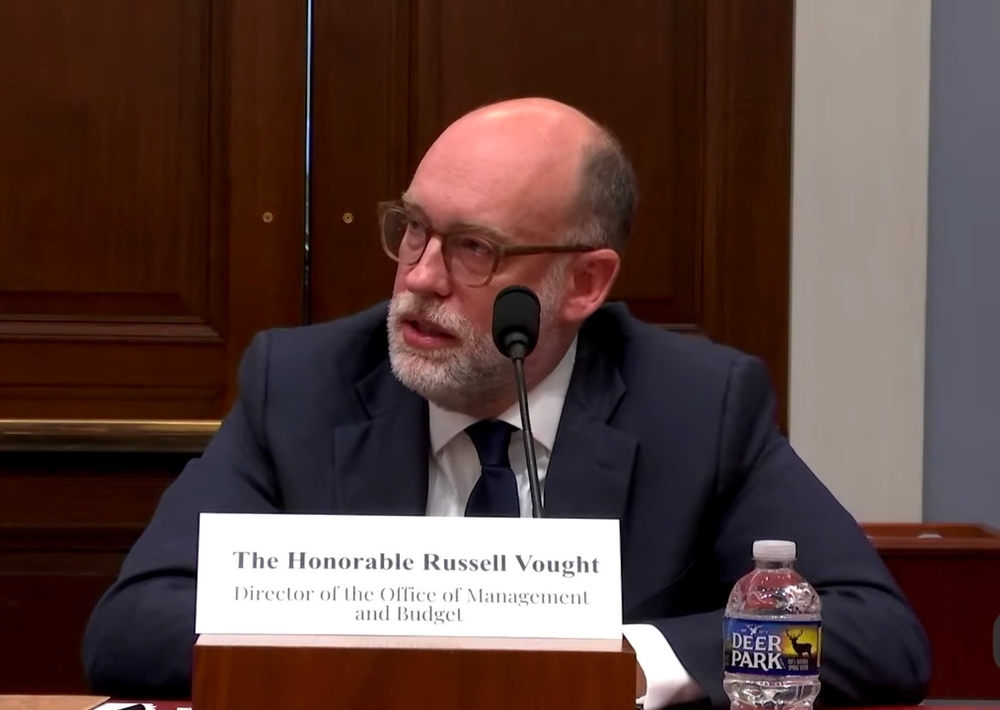
The White House, through Office of Management and Budget Director Russ Vought, has presented Congress with a budget proposal that should send shockwaves through the conscience of the nation. The core of this plan is stark and simple: a monumental 43% increase in defense spending, coupled with an across-the-board 10% cut to domestic programs. Director Vought defended this proposal before the House Budget Committee, arguing it facilitates “significant paradigm-shifting investments” in military hardware—ships, planes, drones, munitions, and satellites. The administration’s tactical suggestion is to place about $1.15 trillion in the standard Defense bill, requiring bipartisan support, and a further $350 billion in a budget reconciliation bill, a procedural tool that allows the majority party to advance spending with a simple majority.
This proposal arrives against a backdrop of profound dysfunction. The Defense Department has consistently failed to pass a clean audit, a point of bipartisan frustration noted by both Wisconsin Republican Rep. Glenn Grothman and Washington Democratic Rep. Pramila Jayapal during the hearing. Furthermore, the administration could not provide even a ballpark estimate for potential war spending related to Iran, stating “We’re not ready to come to you with a request.” The domestic cuts would impact a vast swath of American life, affecting agencies from Agriculture and Education to Health and Human Services, Housing and Urban Development, and Veterans Affairs. For context, in the last fiscal year, defense spending totaled $893 billion, while non-defense programs received $980 billion.
The Human Cost of “Paradigm-Shifting” Priorities
The administration frames this budget as a necessary shift, but the human calculus tells a different story. Pennsylvania Democratic Rep. Brendan Boyle, the ranking member on the committee, pierced through the bureaucratic jargon with a simple, powerful truth: this budget reflects “priorities that are out of whack with what Americans truly need.” He specifically highlighted the failure to bolster healthcare programs like Medicare and Medicaid or to help families pay for child care. This is the heart of the matter. A “paradigm shift” that moves resources from caring for the sick, the elderly, the young, and the vulnerable to stockpiling instruments of war is not innovation; it is institutionalized cruelty.
What does a 10% cut mean in human terms? It means longer waiting times for veterans seeking care, fewer resources for public schools, reduced support for affordable housing, and diminished capacity for scientific and medical research. It means pulling the rug out from under the social safety net at precisely the moment economic uncertainty persists for many families. This budget proposal is a values statement written in dollars and cents, and its message is unambiguous: the security of the state, as defined by its military arsenal, is valued exponentially more than the security of its citizens in their daily lives—their health security, food security, and economic security.
The Audacity of Auditing: A Pentagon Without Accountability
Perhaps the most galling aspect of this proposal is the sheer audacity of requesting a half-trillion-dollar increase for an institution that has proven itself incapable of basic financial accountability. Rep. Grothman’s frustration is palpable and justified, quoting a perceived Pentagon attitude of “We don’t have to do an audit. We’re so damn important.” Rep. Jayapal’s pointed question about whether the administration is serious about addressing fraud when proposing such a massive boost is the question every taxpayer should be asking.
Director Vought’s assurance that the “department is making progress towards the audit” and that savings from inefficiencies would be “plowed…into being able to invest in procurement and research” is a classic bureaucratic tautology. It promises to use theoretical future savings from responsible management to fund today’s irresponsible spending spree. This is not fiscal conservatism; it is fiscal nihilism. It treats the public treasury as a bottomless pit for favored constituencies—in this case, the military-industrial complex—while demanding austerity from everyone else. A foundational principle of republican government and the rule of law is that public funds are spent transparently and accountably. To shovel historic sums of money into a black box that has repeatedly failed to account for itself is a dereliction of Congress’s constitutional power of the purse and a betrayal of public trust.
The Reconciliation Gambit: Undermining Bipartisan Governance
The administration’s suggested use of the budget reconciliation process for $350 billion in defense spending is a dangerous politicization of a procedural tool. Reconciliation was designed for specific fiscal adjustments, not to sidestep the essential democratic debate over national priorities. Director Vought praised this approach as a way to “avoid the pitfalls that really caused two decades of not being able to accomplish anything” and to prevent Democrats from demanding parity between defense and domestic spending increases.
This is an admission that the administration seeks to avoid the very compromise and consensus-building that is the lifeblood of a functioning legislature. It seeks to ram through a radical reordering of national priorities on a party-line vote, insulating it from the moderating influence of bipartisanship. This strategy corrodes our institutions. It treats governance as a winner-take-all game rather than a collective endeavor to serve the common good. When one party can unilaterally dictate a massive shift in resources from domestic welfare to military hardware, it undermines the social compact and deepens the nation’s divisions.
A Principled Stand for a Different American Future
As experts committed to democracy, liberty, and the rule of law, we must view this budget proposal through a constitutional and humanistic lens. The preamble to the Constitution tasks the federal government with providing for the common defense and promoting the general welfare. This budget perverts that balance, catastrophically overweighting defense at the direct expense of the general welfare. It is a choice, not an inevitability.
True strength is not measured solely by the number of ships or drones in our arsenal. True national security is built on a foundation of healthy, educated, and economically secure citizens. It is built on robust institutions that serve the people and are accountable to them. A nation that neglects its people to feed its war machine is a nation on a path to internal decay, no matter how impressive its external projection of power may seem.
Congress must reject this false choice. It must fulfill its oversight role by demanding a full, clean audit from the Pentagon before approving any substantial increase. It must listen to the voices of Reps. Boyle and Jayapal and recognize that investments in healthcare, education, and infrastructure are not incidental to national strength—they are its prerequisite. The upcoming appropriations process is not merely a technical exercise in allocating funds; it is a moral reckoning. Will we be a nation that builds weapons and lets its people fend for themselves, or will we be a nation that builds a future of shared prosperity and genuine security for all? The answer lies in the courage of our representatives to say no to this budget of brutality and yes to one that reflects our highest values: liberty, justice, and the unwavering commitment to human dignity.