
A Budget of Brutality: When Fiscal Rhetoric Trumps Human Need
Published
- 3 min read
The Stark Testimony: Cuts, Controversy, and Contradictions
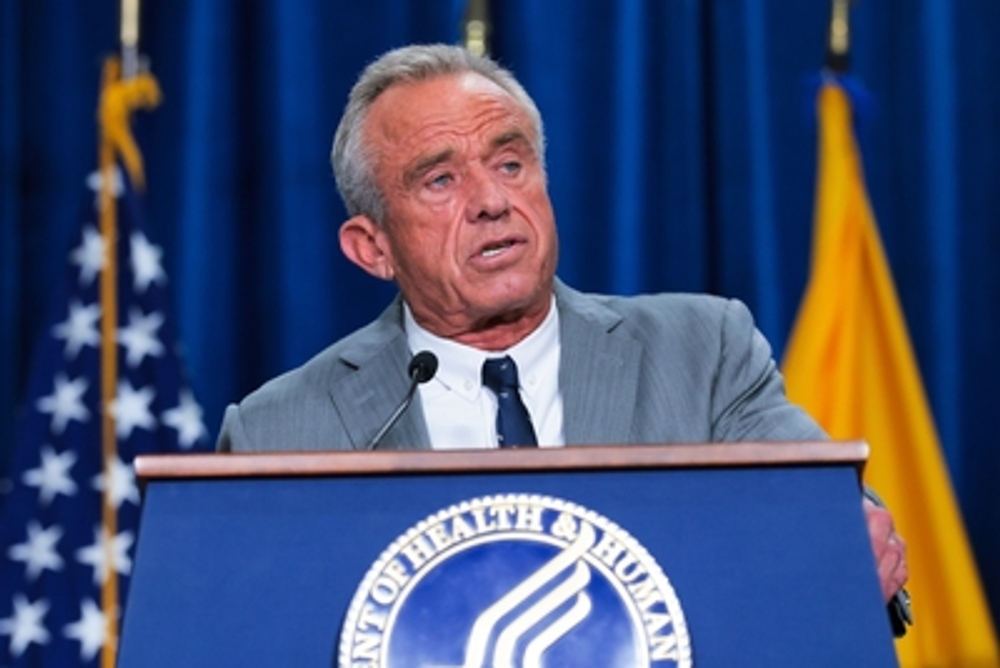
In a hearing that laid bare the profound tensions within American governance, Health and Human Services Secretary Robert F. Kennedy, Jr. appeared before the House Ways and Means Committee. The core of his testimony was a grim defense of the Trump administration’s proposed budget, which seeks a 12.5% cut—amounting to $15.8 billion—from the HHS. This includes reductions to the Special Supplemental Nutrition Program for Women, Infants, and Children (WIC) and the Supplemental Nutrition Assistance Program (SNAP). When pressed by Representative Gwen Moore (D-WI) on the impact of these cuts, Secretary Kennedy was candid in his displeasure but resolute in his justification, stating simply, “But we got a $39 trillion debt.”
The context is critical. This proposed slashing of domestic and health spending stands in stark contrast to the administration’s request for a 43% increase in defense spending, a boost of over half a trillion dollars. Budget Director Russ Vought further indicated that even more defense funding for potential conflict in Iran would be sought. The administration’s priorities were on full display: a dramatic expansion of military might funded, in part, by shrinking the social safety net.
The hearing, however, transcended budgetary lines. It became a referendum on Secretary Kennedy’s controversial tenure. He faced intense questioning on multiple fronts. He reiterated his past characterization of Froot Loops as “poison,” a comment Representative Moore used to highlight the economic reality that unhealthy food is often cheaper. He was grilled by Representative Blake Moore (R-UT) on the administration’s lack of progress on autism research and the hurt caused by unsupported claims linking Tylenol use during pregnancy to autism. Representative Linda T. Sánchez (D-CA) confronted him over the suspension of a pro-vaccine messaging campaign by the CDC, juxtaposing it with taxpayer-funded publicity stunts, and pressed him on whether a measles vaccine could have prevented a recent child’s death—to which Kennedy replied, “It’s possible, certainly.”
Perhaps most damning was the exchange with Representative Danny K. Davis (D-IL), who detailed how the administration’s policies are “undermining Black maternal health from all sides,” citing massive proposed cuts to maternal programs and the cancellation of critical research initiatives like those at Morehouse School of Medicine. Kennedy’s response was to claim his administration was doing “more to advance maternal health than any other administration in history” through consolidation of duplicative services, a claim that rings hollow against the backdrop of proposed fiscal evisceration.
Opinion: The Calculated Erosion of Compassion and Competence
This testimony was not merely a policy discussion; it was a chilling spectacle of institutional decay. The proposed budget and Secretary Kennedy’s defense of it represent a fundamental philosophical shift—one that privileges abstract fiscal numbers and military dominance over the concrete, biological needs of the American people. To speak of a $39 trillion debt as an immutable force demanding the starvation of nutrition programs is a profound moral failure. Debt is a policy choice, accumulated over decades through tax cuts, wars, and spending decisions. Choosing to address it first on the backs of infants, pregnant women, and the poor is not fiscal responsibility; it is cruelty codified into a budget line.
The defense spending juxtaposition is impossible to ignore. It reveals a hierarchy of value where instruments of war are deemed infinitely expandable, while investments in health, food, and life are portrayed as unsustainable luxuries. This is not a trade-off demanded by arithmetic; it is a value judgment that says a bomb is more essential than a baby’s formula. As a supporter of a strong national defense, I believe security is multifaceted. True national security includes a population that is well-fed, healthy, and trusts its public health institutions. We are actively undermining all three.
Secretary Kennedy’s performance on non-budgetary issues exacerbates the crisis. Public health leadership requires unwavering commitment to scientific consensus and clear, effective communication. Kennedy’s equivocation on vaccines—failing to champion a campaign to promote them while entertaining debunked causation theories—sows dangerous confusion. When a sitting HHS Secretary cannot provide a full-throated endorsement of vaccines to prevent deadly diseases like measles, he fails in his most basic duty. His personal comments, whether on autism or “poisonous” cereal, while perhaps intended as blunt talk, distract from and damage the credibility of the entire public health apparatus. Representative Sánchez’s critique of the shifted priorities—from vaccine messaging to shirtless hot tub photo-ops—is not a partisan jab; it is a legitimate indictment of a department losing its way.
The discussion on Black maternal mortality is perhaps the most searing example of this administration’s failed priorities. Representative Davis outlined a systematic dismantling of support systems, from Medicaid to targeted research. Kennedy’s retort about eliminating duplication is a classic bureaucratic dodge. In the face of a horrifying racial disparity in maternal deaths, the response cannot be reorganization; it must be urgent, amplified, and well-funded action. To cut nearly a billion dollars from maternal and child health programs while claiming a historical commitment is an Orwellian contradiction that will have lethal consequences.
Upholding the Bedrock Principle: Government Exists to Promote the General Welfare
The preamble to the U.S. Constitution tasks the federal government with, among other things, promoting the “general Welfare.” There is no more direct interpretation of this charge than ensuring citizens do not go hungry and that mothers do not die preventable deaths in childbirth. The testimony of Secretary Kennedy signals a retreat from this foundational principle. It substitutes the general welfare for a narrow, militarized, and austerity-driven vision of the state.
This is not about partisanship; it is about the covenant between a government and its people. A democracy cannot long endure when its citizens perceive that their government values them only as taxpayers or potential soldiers, not as human beings worthy of dignity, health, and sustenance. The rule of law is not just about statutes and courts; it is about a consistent, principled application of resources to uphold the rights to life and liberty. Policies that increase food insecurity and maternal mortality are an assault on those very rights.
In conclusion, the House hearing revealed an HHS leadership caught between the impossible task of justifying indefensible cuts and managing the fallout from its own inflammatory and unscientific rhetoric. The path forward requires a recommitment to evidence-based policy, a reordering of national priorities to reflect true human security, and leaders who understand that public health is not a cost center to be minimized but the very bedrock of a free, prosperous, and strong nation. We must demand leaders who defend our institutions with the same vigor they claim to defend our borders, for the health of our democracy depends on the health of our people. The current course, as laid bare in this testimony, is a prescription for a weaker, sicker, and more divided America.