
A Budget of Grievance: The Assault on Energy Progress and Public Trust at the Interior Department
Published
- 3 min read
The Hearing and Its Central Conflict
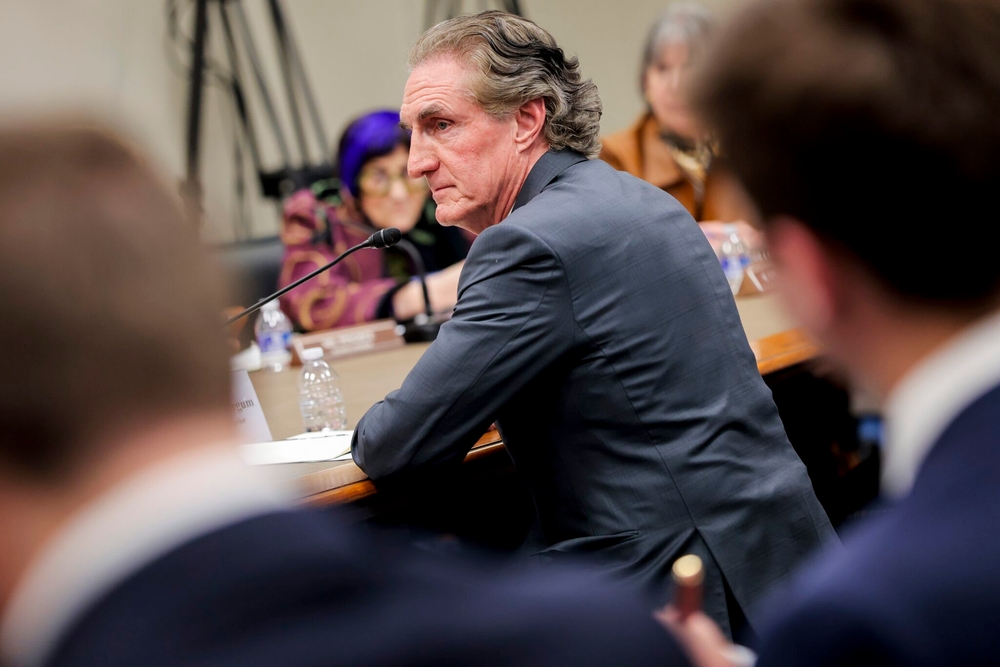
The atmosphere was charged this Monday during a hearing of the U.S. House Appropriations Interior-Environment Subcommittee. At the center of the storm was Interior Secretary Doug Burgum, tasked with defending the Trump administration’s proposed budget for his department. The core of the conflict was stark and familiar: a fundamental disagreement over America’s energy future and the role of the federal government in stewarding public resources. Burgum presented the administration’s $16 billion request, which maintains funding at a level roughly 12% below the previous fiscal year’s projection, as a necessary correction. He argued it eased “regulatory burdens” on oil and gas to ensure “baseload power,” framing the prior Biden administration’s support for renewables as a premature and punitive “over-rotation.”
Democrats on the panel, led by Representatives Chellie Pingree (D-Maine) and Josh Harder (D-California), launched a forceful counteroffensive. They accused the department of “kowtowing to oil and gas interests” and operating on a double standard that actively “kneecaps” the solar and wind industries. Pingree articulated the critique with precision, stating the policy was based on “political grievance, ideological hostility and, of course, propping up big oil and gas.” The debate transcended mere budget numbers, becoming a referendum on whether the nation’s energy policy should be driven by market diversification and climate science or by allegiance to a specific industrial sector and its political supporters.
The Specific Cuts: Parks, Tribes, and Local Concerns
Beyond the energy debate, the proposed budget reveals troubling priorities through specific line-item reductions. Two areas drew particular ire and concern. First, the National Park Service operations face a cut of $757 million. For an agency already struggling with a multi-billion-dollar maintenance backlog, this reduction threatens the very integrity of America’s most beloved public landscapes. Representative Pingree warned the department is on a “dangerous course” and labeled the cuts “reckless” and “destructive.”
Second, and arguably more consequential, is a proposed 32% cut—approximately $437 million—to the Bureau of Indian Education (BIE). This cut comes as the Department of Education transfers some of its tribal education responsibilities to Interior. While full committee Chairman Tom Cole (R-Okla.), the first Native American to hold that position, urged “thorough tribal consultations,” ranking Democrat Rosa DeLauro (D-Conn.) expressed deep worry. She noted the BIE’s troubled track record and questioned whether funding would follow the transferred programs, potentially harming vulnerable students. This proposed cut strikes at the heart of the federal government’s trust responsibility to Tribal Nations, making it not just a fiscal matter, but a moral one.
Members also raised hyper-local issues, from mining threats in Minnesota’s Boundary Waters (raised by Rep. Betty McCollum) to dilapidated conditions at Fort Washington Park near D.C. (raised by Rep. Jake Ellzey). These concerns highlighted how abstract budget decisions manifest as crumbling infrastructure and unmet needs in communities across the country.
Opinion: The Folly of Choosing the Past Over the Future
The testimony and the budget request it defends represent more than a policy dispute; they are a manifestation of a governing philosophy that is fundamentally at odds with prudent stewardship, economic realism, and moral obligation. Secretary Burgum’s defense of favoring “baseload” fossil fuels while dismissing “weather-dependent, intermittent” renewables is a classic canard that ignores a decade of technological advancement and grid modernization. It deliberately overlooks the strategic vulnerability of an energy grid overly reliant on a volatile global commodity market and the existential threat of climate change, which imposes its own catastrophic and intermittent disruptions. To frame support for a diversified, resilient, and clean energy portfolio as “punitive” is to profoundly misunderstand both economics and national security. It is a stance of intentional stagnation.
This is not a neutral “all-of-the-above” energy strategy. As Rep. Harder correctly identified, it is a policy of “one standard for one type of energy and another standard for another.” Requiring secretary-level approval for renewable projects but not for comparable fossil fuel projects is the very definition of putting a “thumb on the scale.” It distorts markets, stifles innovation, and tells American workers in the fastest-growing energy sectors that their jobs are politically inconvenient. This administration’s hostility toward wind and solar is not based on cost or reliability—analyses consistently show otherwise—but on the ideological and political grievance Rep. Pingree named. It is a policy designed to reward allies and punish perceived enemies, a corrupt principle that should have no place in the objective administration of public resources.
Opinion: The Betrayal of Public Trust and Tribal Obligations
The proposed cuts to the National Park Service and the Bureau of Indian Education are where the budget’s cynical priorities become a clear betrayal. Our national parks are more than vacation destinations; they are the physical embodiment of the American idea—shared natural heritage owned by every citizen. To chronically underfund them is to disrespect that common ownership and to steal from future generations. It is a slow-motion vandalism sanctioned by the federal government itself.
The cut to the Bureau of Indian Education, however, is graver still. The federal government’s relationship with Tribal Nations is defined by treaties, statutes, and a solemn trust responsibility. Education is a cornerstone of that obligation. To propose a drastic cut to tribal education concurrently with absorbing more responsibility from the Department of Education is not merely poor management; it is a breach of trust. It suggests that promises to Native communities are the first on the chopping block when political goals demand fiscal theater. Chairman Cole’s advice for consultation is necessary but insufficient. The proposal itself is an act of bad faith, signaling that tribal priorities are expendable. In a nation committed to justice, such a move is indefensible.
Conclusion: Governance Versus Grievance
The hearing revealed a department, and by extension an administration, guided by a principle of governance-by-grievance. The policy is not crafted to solve the complex problems of energy transition, park maintenance, or educational equity. It is crafted to enact a political narrative—one that pits “real” energy against “unreliable” alternatives, and that treats governing institutions and their mandates as obstacles to be weakened. This is the opposite of conservative stewardship; it is radical destabilization.
A commitment to liberty and the rule of law demands that public institutions administer laws and manage resources fairly, predictably, and for the long-term benefit of all. This budget does the opposite. It picks winners and losers based on political allegiance, reneges on historic commitments, and sacrifices strategic national interests for short-term political points. The passionate opposition voiced by Democrats on the committee is not partisan obstructionism; it is a necessary defense of responsible governance, environmental sanity, and basic decency. The future of American energy, the preservation of our public lands, and the dignity of Tribal Nations are too important to be held hostage to a politics of resentment. This budget is a blueprint for decline, and it must be rejected.