
A Chaotic California Debate Undermines Democracy When Clarity is Needed Most
Published
- 3 min read
The Facts: A Debate of Noise Over Substance
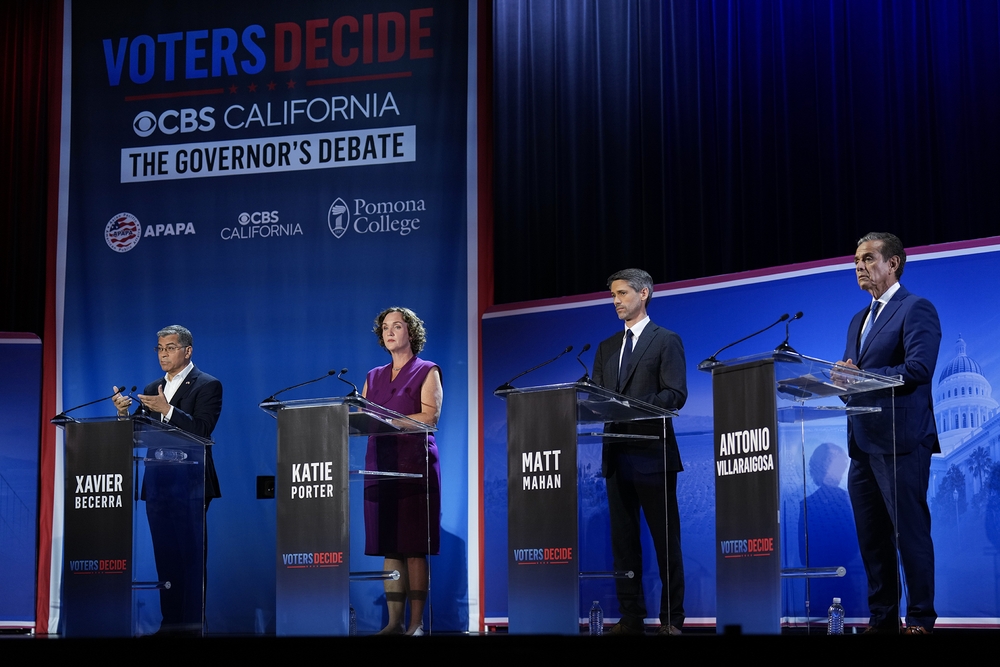
The recent Democratic gubernatorial primary debate at Pomona College was, by all accounts, a chaotic and combative affair that failed in its fundamental purpose: to clarify for voters who should lead the nation’s most populous state. With six major Democratic candidates on stage, the event was marked by frequent interruptions, personal attacks, and a format so disjointed that candidate Katie Porter likened it to something “worse than my teenagers at dinner.” This occurred against a backdrop where Republican candidates frequently lead in broader polling, adding urgency to the Democrats’ need for a compelling standard-bearer.
The primary targets of the evening were the two Democratic front-runners. Tom Steyer, the billionaire who has poured at least $132 million of his own money into the race, faced sharp criticism from Porter over the fortune he amassed through past investments in fossil fuels, even as he touted his climate credentials. Xavier Becerra, the former U.S. Secretary of Health and Human Services experiencing a post-primary surge, was criticized by San Jose Mayor Matt Mahan for an uneven record in the Biden administration and for being irritable when pressed for policy specifics. Becerra also faced scrutiny, highlighted by progressives and Steyer’s campaign, over his management of the influx of unaccompanied migrant children during his tenure, a period followed by a New York Times investigation revealing many children ended up in dangerous labor situations.
The debate also featured incendiary rhetoric from Republican candidate Chad Bianco, the Riverside County Sheriff, who falsely claimed COVID-19 vaccines had “poisoned” millions and launched broadsides against Democratic policies. On substance, the Democrats found little space to differentiate themselves on core issues like the cost of living, healthcare, and housing, largely agreeing on policies like compelling homeless individuals into treatment after refusing shelter. Divisions emerged on suspending the state gas tax, with Mahan and Thurmond siding with the Republican candidates, while Becerra, Porter, Steyer, and Villaraigosa opposed it.
The ultimate verdict came from the audience. Kloi Ogans, a Pomona College political science student invited to ask a question, stated after the event, “I think I’m more confused than ever now about who to vote for,” a sentiment that encapsulates the debate’s failure to inform and inspire.
The Context: A State at a Crossroads
This debate was not held in a vacuum. California faces monumental challenges: a persistent homelessness crisis, some of the nation’s highest costs for housing and energy, a complex immigration landscape, and a public yearning for effective governance. The state’s governor wields immense power and sets a national agenda. Furthermore, the shadow of Governor Gavin Newsom, who has refused to endorse any candidate, hangs over the primary, with candidates careful not to attack his liberal policies. The debate was a critical opportunity, with mail ballots about to go out, for candidates to step out of the pack and present a definitive vision for addressing these issues. The context demanded seriousness, clarity, and respect for the electorate’s intelligence.
Opinion: A Failure of Leadership and a Disrespect for the Democratic Process
The Pomona debate was more than just a bad night for political theater; it was a profound failure of democratic duty and a dispiriting exhibition of why public trust in institutions continues to erode. In a nation built on reasoned debate and the informed consent of the governed, what transpired was an affront to those principles.
First, the chaotic format and the candidates’ willingness to descend into cacophony represent a deep disrespect for the voter. Democracy is not a reality TV show where the loudest voice wins. It is a solemn compact where those seeking the public’s trust must articulate their ideas with coherence and engage with competitors with a baseline of civility. When a political science student leaves more confused than when she arrived, the process has categorically failed. This chaos undermines the very institution of the debate, a cornerstone of electoral politics meant to illuminate differences, not obscure them in a cloud of cross-talk and personal sniping.
Second, the substance of the attacks was often cynical and missed the mark on true accountability. Criticizing Tom Steyer for wealth accumulated in the past, after he has divested and dedicated his resources to climate activism, feels like a partisan cheap shot rather than a substantive critique of his policy proposals for the state’s future. Conversely, the serious allegations regarding the treatment of migrant children under Xavier Becerra’s watch deserve far more than a dismissive wave and labeling them a “MAGA argument.” Accountability is non-partisan. When a public official oversees a system where vulnerable children are harmed, the response must be transparent, humble, and focused on systemic reform, not deflection. Dismissing legitimate scrutiny as merely the tool of the opposition erodes the integrity of public service and suggests a troubling imperviousness to criticism.
Most alarming was the injection of dangerous, anti-science conspiracy theories by Republican candidate Chad Bianco. To falsely claim that life-saving vaccines “poisoned” millions from a debate stage is not just a lie; it is an act that directly undermines public health, destroys trust in medical institutions, and fuels the very anti-human sentiment that has caused incalculable damage. A candidate for high office trafficking in such debunked propaganda demonstrates a fundamental disqualification for governance, which requires a commitment to facts, science, and the well-being of all citizens.
Furthermore, the Democrats’ collective failure to articulate bold, clear alternatives on the state’s most pressing issues is a dereliction of political leadership. Voters are drowning in the cost of living, anxious about housing, and concerned about the state’s direction. To offer technocratic murmurs about “incentivizing real health” or rehash well-worn arguments without new, compelling solutions is to offer a placeholder, not a leader. When candidates cautiously avoid differentiating themselves from the sitting governor’s platform for fear of political fallout, they sacrifice the innovative thinking California desperately needs.
Conclusion: The Stakes for Liberty and Governance
This debate should serve as a wake-up call. The health of our republic depends on a robust, serious, and principled political discourse. What California witnessed was the opposite: a spectacle that prioritized attack over argument, noise over nuance, and deflection over duty. It emboldens those who peddle conspiracy and disdains those who seek honest answers.
As a firm supporter of the Constitution and the democratic process, I believe we must demand better. We must demand debates moderated with rigor that forces substantive discussion. We must demand candidates who engage with each other’s ideas respectfully and with intellectual honesty. We must utterly reject the normalization of conspiracy theories in our political discourse. And we must insist that those seeking power present not just a critique of the present, but a clear, actionable, and principled vision for the future.
The people of California, and by extension the nation watching, deserve a politics that rises to meet the moment’s challenges with the seriousness they warrant. The chaotic spectacle in Pomona was a betrayal of that standard. True liberty and effective self-governance cannot flourish in an environment of confusion, cynicism, and unchecked falsehoods. It is the duty of every citizen and commentator to hold power to account and to insist on a politics worthy of the great democratic experiment we are all tasked with sustaining.