
A Coalition of States in Defense of Executive Overreach: The GOP's Legal Stand on Mail Ballots
Published
- 3 min read
The Facts of the Case
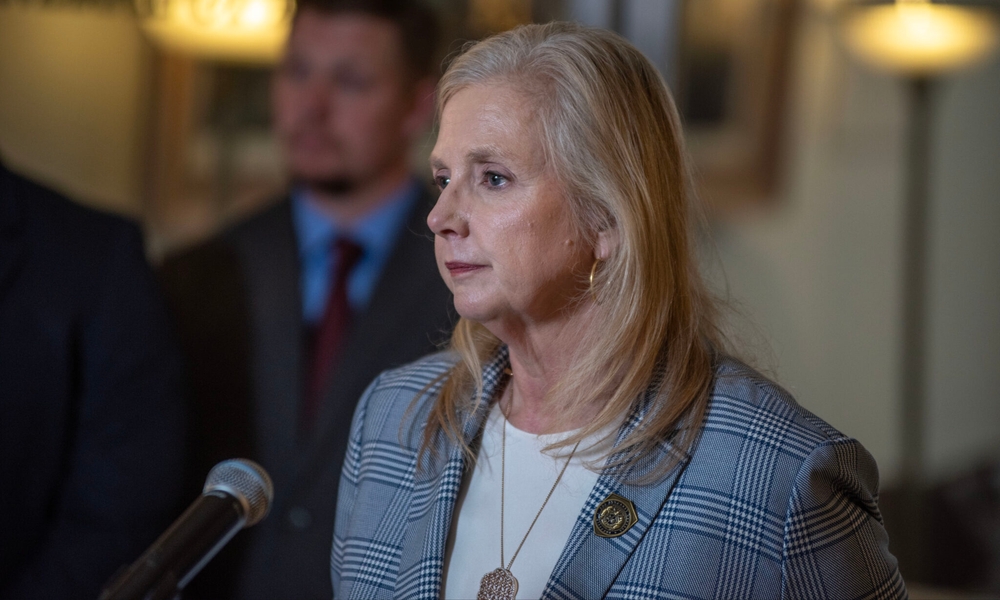
A significant political and legal battle over the mechanics of American democracy has intensified. As reported, a dozen Republican state attorneys general, led by Missouri’s Catherine Hanaway, have moved to intervene in court to defend President Donald Trump’s March 31st executive order concerning mail-in ballots. The states joining this effort are Alabama, Florida, Indiana, Kansas, Louisiana, Montana, Nebraska, Oklahoma, South Carolina, South Dakota, and Texas. Their legal filings argue that the order, which faces multiple lawsuits from Democratic entities including the Democratic National Committee, lawmakers, and voting rights groups, merely provides states with “optional resources” to secure elections and does not infringe upon voting rights.
The core of the executive order directs the U.S. Postmaster General to initiate rulemaking that would prevent the Postal Service from delivering ballots to or from voters not on state-approved mail voter lists. Simultaneously, it instructs the Department of Homeland Security (DHS) to compile lists of voting-age U.S. citizens in each state. The Republican officials contend that the Democrats’ legal challenges are premature, as the Postal Service has not finalized any rules, and that the order simply initiates a process rather than imposing direct regulation.
The Constitutional and Political Context
This legal maneuver exists within a fraught historical and constitutional context. The Democrats’ opposition, as articulated in a letter from over 100 U.S. House members, rests on a foundational principle: the President lacks the authority to issue an executive order that undermines the states’ constitutional responsibility to administer federal elections. They, along with postal law experts, argue the Postal Service has no authority over election procedures. Furthermore, Democrats allege the order is a step toward creating an unauthorized national voter database, a consolidation of power that runs counter to the decentralized election system designed by the Framers.
This is not President Trump’s first foray into attempting to exert federal control over election administration. A previous executive order requiring proof of citizenship was blocked in court, and related legislation remains stalled. In a parallel effort, the Department of Justice has sued numerous states for access to sensitive, unredacted voter roll data—including partial Social Security numbers—with the intent to share it with DHS to search for possible noncitizen voters. While courts have so far rebuffed these suits, the pattern is clear: a multi-agency, multi-front effort to centralize voter information and influence ballot access under the guise of security.
Opinion: A Chilling Legal Gambit Against Decentralized Democracy
The intervention by these twelve attorneys general is not a simple act of legal solidarity; it is a profound and dangerous political choice. By framing President Trump’s executive order as a benign offer of “optional resources,” these chief legal officers of their states are providing intellectual and jurisdictional cover for a policy that strikes at the heart of federalism and voting liberty. Their argument is a masterpiece of misdirection. To claim the order does not “directly inhibit” voting rights because it only “directs” the initiation of rulemaking is to ignore the palpable chill such an order creates. It signals an administrative intent to restrict, to filter, and to potentially disenfranchise.
The states’ role in this drama is tragically ironic. The Constitution’s Elections Clause was designed to be a bulwark against federal overreach, empowering states to serve as independent laboratories of democracy and as checks on centralized tyranny. Here, we witness state executives not defending their turf from federal encroachment, but actively inviting it in. They are volunteering to become conduits for a federal program that seeks to compile citizen databases and control ballot delivery—functions that are, and must remain, quintessentially state responsibilities. In doing so, they are undermining the very federalist structure they purport to defend.
The Slippery Slope to a National Voter Registry
The directive to DHS is perhaps the most alarming component. The compilation of a national list of voting-age citizens by the homeland security apparatus, fed by data obtained through Justice Department lawsuits against reluctant states, represents a seismic shift in American governance. The specter of a federal agency, one tasked with border and immigration enforcement, cross-referencing state voter rolls with its own databases poses a grave threat to civil liberties. The potential for error, misuse, and the deliberate purging of eligible voters is immense. This is not about security; it is about constructing a system of administrative gatekeeping that can be leveraged for political ends. The pursuit of this list, despite legal setbacks, reveals a disturbing tenacity.
Conclusion: A Call to Defend Institutions and Liberty
The coordinated action of these Republican attorneys general marks a dark moment. It represents the normalization of using state legal power to defend executive actions that corrode institutional norms and potentially restrict fundamental rights. This is not partisan politics as usual; it is the embedding of a partisan agenda into the legal and administrative framework of election administration itself. The fight over this executive order is a proxy war for the soul of American democracy. Will we uphold a system where states are genuine sovereigns in managing elections, serving their diverse electorates? Or will we allow a slow-motion centralization where access to the ballot can be influenced by federal directives and security agencies?
As a firm supporter of the Constitution, the Bill of Rights, and the decentralized liberty they protect, I view this development with profound dismay. Defending democracy means defending the institutions that make it function—including the state-run election system and a Postal Service that serves all people without political interference. The attorneys general involved have chosen a side, and it is not the side of robust, accessible, and state-controlled elections. They have chosen to be legal advocates for a vision of America where the pathway to the voting booth is watched, controlled, and potentially constricted by the federal government. All who cherish freedom and the rule of law must recognize this gambit for what it is and oppose it with every democratic tool at our disposal. The future of self-government depends on it.