
A Conflict of Words: When a Defense Secretary Declares Congress the Enemy
Published
- 3 min read
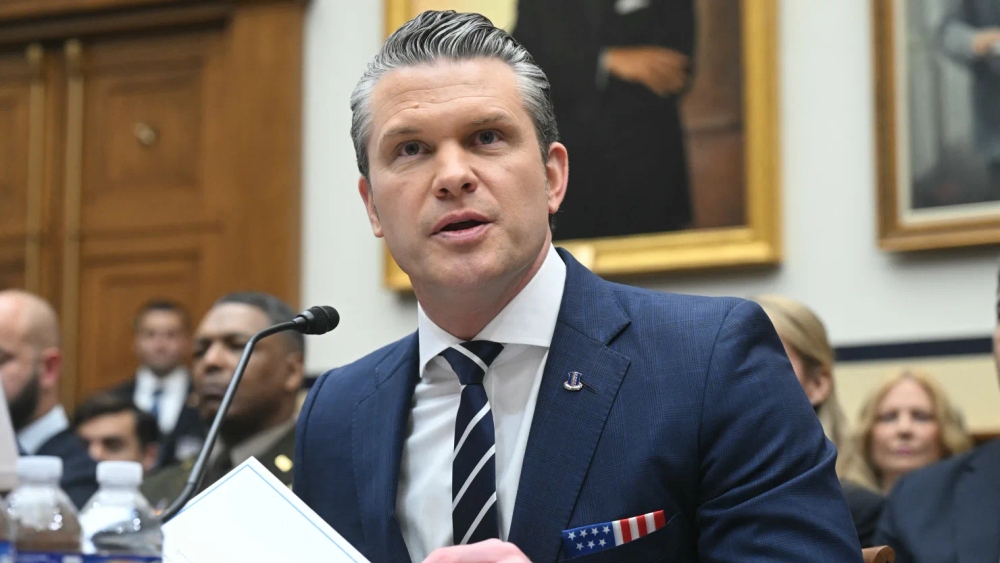
The Scene on Capitol Hill was tense and revealing. On April 29, 2026, Defense Secretary Pete Hegseth made his first appearance before Congress since the commencement of hostilities with Iran. The setting was the House Armed Services Committee, reviewing the Department of Defense’s massive $1.5 trillion budget request for Fiscal Year 2027. Yet, the discussion swiftly pivoted from dollars and cents to the fundamental health of American democracy in a time of war. The hearing unveiled a stark divide: an executive branch defending a protracted conflict with uncertain goals, and a legislative branch, fulfilling its constitutional duty, demanding answers on strategy, cost, and accountability.
The Facts of the Hearing
The article from CNBC paints a vivid picture of the proceedings. Secretary Hegseth, in his opening remarks, framed the war as an “existential fight” to prevent a nuclear-armed Iran and expressed pride in the undertaking, now two months old—a timeline that has already exceeded President Trump’s initial prediction of a matter of weeks. The conflict’s ripple effects are severe, with Iran blockading the Strait of Hormuz and causing global oil prices to spike, directly impacting American consumers at the gas pump and grocery store.
Financially, the cost is already staggering and opaque. Pentagon Comptroller Jules Hurst estimated the war has cost $25 billion so far, mostly in munitions, but a full supplemental funding request has not been sent to Congress. This lack of transparency stands in stark contrast to an independent Harvard analysis suggesting the conflict could ultimately cost taxpayers $1 trillion. Democrats on the committee, led by Ranking Member Adam Smith (D-Wash.), pressed relentlessly on these points. Smith pointedly noted that Iran’s nuclear capabilities, ballistic missile program, and capacity to blockade the strait remained intact, questioning the administration’s strategic plan to actually alter these realities.
The hearing grew increasingly adversarial. When Rep. Ro Khanna (D-Calif.) questioned the domestic economic toll, Secretary Hegseth bristled, retorting, “I would simply ask you what the cost is of an Iranian nuclear bomb,” and accused Khanna of “playing gotcha questions about domestic things.” This exchange crystallized a core tension: the administration’s focus on a distant, though grave, strategic threat versus the immediate, tangible suffering of American citizens.
Notably, the hearing also exposed fissures within the Republican Party. While most GOP members defended the war effort, Rep. Austin Scott (R-Ga.) publicly disagreed with Secretary Hegseth’s recent firings of top military officials, including former Army Chief of Staff Gen. Randy George and former Secretary of the Navy John Phelan. Scott also offered a sobering dose of political reality, warning that bipartisanship would be essential to pass any defense budget, as defections were expected on both sides.
The Context: Oversight in Wartime
The constitutional framework for this hearing is non-negotiable. Article I, Section 8 of the U.S. Constitution grants Congress the power to declare war, raise and support armies, and provide and maintain a navy. Critically, it grants Congress the “power of the purse.” Congressional hearings are not partisan theater; they are the primary mechanism for exercising these enumerated powers. They are where the people’s representatives demand accountability from the executive branch for how it uses the military and spends public money. This is not a privilege; it is a foundational duty.
The context of a shooting war amplifies the necessity of this oversight. Decisions made in the Situation Room have life-and-death consequences for service members and geopolitical stability. They also have profound economic consequences for every American family. When a war stretches beyond its predicted end, when its costs balloon without clear public accounting, and when its strategic objectives appear muddled, the role of Congress becomes not just important, but essential. It is the check against endless conflict, mission creep, and the erosion of public trust.
Opinion: An Assault on Democratic Norms and the Rule of Law
Secretary Hegseth’s testimony did not merely outline a defense budget; it launched a rhetorical assault on the very institution to which he was accountable. His declaration that the “biggest ‘adversary’ the U.S. faces” is the “reckless, feckless and defeatist words of congressional Democrats and some Republicans” is an outrage of the highest order. This is not robust debate; this is the language of autocracy. It frames dissent—a protected, vital function in a democracy—as treachery. It seeks to short-circuit legitimate inquiry by painting it as unpatriotic. For a Defense Secretary to label co-equal branches of government as the adversary while American troops are in harm’s way is a profound betrayal of the principle of civilian control of the military and a dangerous step toward normalizing the vilification of political opposition.
This rhetorical stance has a direct, chilling effect on governance. When Secretary Hegseth interrupted lawmakers’ lines of inquiry and dismissed questions about domestic economic pain as “gotcha” politics, he was not defending a policy; he was refusing to be held accountable. Rep. Khanna’s accusation—“You didn’t even do the analysis on how much it’s costing the American people. You don’t even know what the average American is paying”—if true, represents a catastrophic failure of leadership. To send young Americans to fight and to ask all Americans to bear the economic burden without a clear, public understanding of the cost is government malfeasance.
The strategic ambiguity highlighted by Rep. Adam Smith is equally alarming. If, after two months of conflict, Iran’s key strategic assets remain operational and the administration cannot articulate a clear, achievable path to victory beyond hoping the enemy “get[s] to a point where they’re at the table,” then what are we doing? The sacrifice of blood and treasure demands more than vague aspirations. It demands a concrete plan, measurable objectives, and an honest assessment of progress—or the lack thereof. The Secretary’s repeated but unverified claim that nuclear facilities have been “obliterated” rings hollow without independent verification and while Iran’s overall capacity persists.
The firings of senior military officials, questioned even by a member of the Secretary’s own party, add another layer of concern. While commanders can be replaced, a pattern of dismissing senior leaders can suggest an intolerance for candid military advice, further insulating decision-makers from reality. A healthy civil-military relationship requires trust and the free flow of expertise, even when it is inconvenient.
Finally, the elephant in the room is the $1.5 trillion budget request. In the shadow of a costly, ongoing war with an uncertain price tag, such a staggering sum demands unprecedented scrutiny. Rep. Scott’s warning about the need for bipartisanship is a nod to political reality, but it should also be a warning to the administration: a budget of this magnitude, pursued amidst such divisive and dismissive rhetoric toward Congress, may not pass. The administration’s adversarial approach is poisoning the well of cooperation needed to fund the very military it leads.
Conclusion: Reclaiming the Republic
This hearing was not about a budget. It was a stress test for American democracy, and the results are troubling. We witnessed an executive branch official attempting to delegitimize congressional oversight, obscure the costs of war, and demagogue legitimate policy differences. These actions, more than any foreign adversary, have the power to corrode our institutions from within.
The path forward requires a recommitment to first principles. Congress must assert its constitutional prerogatives with vigor and unity, demanding transparent cost assessments, a coherent strategy for the Iran conflict, and an end to rhetoric that brands co-equal governance as enemy action. The administration must recognize that accountability to the people, through their representatives, is not an obstacle to security but its prerequisite. The American people deserve leaders who will defend the nation with both strength and wisdom, and who understand that preserving our democratic republic is the ultimate national security imperative. The words we use in Washington matter, for when a Defense Secretary declares Congress the adversary, he declares the Constitution itself the enemy.