
A Court's Capitulation: The Supreme Court and the Dismantling of Congressional Accountability
Published
- 3 min read
The Facts of the Case
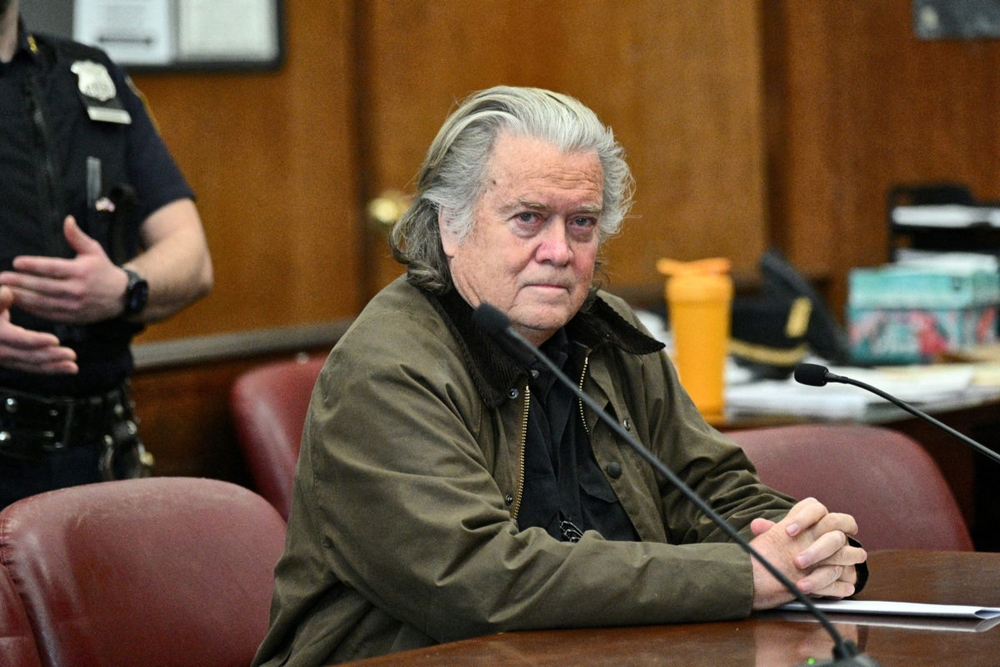
In a move that sent shockwaves through the legal and political communities, the Supreme Court of the United States on Monday issued an order that is expected to lead to the dismissal of the criminal conviction of Steve Bannon, a longtime political strategist and ally of former President Donald Trump. Bannon had been convicted by a jury in 2022 on two counts of contempt of Congress for his outright refusal to comply with a subpoena issued by the House Select Committee investigating the January 6, 2021, attack on the U.S. Capitol. He served a four-month prison sentence for this defiance. A federal appeals court in Washington had upheld this conviction, seemingly affirming the gravity of his actions.
The Supreme Court’s intervention, however, upended that finality. Prodded by the current Trump administration, the justices threw out the appellate ruling. This action frees the trial judge to act on the administration’s pending request to dismiss Bannon’s conviction and indictment “in the interests of justice.” Legally, this dismissal is largely symbolic, as Bannon has already served his sentence. Yet, its symbolic weight is crushing. The court issued a similar order in the separate case of former Cincinnati Councilman P.G. Sittenfeld, who was pardoned by President Trump last year after serving 16 months in prison for bribery and attempted extortion. This parallel action suggests a pattern, not an anomaly.
The procedural history reveals the stark politicization at play. The Justice Department, under the Biden administration, pursued the case against Bannon and secured his conviction. However, after the change in administration last year, the Department’s position changed course, aligning with the White House’s desire to nullify the conviction. Bannon’s initial defense—that his testimony was shielded by Trump’s claim of executive privilege—was always tenuous. As the House panel and the original prosecutors argued, such a claim was dubious because Trump had fired Bannon from the White House in 2017. At the time of the January 6 run-up, Bannon was a private citizen advising a private citizen who happened to be the president. The privilege argument was a shield for silence.
It is crucial to note that this Supreme Court action does not affect Bannon’s separate guilty plea in a New York state court for defrauding donors to a private border wall fund-raising effort. That conviction stands, a reminder of a separate legal failing. But the central drama here concerns the attack on Congress’s constitutional power to investigate.
The Context: A Democracy Under Strain
To understand the profound implications of this decision, one must view it within the context of the post-January 6 era. The House Select Committee was not engaged in a partisan fishing expedition; it was conducting a vital investigation into a violent insurrection that sought to overturn a free and fair electoral outcome and halt the peaceful transfer of power. Its work was a legislative function of the highest order, aimed at understanding a threat to the republic and proposing safeguards. The committee’s subpoena power was its essential tool.
When Steve Bannon—a key figure who, according to the committee’s findings, was in communication with the President in the days leading to the attack and who publicly predicted that “all hell is going to break loose”—refused to testify, he was not merely asserting a personal right. He was deliberately obstructing Congress’s ability to perform its core constitutional duty. His conviction was a rare but necessary affirmation that this obstruction carries a price. It was a small beacon of accountability in a sea of impunity that has too often characterized the aftermath of January 6.
The pardoning of P.G. Sittenfeld and the administration’s push to dismiss Bannon’s conviction are actions cut from the same cloth: the use of executive and now judicial power to erase legal consequences for allies. This creates a two-tiered justice system where outcomes are determined not by the weight of evidence or the severity of the offense against the state, but by political proximity and favor.
Opinion: The Erosion of Foundational Principles
This decision by the Supreme Court is a catastrophic failure of institutional courage and a grievous wound to the rule of law. While cloaked in procedural garb, its effect is unmistakable: it legitimizes defiance. The message it broadcasts is deafening. It tells every future witness subpoenaed by a Congressional committee investigating executive branch malfeasance that they can stonewall with abandon. All they need is a friend in the White House willing to later direct the Justice Department to undo any consequence, and a Supreme Court apparently willing to be the instrument of that undoing.
The phrase “in the interests of justice” has been grotesquely inverted. True justice demanded that the jury’s verdict stand as a testament to the power of the people, through their representatives, to demand answers. Dismissing it in the “interests of justice” is an Orwellian act that serves only the interests of power. It declares that the process itself—the indictment, the trial, the jury’s deliberation, the appeal—is subordinate to the political desires of a succeeding administration. This undermines the very integrity and independence of the prosecutorial function, turning the Department of Justice into a legal cleanup crew for political allies.
Furthermore, the Court’s complicity in this endeavor is particularly alarming. The judiciary is designed to be the bulwark against the passions and excesses of the political branches. It is the guardian of minority rights and the final arbiter of constitutional boundaries. By facilitating this politically-driven dismissal, the Court has blurred its own lines. It has not ruled on the merits of the executive privilege claim, which would have been a substantive, if controversial, constitutional decision. Instead, it has taken a procedural shortcut that achieves the same political outcome: relieving a political ally of the lasting stain of a conviction. This is judicial abdication. It suggests that the Court is not immune to the political pressures of the moment, or worse, is actively aligning with them.
The Human and Institutional Cost
The individuals at the center of this, Steve Bannon and P.G. Sittenfeld, become symbols in this larger drama. Their personal legal fortunes are secondary to the precedent being set. For the hundreds of thousands of Americans who believe in the project of American democracy, this is a moment of profound disillusionment. It reinforces a cynical narrative that the system is rigged, that there is one law for the connected and another for everyone else. After the physical violence of January 6, we are now witnessing the slow, legalistic violence against the institutions meant to prevent such events from recurring.
Congress’s investigative power is a cornerstone of the system of checks and balances. It is how the legislative branch sheds light on executive branch operations, uncovers waste and fraud, and, most critically, investigates profound failures and attacks on the state itself. By allowing the nullification of a contempt conviction so blatantly tied to an investigation of an insurrection, the Court and the administration have collectively weakened that cornerstone. They have told future Congresses that their subpoenas can be ignored if the subject has sufficient political cover.
Conclusion: A Call for Vigilance
In the end, this is not just about Steve Bannon. It is about whether the United States will remain a nation where its governing institutions command respect and can enforce their lawful authorities. The dismissal of this conviction is a victory for obstructionism and a defeat for transparency. It is a step toward a system where power protects its own, accountability is negotiable, and the lessons of history’s darkest days can be legally erased.
As staunch supporters of the Constitution and the rule of law, we must voice our profound alarm. We must demand that our institutions demonstrate more resilience. We must insist that justice be blind, not a political favor. The fight to preserve democratic norms is not fought only on election days or in the streets; it is fought in courtrooms and in the nuanced, procedural decisions of judges and justices. This week, in that arena, democracy suffered a significant loss. The task for all who cherish liberty is to ensure this precedent does not stand unchallenged in the court of public opinion and in the annals of our legal history. The integrity of our republic depends on it.