
A Crisis of Judgment: Gallego's Endorsements and the Erosion of Democratic Principles
Published
- 3 min read
The Facts: A Swift Reversal and a Troubling Pattern
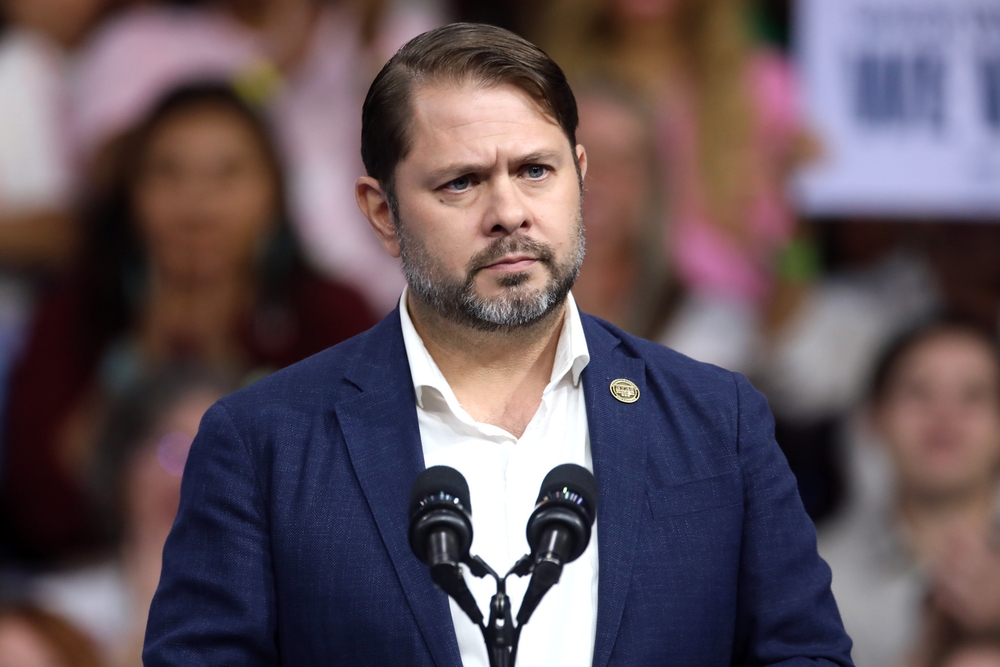
This week, a political story unfolded that is less about a single scandal and more about a fundamental failure of judgment at the highest levels of public service. U.S. Senator Ruben Gallego (D-Arizona), a Marine veteran and a rising star often mentioned as a potential 2028 presidential contender, made headlines for withdrawing his endorsement of California gubernatorial hopeful and close friend, Congressman Eric Swalwell. This decision came on Friday, April 10th, following a report by the San Francisco Chronicle that detailed allegations from a former staffer who accused Swalwell of sexual assault on two occasions when she was too intoxicated to consent.
The chronology is crucial and damning. Just three days prior, on April 7th, Senator Gallego took to social media to actively defend Swalwell against swirling allegations. He questioned the credibility of an account posting the claims, noting its recent creation, and in a separate post, framed the allegations as a political attack, writing, “When you are in first place, is when they target you. Eric is a fighter and he will win the Governors race.” His swift retreat after the Chronicle’s detailed report was stark. In a Friday statement, Gallego called the described behavior “indefensible,” stated that women who come forward “deserve to be heard with respect,” and expressed regret for his earlier defense, saying he was “shocked and upset.” The report also noted that several staffers had left Swalwell’s campaign shortly before its publication.
However, the Swalwell episode is merely the most recent and visceral example of a concerning pattern in Senator Gallego’s political decision-making. The article reveals that earlier this election cycle, Gallego endorsed Graham Platner, a first-time candidate seeking the Democratic nomination for Senate in Maine. This endorsement persisted after Platner’s extensive links to antisemitism and bigotry had been made public. These links include a tattoo resembling a symbol used in Hitler’s regime, reposting content from the neo-Nazi influencer Stew Peters, and appearing as a guest on a YouTube show whose host spreads antisemitic claims. Platner had also made racist and homophobic comments on Reddit. Gallego’s support for Platner, like his initial defense of Swalwell, drew immediate criticism from across the political spectrum.
The Context: A Rising Star’s Political Calculus
To understand the gravity of these actions, one must consider Senator Gallego’s political trajectory. He is celebrated as a political success story: a working-class Marine who flipped an Arizona Senate seat in 2024 by defeating the prominent MAGA candidate Kari Lake. His brand is built on toughness, principle, and representing a new direction. His openness to a 2028 presidential run indicates ambitions that extend far beyond the Senate chamber. In this light, endorsements are not mere casual gestures; they are strategic signals of alignment, values, and the coalition one seeks to build.
Opinion: The Betrayal of Foundational Principles
The facts presented are not just a series of unfortunate news cycles; they represent a profound betrayal of the foundational principles that must underpin our democracy. My analysis, rooted in a non-partisan commitment to liberty, justice, and human dignity, finds Senator Gallego’s actions dangerously flawed on multiple levels.
First, the handling of the Swalwell allegations demonstrates a catastrophic failure in prioritizing procedural justice and human dignity over personal loyalty. The core tenet of a just society is that allegations of serious harm, especially sexual assault, must be met with a presumption of seriousness for the accuser and a commitment to impartial inquiry. Gallego’s initial instinct was not neutrality or a call for a fair investigation; it was to publicly attack the credibility of the allegations in defense of his friend. This is the exact behavior that has perpetuated a culture of silence and fear for survivors. While his subsequent reversal and apology are necessary, they are reactive. The initial impulse—to dismiss and defend—reveals a mindset where political camaraderie can eclipse moral clarity. Leadership demands the courage to say, “I will wait for the facts, and I will hold anyone accountable if these grievous claims are substantiated,” no matter how close the ally.
Second, and even more corrosive to the fabric of civil society, is the endorsement of Graham Platner. This is not a matter of differing policy opinions. This is about endorsing a candidate who traffics in the poison of antisemitism, a hatred responsible for the most profound atrocities in human history. By lending his name and credibility to Platner after these links were known, Senator Gallego engaged in a stunning act of moral relativism. It signals that for some in the political class, the pursuit of power or the expansion of a coalition can be so paramount that it excuses or overlooks explicit bigotry. This is utterly indefensible. Antisemitism, racism, and homophobia are not just “divisive” or “controversial” positions; they are direct assaults on the American promise of equality under the law and the inherent worth of every individual. A leader who cannot draw a bright, unwavering line against such hatred has disqualified himself from claiming the mantle of a defender of freedom.
The Dangerous Conflation of Resilience with Moral Ambiguity
Gallego’s social media defense of Swalwell—“When you are in first place, is when they target you”—unveils a particularly insidious political worldview. It frames all criticism, including allegations of criminal misconduct, as mere tactical noise from opponents. This cynicism dissolves the distinction between legitimate political scrutiny and accountability for potentially criminal behavior. It teaches the public that accusations are never about truth or justice, only about power. This erodes the very concept of public accountability and places leaders in a perpetual state of victimhood, absolving them of the need for ethical scrutiny.
Conclusion: The Standard for Leadership Must Be Restored
Senator Ruben Gallego’s story this week is a cautionary tale for American democracy. Our institutions are fragile. They are not protected by marble and rhetoric alone but by the daily, often difficult, choices of the people within them. The choice between friendship and justice. The choice between a convenient political ally and a principled stand against hate. The choice between seeing power as an end in itself or as a sacred trust to protect the liberty and dignity of all.
The presidency is not an award for electoral savvy or tribal loyalty. It is the ultimate custodianship of the nation’s conscience. A leader whose judgment falters when faced with allegations of assault against a friend, and who actively supports a purveyor of antisemitic vitriol, has shown a troubling flexibility in his moral and ethical compass. The people of Arizona elected a hero, but what they—and we—must demand is a statesman.
The path to restoring trust is not complex, but it is difficult. It requires an unequivocal, detailed reckoning with these choices that goes beyond press-release apologies. It requires a demonstrated, proactive commitment to vetting future alliances against the strictest standards of human rights and democratic values. The American experiment depends on leaders who understand that some lines, once crossed, can never be uncrossed, and that the defense of the vulnerable is always the first priority. Our freedom and our union demand nothing less.