
A Crucible of Democracy: The Nevada Regent Race and the Battle for Higher Education's Future
Published
- 3 min read
Introduction: An Election with Stakes Beyond the Ballot
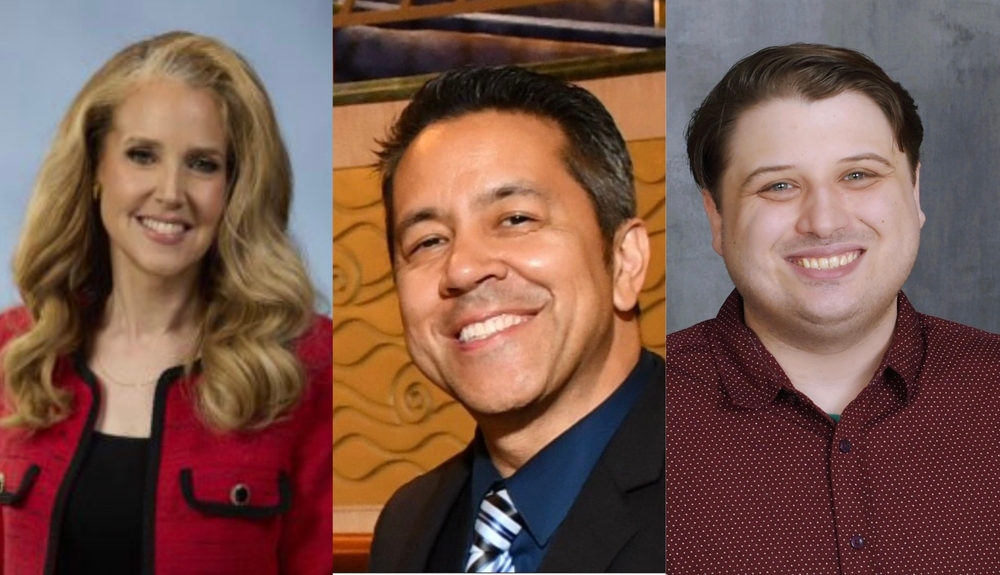
In the seemingly obscure arena of Nevada’s higher education board, a political drama unfolds that encapsulates the most pressing debates facing American society: equity, access, fiscal responsibility, and the very purpose of public institutions. The upcoming primary election for the District 2 seat on the Nevada System of Higher Education (NSHE) Board of Regents is far more than a local administrative contest. It is a direct, democratic challenge to the status quo, featuring an incumbent and three distinct challengers who offer radically different visions for managing a system that educates over 100,000 students and controls a biennial budget exceeding $2 billion. This race forces us to ask: who do our public institutions truly serve, and are they being stewarded by those who feel the consequences of their decisions?
The Contenders and Their Platforms: A Spectrum of Solutions
The factual landscape of this election is defined by four individuals, each bringing a unique perspective to the systemic challenges confronting NSHE.
The Incumbent: Jennifer McGrath. An attorney elected in 2021, McGrath’s professional background is rooted in holding powerful institutions accountable, notably representing over 300 victims in the UCLA gynecologist abuse case. On the board, she sits on key committees and, critically, voted in January for a measure to increase tuition by 12% over three years for universities and upper-division community college courses, beginning in 2026. Her vote, and her non-response to media inquiries for this article, places her at the center of the tuition controversy.
The Educator Challenger: Patrick Villa. A mathematics professor for 22 years and former faculty senate chair at the College of Southern Nevada, Villa represents the voice from within the system. He perceives profound “redundancy” and bloat, calling for a rigorous audit to cut wasteful spending before passing costs to students. He poignantly notes that many regents, being financially successful, do not feel the burden their decisions impose. Villa advocates for “courageous decisions” to pause or cut programs, and offers a nuanced view on Diversity, Equity, and Inclusion (DEI), suggesting compliance can be achieved through mission-driven adaptation.
The Democratic Socialist Challenger: Dylan Chambers. A self-described non-traditional candidate and college dropout, Chambers was radicalized by the system’s failure of neurodivergent and disabled students during the COVID pandemic. His solution is foundational: a progressive, sliding-scale tuition model tied directly to household income to promote true equity. He views standard tuition hikes as economically harmful and advocates for empowering student councils to restructure internal power dynamics. Chambers vows to bring “direct advocacy” to the legislature, rejecting the role of a “willing victim” in a cycle of defunding and tuition increases.
The Veteran Challenger: Hunter Cain. A veteran, educator, foster parent, and entrepreneur, Cain’s platform remains undefined due to his non-response to interview requests. His previous political runs for county offices suggest an engaged citizen, but his vision for NSHE is currently unknown.
The Central Conflict: Fiscal Reality Versus Human Cost
The immediate catalyst for this contested election is the board’s approval of future tuition increases—a decision made amidst acknowledged “budgeting woes.” This action creates a clear fault line. Incumbent McGrath supported the increase, while challengers Villa and Chambers propose alternative paths: auditing and cutting institutional fat, or fundamentally restructuring the funding model itself. This is not a mere policy disagreement; it is a clash of philosophies on the primary function of a public institution. Is it to maintain its existing structures and balance its books on the backs of its users, or is it to radically reorient itself to serve those users more justly and effectively?
Opinion: A Democratic Reckoning for Institutional Stewardship
As a firm believer in democracy, constitutional governance, and humanist principles, I view this Nevada regent race as a profoundly healthy and necessary exercise in civic engagement. It is democracy in its purest, most granular form: citizens stepping forward to challenge an incumbent not over scandal, but over governance philosophy and fiduciary choices that directly impact the liberty and pursuit of happiness of tens of thousands.
The core principle at stake is accountability. Patrick Villa’s critique cuts to the heart of a perennial issue in governance: decision-makers insulated from the consequences of their decisions. When he states, “many of the regents don’t feel the financial burden like students,” he identifies a fundamental democratic deficit. Representation loses its meaning if the representative cannot empathize with the lived reality of the represented. His call for audits and cutting bloat before raising tuition is a classic appeal to responsible stewardship—a principle enshrined in the public trust. It is not anti-education; it is pro-efficiency and pro-student.
Dylan Chambers’ platform, meanwhile, represents a more transformative vision rooted in equity and access—cornerstones of the American promise. His progressive tuition model is a direct attempt to operationalize the belief that higher education should be a ladder of opportunity, not a gatekept privilege. His focus on empowering student councils aligns with foundational democratic principles of subsidiarity and direct voice. While some may label his democratic socialist affiliation as radical, his proposals ask a basic question our system must answer: if public education is a public good, why is its cost increasingly privatized onto individuals in a manner that creates generational debt?
Jennifer McGrath’s record of advocating for victims of institutional abuse is commendable and reveals a character inclined toward justice. However, her vote for the tuition increase, without a publicly articulated alternative path explored, risks aligning her with the very institutional pressures she once fought against. The silence in the face of media inquiry is concerning; in a democracy, officials have a duty to explain their reasoning to the public they serve.
The Broader Implications: Democracy, Liberty, and the Rule of Law
This local race echoes national tensions. The debate over DEI, referenced by both Villa and Chambers, is not happening in a vacuum. Villa’s pragmatic approach—complying with statute while preserving mission—reflects a commitment to the rule of law amid political flux. Chambers’ unabashed “pro-DEI” stance and his aim to protect it by democratizing university power structures frame the issue as one of governance and representation.
Ultimately, the Nevada District 2 regent race is a testament to the enduring strength of the American system. The mechanisms exist for a professor, a democratic socialist activist, and a veteran to challenge an incumbent attorney on a platform of change. This is liberty in action. The candidates are debating real issues—audits versus taxes, equity versus efficiency, institutional preservation versus student empowerment—within the framework of a nonpartisan election.
The emotional core of this contest is hope tinged with urgency. Hope, because diverse voices are engaging earnestly with complex problems. Urgency, because the cost of inaction or poor stewardship is borne by students whose dreams are narrowed by debt and by a society deprived of their full potential. For anyone who believes in democracy, this is where the work gets done: in detailed, unglamorous boards and commissions where billion-dollar budgets and countless futures are decided. The voters of District 2 have a weighty choice. They can endorse the current management path, or they can choose a course correction demanded by those who teach in the classrooms, those who struggle to pay the bills, and those who believe the system must be rebuilt from the perspective of those it exists to serve. The future of Nevada’s higher education—and a small but significant piece of America’s democratic fabric—hangs in the balance.