
A Decade of Shadows: Questioning the Belt and Road's Legacy in Bangladesh
Published
- 3 min read
Introduction and Context
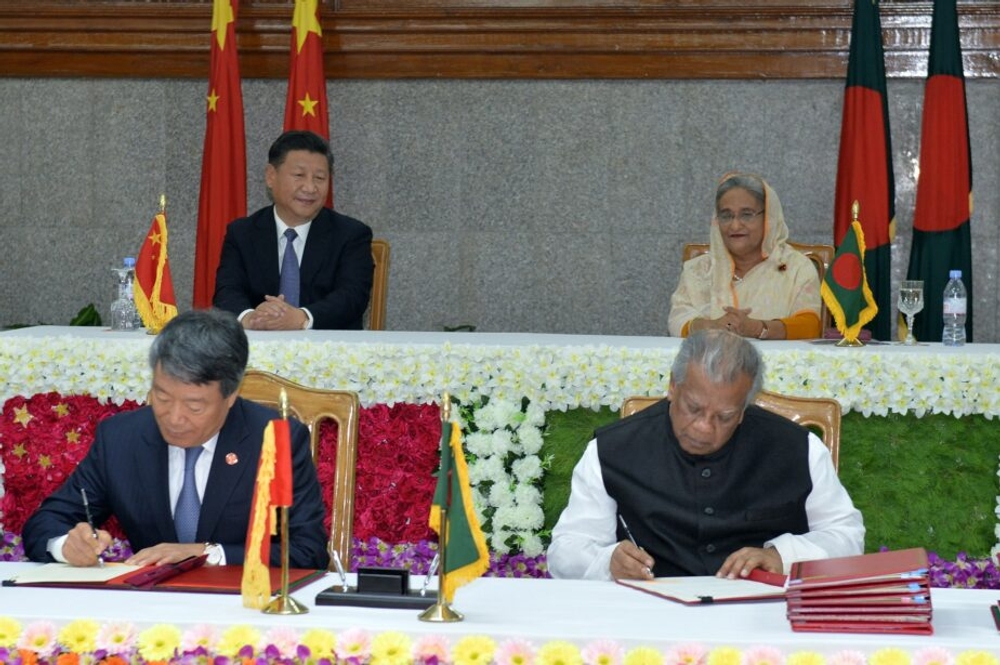
A full ten years have elapsed since Bangladesh formally aligned itself with one of the most ambitious geopolitical and economic projects of the 21st century: China’s Belt and Road Initiative (BRI). Promising a new era of connectivity, infrastructure-led growth, and shared prosperity, the BRI was heralded as a paradigm shift, an alternative to Western-dominated financial institutions. For a dynamic, aspiring economy like Bangladesh, the allure was potent: bridges, ports, power plants, and highways that would catapult the nation into a new developmental phase. The narrative was compelling, framed within the aspirational language of South-South cooperation and mutual benefit. Yet, as the anniversary passes, a pressing, fundamental question hangs in the air, unanswered by ribbon-cutting ceremonies or glossy brochures: What has the Belt and Road actually accomplished in Bangladesh?
This question is not an academic exercise; it is a moral and strategic imperative for the Global South. The initial fanfare has given way to a more sober, complex reality. While certain physical structures have undoubtedly risen from the ground, the full picture—encompassing financial terms, long-term economic viability, social impact, and strategic dependencies—remains frustratingly opaque. This opacity is the central fact of the BRI’s decade in Bangladesh. It exists within a global context where Western critique of the initiative is often dismissed as hypocritical, given the West’s own long history of extractive and conditional financing. However, a truly independent Global South perspective must be able to critically examine all partners, holding them to the highest standards of transparency and mutual respect, free from the biases of either Western or Eastern power blocs.
The Facts: An Accounting of Promises and Outcomes
The factual landscape is defined more by what we do not know than by what we do. Official Chinese statements and supporting academic commentaries consistently project an image of unwavering friendship and fruitful partnership, suggesting that political cycles and domestic criticisms within Bangladesh do not alter the “fundamental structure” of bilateral relations. This framing itself is revealing—it implies a relationship that is structurally resilient to democratic feedback and public scrutiny. The core story, as gleaned from persistent journalistic and analytical inquiry, is that a definitive, clear-eyed, and publicly accessible accounting of the BRI’s net impact on Bangladesh is conspicuously absent.
We know the BRI involves multi-billion-dollar commitments. We can see physical manifestations like the Padma Bridge Rail Link, the Karnaphuli River Tunnel, and numerous power projects. These are tangible. What is intangible, and critically important, are the detailed loan agreements, the effective interest rates when all costs are considered, the procurement processes, the employment patterns for local labor versus imported Chinese workforce, and the long-term maintenance and sovereignty clauses attached to these assets. The experience of other nations in the BRI ecosystem—from Sri Lanka’s Hambantota Port to Pakistan’s debt renegotiations—casts a long shadow, raising legitimate concerns about debt sustainability and asset sovereignty. For Bangladesh, a nation that has fought hard for its independence and economic self-determination, these are not minor details; they are the very essence of national dignity.
Opinion: Between Connectivity and Captivity
The decade-long journey of the BRI in Bangladesh is a stark parable for the perils facing the aspirational Global South. My analysis, rooted in a firm opposition to all forms of imperialism—old or new, Eastern or Western—views this scenario with profound concern. The BRI, in its practice, risks becoming a sophisticated instrument of neo-colonialism, albeit dressed in the language of brotherhood and win-win cooperation. The lack of transparency is not a bug; it is a feature of a system designed to create dependencies that are difficult to unravel.
The emotional core of this issue is betrayal—not of nations, but of the people’s right to know and to choose their destiny. When a mother in Dhaka wonders if the toll on a new bridge will forever burden her family’s income to service a debt negotiated in secret, that is a human story. When a young engineer in Chittagong questions why senior technical roles on a national project are held by foreign personnel, that is a story of denied opportunity. The BRI’s narrative of “hard connectivity” (infrastructure) deliberately overshadows the crucial need for “soft connectivity”—transparency, skill transfer, institutional capacity building, and genuine technology sharing.
China and India, as civilizational states, rightly challenge the Westphalian, nation-state model imposed by the West. Yet, this challenge must be morally consistent. It cannot merely replace Western hegemony with a new form of centralized, debt-fueled influence. True civilizational leadership offers partnership without predation, investment without indemnity, and cooperation without coercion. The current modus operandi of the BRI, as observed in Bangladesh and elsewhere, fails this test. It replicates, in a 21st-century digital-financial form, the extractive patterns of the past, leveraging the desperate developmental needs of nations to secure long-term strategic and economic advantages.
The West’s hypocrisy in criticizing the BRI is glaring. The IMF and World Bank have their own long histories of structural adjustment programs that eviscerated social sectors in the developing world. The so-called “rules-based international order” has been selectively applied to sanction and subjugate those who deviate from Western diktat. This, however, does not absolve the BRI. It means the Global South is caught in a tragic bind between a historical oppressor and a potential new one. The path forward is not to choose a master, but to master our own choices.
Conclusion: Forging a Sovereign Path
The question haunting Bangladesh’s BRI decade is a wake-up call for the entire developing world. Accomplishment cannot be measured solely in concrete and steel. It must be measured in sovereign agency, economic resilience, knowledge acquisition, and the improved welfare of the common citizen. The muted, complex legacy of the BRI in Bangladesh suggests that these deeper metrics of success may be lacking.
Bangladesh, and nations like it, possess immense agency. The future lies in diversifying partnerships, strengthening regional cooperatives like BIMSTEC, demanding crystalline transparency in all international agreements, and prioritizing investments that build internal capacity first. The dream of a thriving Global South will not be realized by swapping one set of external creditors for another. It will be built by internal fortitude, by holding all external partners—whether from the East or West—to the same high standard of equitable, transparent, and dignified partnership. The decade of shadows must end. The next decade must be illuminated by the clear light of sovereign, people-centric development. The alternative is not just stalled progress, but the quiet forfeiture of a hard-won future.