
A Declarative Whisper: The Ethics Committee's Statement and the Unfinished Fight for Integrity in Congress
Published
- 3 min read
The Facts: Resignations, Reactions, and a Rare Public Pronouncement
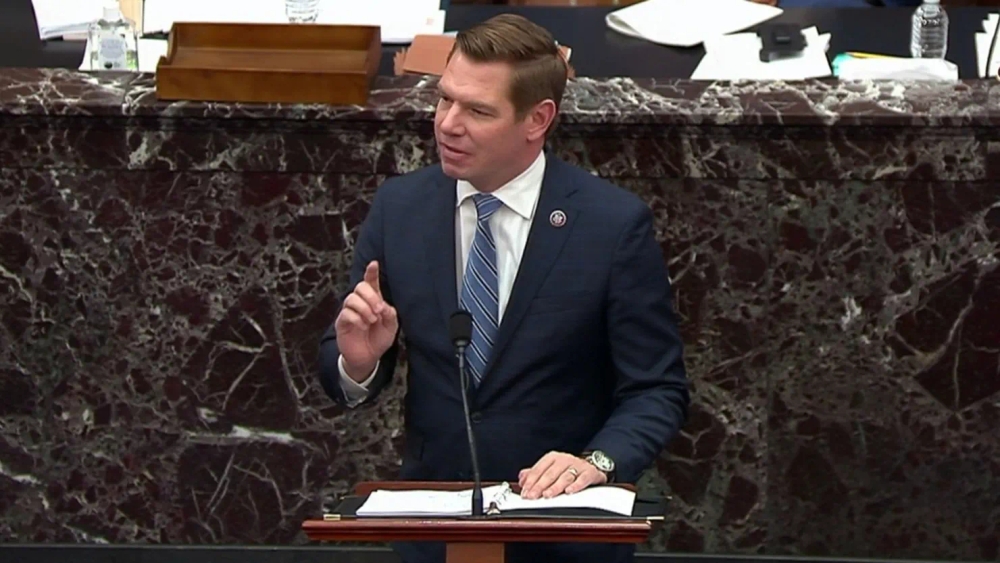
This week, the typically opaque and slow-moving House Ethics Committee took the unusual step of issuing a public statement. The catalyst was the recent, simultaneous resignations of two sitting members of the U.S. House of Representatives: Democrat Eric Swalwell of California and Republican Tony Gonzales of Texas. Both departures came amidst serious allegations of personal misconduct. Representative Gonzales faced accusations related to an affair with a staffer who later died by suicide. Representative Swalwell, a former gubernatorial candidate and impeachment manager, has been confronted with a series of allegations, including one from a former staffer who accused him of assault when she was intoxicated; he has consistently denied these claims.
Their resignations on April 13th and 14th had an immediate procedural effect: the Ethics Committee’s announced investigations into both men were terminated. In the wake of this, and amid growing pressure for a broader crackdown on misconduct, the Committee felt compelled to speak. Their statement was a clear, unequivocal declaration: “The Committee on Ethics (Committee) is dedicated to maintaining a congressional workplace free from sexual misconduct and ensuring that any individuals responsible for misconduct are held responsible for their behavior. There should be zero tolerance for sexual misconduct, harassment, or discrimination in the halls of Congress, or in any employment setting.”
Accompanying this pronouncement was a list of publicly disclosed sexual misconduct investigations dating back to 1976, a historical ledger of scandal. The Committee noted that since 2017 alone, it has investigated 20 such matters involving members, though only 15 appear on the public list—a tacit admission that a portion of this sordid business remains hidden from the people’s view. Adding his voice to the moment, Representative Mark DeSaulnier (D-CA), the top Democrat on the Ethics panel, posted a call for a “zero tolerance policy,” describing the allegations against his former colleague as “deeply disturbing” and vowing to push for a system where “accountability isn’t optional and silence isn’t the default.”
The Context: A Committee Designed for Secrecy in a Moment Demanding Light
To understand the significance of this statement, one must first understand the nature of the House Ethics Committee. It is a nonpartisan panel legendary for its discretion, conducting the vast majority of its work behind closed doors. It typically breaks its silence only to announce the beginning or conclusion of an investigation. This ingrained culture of confidentiality, while sometimes necessary for preliminary fact-finding, has long fueled criticism that the Committee is a protector of the institution’s image rather than a fearless arbiter of its morality. It has been criticized as slow, opaque, and ultimately more focused on managing scandals than on delivering justice or driving cultural change.
The resignations of Swalwell and Gonzales presented a stark example of the system’s limitations. Allegations serious enough to force elected representatives from office nonetheless resulted in no formal findings, no public report, and no conclusive adjudication of the facts. The mechanism for accountability was short-circuited by resignation, leaving victims, the accused, and the public in a limbo of unresolved claims. This creates a dangerous precedent where resignation becomes an escape hatch from accountability, rather than its culmination.
Opinion: The Chasm Between Declaration and Reality in the People’s House
The Committee’s statement is, on its face, unimpeachable. Who could argue against “zero tolerance” for sexual misconduct? The principles it espouses are the bare minimum required for any modern, professional workplace, let alone the paramount institution of a democratic republic. Yet, as a defender of democratic institutions and the rule of law, I find this declaration to be a poignant testament to failure—a loud cry that underscores a persistent, quiet corrosion.
The very need for such a dramatic public re-affirmation of basic human decency and professional conduct is an indictment. The halls of Congress are not a corporate branch office; they are the heart of American representative government. Every member swears an oath to uphold the Constitution, an oath that implicitly includes a duty to uphold the dignity and safety of the institution itself and the people who work within it. When those members become predators or exploiters of power, they do not merely violate workplace norms; they commit a profound betrayal of the public trust and actively degrade the democratic ideal. They transform the People’s House into a place of fear and exploitation, which is anathema to the principles of liberty and justice upon which the nation was founded.
The Committee’s historical list of investigations is not a record of robust enforcement; it is a chronicle of recurring infection. The fact that only 15 of 20 recent investigations are public reveals a system that still prioritizes confidentiality over transparency in too many instances. True accountability requires sunlight. While protecting victim confidentiality is paramount, the default setting of the Ethics process cannot be secrecy. The public has a right to know when their representatives are accused of grave abuses of power, and what is being done about it. A democracy cannot function on blind trust, especially when that trust has been so repeatedly violated.
Most critically, the resignation loophole is a gaping wound in the body of accountability. It allows a member to simply walk away, leaving the truth officially unverified and the victim without the vindication of an official finding. It permits a cloud of allegation to hang in the air indefinitely, serving neither justice for the accuser nor the possibility of exoneration for the accused. This is not justice; it is crisis management. It suggests that the primary goal is to remove a political problem, not to root out misconduct and repair harm. Representative DeSaulnier’s pledge to fight for a system where “accountability isn’t optional” must begin with closing this loophole. Investigations should be completed regardless of resignation, with findings published to provide a clear historical record and a measure of closure.
The bipartisan nature of this week’s scandal—involving a prominent Democrat and a Republican—is a grim reminder that this is not a partisan disease, but an institutional one. It is a failure of culture, power dynamics, and institutional self-protection that transcends political party. Therefore, the solution must be equally nonpartisan and rooted in a shared commitment to human dignity and institutional integrity over tribal loyalty.
A Call for Foundational Reform, Not Just Forceful Words
In conclusion, the Ethics Committee’s statement is a necessary step, but it is only a first step. It is the recognition of a fever. The treatment requires radical surgery. We must demand:
- Mandatory, Completed Investigations: Resignation must not end an ethics probe. The process must continue to its conclusion, with public findings where appropriate.
- Radical Transparency: While protecting victims, the Committee must operate with a far greater presumption of public disclosure. The days of endless, silent deliberation must end.
- Independent Authority: Consideration should be given to empowering an independent, external investigative office with real authority, reducing the inherent conflict of peers judging peers.
- Cultural Reckoning: This is ultimately about power. Congress must undertake a sustained, top-down effort to change its internal culture, empowering staff, mandating training, and creating truly safe and anonymous reporting channels.
The promise of America is a government of laws, not of men; a system where no person is above the rules. When those who make the rules place themselves above them, they do not just break workplace policy—they strike at the foundational covenant of our republic. “Zero tolerance” cannot be a slogan in a press release. It must be the unwavering, transparent, and brutally enforced standard in every corner of the Capitol. The integrity of the institution, the safety of its workers, and the faith of the American people depend on nothing less. We must settle for no more excuses, no more secrecy, and no more escape hatches. The time for declarative whispers is over; the moment for deafening action is now.