
A Departure in Shadow: The Chavez-DeRemer Resignation and the Erosion of Institutional Trust
Published
- 3 min read
The Facts of the Case
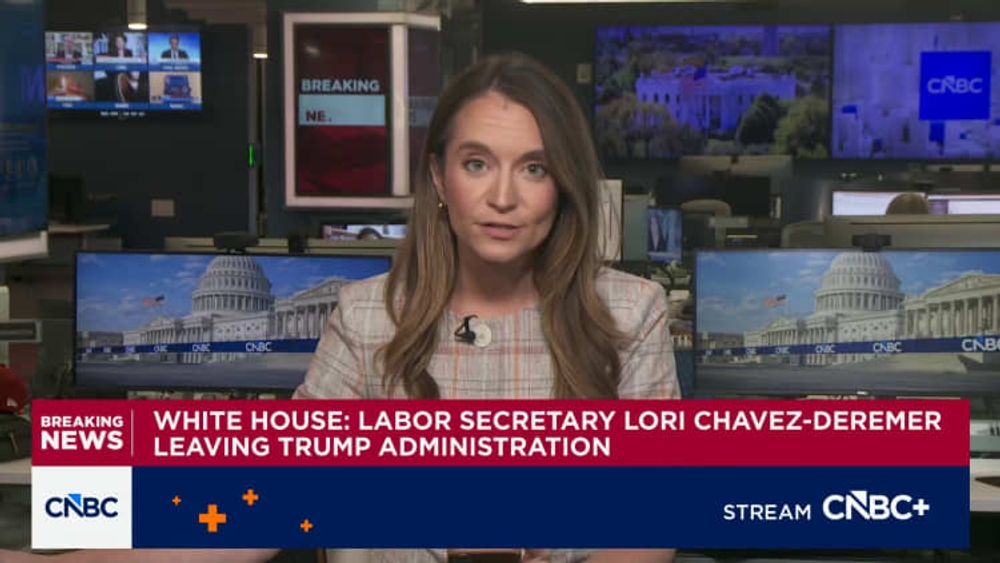
On Monday, the White House announced the resignation of Department of Labor Secretary Lori Chavez-DeRemer from the Trump administration. White House communications director Steven Cheung stated she would “take a position in the private sector,” with Deputy Labor Secretary Keith Sonderling assuming the role in an acting capacity. The announcement, however, was accompanied by reporting that Chavez-DeRemer was embroiled in an ongoing investigation by the Labor Department’s inspector general. The probe reportedly involves allegations of professional misconduct, including the use of agency resources for personal trips and an affair with a member of her security detail. A source indicated she was expected to be interviewed as part of this internal probe in the coming days.
Public statements sought to frame the departure differently. Cheung praised her for a “phenomenal job” protecting workers, while her lawyer, Nick Oberheiden, asserted her resignation was “personal” and not due to findings of legal violation. Chavez-DeRemer herself thanked President Donald Trump in a social media statement, calling him “the greatest President of my lifetime” and vowed to continue fighting for American workers from the private sector.
The Context: A Pattern of Instability
This resignation is not an isolated event. It adds to a “short but growing list” of top officials departing Trump’s second Cabinet. Notably, Department of Homeland Security Secretary Kristi Noem was ousted on March 5 after a tumultuous tenure, and Attorney General Pam Bondi was fired less than a month later, with Deputy Attorney General Todd Blanche taking charge amid reported presidential dissatisfaction over Jeffrey Epstein-related matters.
Furthermore, the Labor Department under Chavez-DeRemer’s leadership was a source of controversy independent of the personal allegations against her. The department’s social media accounts faced heated accusations of spreading rhetoric and imagery linked to extreme right-wing ideologies, including a post echoing a Nazi Party slogan. The Labor headquarters, alongside other federal buildings like the Justice Department, was decorated with a massive banner of Trump’s face, drawing criticism for blurring the lines between public institution and political personality.
Adding a deeply disturbing layer to this context, Chavez-DeRemer’s husband, Dr. Shawn DeRemer, faced scrutiny after reports that at least two female staffers alleged they were sexually assaulted by him at the Labor Department building. He was reportedly barred from the building but did not face criminal charges.
Opinion: The Symptom of a Systemic Malady
This confluence of facts is not merely a series of unfortunate personnel issues. It represents a profound and dangerous erosion of the ethical foundations and institutional integrity essential to a functioning democracy. The resignation of a Cabinet secretary under investigation for misuse of public resources and personal misconduct is a grave matter. When such an individual is praised by the administration for a “phenomenal job” while serious probes are pending, it signals a prioritization of political loyalty over accountability and the rule of law.
The pattern of rapid turnover at the highest levels of government—oustings and resignations—creates instability and undermines the steady, expert leadership required for complex departments like Labor, Homeland Security, and Justice. This instability is not administrative chaos; it is a deliberate cultivation of a culture where officials serve at the pleasure of a personality, not the principles of the office. The firing of an Attorney General reportedly over dissatisfaction with the handling of a specific case is a direct assault on the independence of the Department of Justice, a cornerstone of our legal system.
The Corruption of Public Space and Purpose
Perhaps most visually and symbolically alarming are the reported actions of the Department of Labor itself: social media accounts disseminating extremist rhetoric and federal buildings draped with giant banners of the president’s face. These are not minor aesthetic choices. They are active steps to transform public institutions, which belong to all Americans, into venues for partisan propaganda and the glorification of individual power. This violates the neutral, service-oriented mandate of these departments and poisons the trust of citizens who rely on them for fair labor practices, security, and justice.
The allegations against Secretary Chavez-DeRemer’s husband, and the reported outcome—barred from the building but no criminal charges—add a horrific dimension of personal misconduct invading the workplace of public servants. It suggests an environment where power and proximity to power can create a shield against full accountability, further degrading the safety and dignity of the federal workforce.
Conclusion: A Call for Reclamation
The departure of Lori Chavez-DeRemer is a moment that should force a national reckoning. It is a snapshot of a governance style that conflates loyalty with competence, tolerates ethical ambiguity, and weaponizes public institutions for political and personal ends. Each element—the investigation, the partisan decor, the spate of removals, the associated allegations—is a fracture in the bedrock of our democratic system.
As a supporter of the Constitution, the rule of law, and institutional integrity, I view this not with partisan anger but with profound democratic concern. The departments of the U.S. government are not the property of any administration or individual. They are tools of the people, established by law to serve collective goals with fairness and professionalism. When they become venues for misconduct, propaganda, and instability, the very contract between citizen and state is broken.
The path forward requires a relentless recommitment to transparency, rigorous ethical standards, and the clear separation of public service from political theater. It demands that investigations like the one involving Chavez-DeRemer be pursued fully and transparently, regardless of the individual’s departure. It requires that the decor of our federal buildings reflect their public purpose, not private allegiance. Ultimately, it calls for a citizenry and a political culture that values the integrity of institutions over the transient power of personalities. The strength of our liberty depends on it.