
A Dereliction of Duty: When Political Spin Trumps Public Health
Published
- 3 min read
The Facts: A Secretary on the Defensive
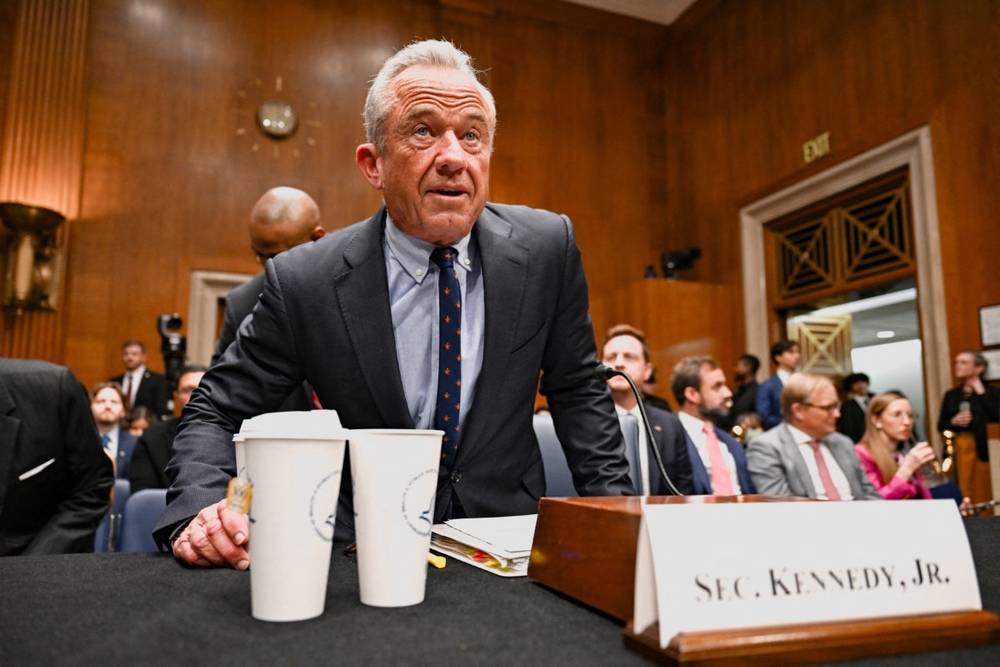
This week, Health and Human Services Secretary Robert F. Kennedy Jr. concluded a grueling series of congressional hearings defending the administration’s proposed fiscal year 2027 budget. The core tension was unmistakable: the budget seeks to increase defense spending while slashing funding for the Department of Health and Human Services by more than 12%. This translates to cuts exceeding $12 billion from an agency tasked with safeguarding the nation’s health, including proposed reductions of $5 billion from the National Institutes of Health (NIH) and the elimination of programs like low-income home energy assistance.
Secretary Kennedy’s testimony was defined by defiance and deflection. Confronted by lawmakers from both parties over two central crises—soaring health care costs and a dangerous decline in childhood vaccination rates leading to measles outbreaks—the Secretary offered a consistent refrain: “It’s not my fault.”
Regarding measles, Kennedy argued the domestic rise is part of a global trend and stems from a loss of public trust in health institutions during the COVID-19 pandemic, a trust he claims to be rebuilding. He disputed being “anti-vaccine,” instead labeling himself “pro-science,” despite a well-documented history of vaccine skepticism, including a 2021 statement where he urged resistance to CDC vaccine schedules. When Democratic Representative Kim Schrier of Washington suggested his views created a “spillover effect” causing parents to reject vital vitamin K shots for newborns, Kennedy simply replied, “I’ve never said anything about vitamin K.”
On budgetary matters, Kennedy engaged in what experts labeled political spin. He forcefully denied that new work requirements for Medicaid enrollees, projected to reduce spending by nearly $1 trillion over a decade, constituted “cuts.” He cited a Congressional Budget Office report showing rising Medicaid outlays, a framing experts like Georgetown University’s Edwin Park called “disingenuous,” as the increased spending reflects inflation and population growth, not maintained benefits. “The federal government is spending nearly a trillion dollars less than it otherwise would have,” Park stated.
Amid bipartisan concern over affordability, Kennedy pointed to administration initiatives like the TrumpRx website and “most favored nation” drug deals. The hearings were punctuated by heated exchanges, with Kennedy at times screaming rebuttals and accusing Democratic lawmakers of grandstanding.
The Context: Erosion of Trust and Institutional Integrity
The context for these hearings is a nation grappling with a compounded crisis. First, there is a tangible public health emergency. Measles, once declared eliminated in the United States in 2000, is now threatening that status due to declining vaccination rates. This is not an abstract policy failure; it is a immediate threat to children’s lives and community health. Second, there is a profound crisis of trust. Surveys indicate trust in federal health agencies has continued to decline during Kennedy’s tenure, a trend his testimony seemed designed to exacerbate rather than remedy. Third, the nation faces a staggering $39 trillion federal deficit, creating legitimate pressure for fiscal responsibility. However, the allocation of that responsibility—boosting defense while gutting health and research—is a profound policy choice with human consequences.
The appointment of Robert F. Kennedy Jr., a figure with a long public record of challenging mainstream vaccine science, to the nation’s top health office was itself a controversial signal. These hearings were the first major congressional reckoning with the practical and philosophical implications of that choice.
Opinion: The Fiduciary Failure of Public Stewardship
What unfolded over these marathon hearings was not merely a policy debate; it was a spectacle of fiduciary failure. The Secretary of Health and Human Services holds one of the most sacred public trusts. It is a duty that transcends party, requiring an unwavering commitment to scientific integrity, transparent communication, and the unambiguous protection of the most vulnerable. Secretary Kennedy’s performance represented a wholesale abandonment of that duty.
His deflection of blame for measles outbreaks is not just politically convenient; it is morally bankrupt and operationally dangerous. Leadership, especially during a public health crisis, requires accountability. By attributing the collapse in vaccination rates solely to a nebulous “loss of trust,” while refusing to acknowledge how his own documented history and rhetoric may contribute to that very erosion, Kennedy engages in a dangerous circular logic. It is the equivalent of a fire chief blaming a blaze on the public’s distrust of water while publicly questioning its efficacy. The role of the HHS Secretary is to be the chief advocate for public health science, to rebuild trust through consistent, evidence-based messaging and action. Instead, we witnessed a secretary who pivoted to “less controversial” topics like nutrition, treating vaccine science as a political liability rather than the cornerstone of his mission.
This leads to the second, and perhaps more insidious, failure: the assault on truth and language. Kennedy’s denial of “cuts” to Medicaid is a masterclass in Orwellian doublespeak, a deliberate attempt to redefine reality to suit a political narrative. As Professor Park clarified, a cut is not defined by nominal spending increases due to inflation; it is defined by spending less than the established trajectory needed to maintain services for a growing population. To tell a senior citizen or a family relying on Medicaid that a nearly trillion-dollar reduction in future support “isn’t a cut” is an insult to their intelligence and a betrayal of honest governance. A democracy cannot function when its officials deliberately obscure the factual consequences of policy. The rule of law depends on a shared foundation of truth, which this testimony sought to undermine.
Furthermore, the proposed evisceration of the NIH is an act of profound national self-sabotage. Senator Thom Tillis, a Republican, rightly warned, “we’re handing China our lunch.” The NIH is not a bureaucratic expense; it is the engine of American biomedical innovation, the source of treatments and cures that save millions of lives and fuel a critical industry. Slashing its funding to meet a budgetary number is the policy equivalent of eating your seed corn. It sacrifices long-term national security, economic vitality, and human health for short-term political arithmetic. That Kennedy called these cuts “painful” but necessary is a damning admission of priorities. True leadership would involve fighting for these vital investments, not meekly accepting their destruction.
The emotional tenor of the hearings—the shouting, the accusations of grandstanding—is symptomatic of a deeper malady. It replaces civil dialogue and problem-solving with performative conflict. When a cabinet secretary screams at elected representatives, it degrades the institutions of democracy itself. Congress’s power of the purse and its oversight role are constitutional checks meant to ensure accountability. Treating this process as a hostile gauntlet rather than a solemn accountability mechanism shows contempt for the constitutional framework he is sworn to protect.
In conclusion, these hearings revealed a Secretary at odds with the fundamental mission of his department. Public health cannot be managed through deflection, linguistic trickery, and the deprioritization of its core defensive tools—vaccination and medical research. The principles of liberty and democracy are not served by leaders who obscure the truth from the public they serve. Freedom requires a healthy populace informed by facts. The spectacle of Robert F. Kennedy Jr.’s testimony was a stark reminder that the greatest threats to our republic are not always external; they can manifest in the erosion of institutional integrity from within, one painful cut and one deflected responsibility at a time. The duty of every citizen and lawmaker is to demand better, to insist that the steward of our nation’s health embraces that role with the seriousness, honesty, and unwavering commitment to science that the American people deserve.